kjhgfd
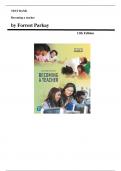
TEST BANK
Becoming a teacher
by Forrest Parkay
11th Edition
ST
U
D
YL
AB
jhgfds
, kjhgfd
TEST BANK
Chapter 1: Teaching: Your Chosen Profession
Multiple Choice Questions
1) A recent research report indicated that 88% of teachers are with teaching as a
career.
A. extremely dissatisfied
B. dissatisfied
C. satisfied
D. extremely satisfied
2) refers to differences among students in regard to gender, race, ethnicity, culture,
ST
and socioeconomic status.
A. Student variability
B. Student diversity
C. Cultural diversity
D. Gender fairness
U
3) Mr. Norton loves English literature, has a strong desire to learn more about this discipline,
and wants the opportunity to share that knowledge with students. He is drawn to teaching
because of a passion for .
D
A. the subject
B. students
C. the teaching life
D. the teaching-learning process
YL
4) Ms. Bradham has always enjoyed school and embraced the environment that encourages a
high regard for education and the life of the mind. She probably chose teaching as a profession
because of a passion for the .
A. desire to serve
AB
B. teaching life
C. salary and associated benefits
D. student variability
5) During an interview with Mr. Fanning, he states that he is attracted to teaching because of a
love of the teaching-learning process. Therefore, he enjoys the .
A. opportunity for teachers to have control over the lives of students
B. ability to apply the theoretical aspects of learning to teaching
C. live, spontaneous aspects of teaching
D. opportunity to pursue independent study in a discipline
6) Educational research supports the fact that those who become teachers are more influenced
by their teachers as .
A. subject-matter experts
B. coaches
jhgfds
, kjhgfd
C. disciplinarians
D. people
7) With the exception of parents or guardians, the adults who have the greatest influence on
children are often their _ .
A. grandparents
B. teachers
C. religious leaders
D. politicians
8) Research tells us that teachers may make up to low-level decisions in a school day.
A. 100
B. 500
ST
C. 1,000
D. 3,000
9) Additions to teacher salaries such as medical insurance and retirement plans are called
.
A. AYP
U
B. passion for the teaching life
C. union dues
D. fringe benefits
D
10) Each state has mandated to assess students’ mastery of academic standards.
A. AYP
B. ESSA
YL
C. high-stakes tests
D. college and career readiness
11) Jon is disturbed by the problems of contemporary America—the erosion of the family, the
increasing violence in our cities, and the hardships of poverty. To make a difference, Jon has
AB
chosen to pursue teaching as a profession. His primary reason for this choice is the _.
A. desire to serve others
B. community support and admiration of others
C. availability of jobs in the inner city
D. competitive salary
12) All of the following are practical benefits of teaching except .
A. job security
B. rising salaries and stipends
C. teachers’ daily and vacation hours
D. frequent promotions to administrative positions
13) Since the turn of the century, teachers’ salaries have .
A. increased steadily
B. stayed about the same
jhgfds
, kjhgfd
C. increased a small percent
D. decreased
14) It is a general perception that _.
A. teachers are overpaid
B. teachers’ salaries are losing ground to competitive occupations
C. teachers’ salaries are too low to attract persons to teaching
D. teachers are underpaid
15) All of the following statements about teachers’ salaries are true except that .
A. average teacher salaries have steadily increased since the 1980s
B. school districts serving the nation’s 100 largest cities had maximum salaries exceeding
$70,000
ST
C. teacher salaries vary little by states or regions
D. teachers in some districts are paid more than $70,000 annually
16) The National Education Association (2018) reported that the average teacher’s salary was
approximately .
A. $36,000
U
B. $48,000
C. $60,500
D. $75,000
D
17) of the nation’s public school teachers “moonlight” or hold a second job to
increase their earnings.
A. One-tenth
YL
B. One-fourth
C. One-half
D. Three-fourths
18) The total number of K–12 teachers is expected to increase from 3.5 million teachers in 2016
AB
by approximately _ percent in 2023.
A. 2
B. 4
C. 8
D. 15
19) is one of the teacher’s most time-consuming non-teaching tasks.
A. Supervising students on the playground, at extracurricular events, and inside school hallways
and other non-classroom areas
B. Keeping paperwork including detailed records of students’ academic progress, attendance,
and other required documentation
C. Attending faculty meetings, parent conferences, open houses, and other required school
functions
D. Taking or selling tickets and other products at school concession stands for school-sponsored
events (e.g., sports and plays)
jhgfds
TEST BANK
Becoming a teacher
by Forrest Parkay
11th Edition
ST
U
D
YL
AB
jhgfds
, kjhgfd
TEST BANK
Chapter 1: Teaching: Your Chosen Profession
Multiple Choice Questions
1) A recent research report indicated that 88% of teachers are with teaching as a
career.
A. extremely dissatisfied
B. dissatisfied
C. satisfied
D. extremely satisfied
2) refers to differences among students in regard to gender, race, ethnicity, culture,
ST
and socioeconomic status.
A. Student variability
B. Student diversity
C. Cultural diversity
D. Gender fairness
U
3) Mr. Norton loves English literature, has a strong desire to learn more about this discipline,
and wants the opportunity to share that knowledge with students. He is drawn to teaching
because of a passion for .
D
A. the subject
B. students
C. the teaching life
D. the teaching-learning process
YL
4) Ms. Bradham has always enjoyed school and embraced the environment that encourages a
high regard for education and the life of the mind. She probably chose teaching as a profession
because of a passion for the .
A. desire to serve
AB
B. teaching life
C. salary and associated benefits
D. student variability
5) During an interview with Mr. Fanning, he states that he is attracted to teaching because of a
love of the teaching-learning process. Therefore, he enjoys the .
A. opportunity for teachers to have control over the lives of students
B. ability to apply the theoretical aspects of learning to teaching
C. live, spontaneous aspects of teaching
D. opportunity to pursue independent study in a discipline
6) Educational research supports the fact that those who become teachers are more influenced
by their teachers as .
A. subject-matter experts
B. coaches
jhgfds
, kjhgfd
C. disciplinarians
D. people
7) With the exception of parents or guardians, the adults who have the greatest influence on
children are often their _ .
A. grandparents
B. teachers
C. religious leaders
D. politicians
8) Research tells us that teachers may make up to low-level decisions in a school day.
A. 100
B. 500
ST
C. 1,000
D. 3,000
9) Additions to teacher salaries such as medical insurance and retirement plans are called
.
A. AYP
U
B. passion for the teaching life
C. union dues
D. fringe benefits
D
10) Each state has mandated to assess students’ mastery of academic standards.
A. AYP
B. ESSA
YL
C. high-stakes tests
D. college and career readiness
11) Jon is disturbed by the problems of contemporary America—the erosion of the family, the
increasing violence in our cities, and the hardships of poverty. To make a difference, Jon has
AB
chosen to pursue teaching as a profession. His primary reason for this choice is the _.
A. desire to serve others
B. community support and admiration of others
C. availability of jobs in the inner city
D. competitive salary
12) All of the following are practical benefits of teaching except .
A. job security
B. rising salaries and stipends
C. teachers’ daily and vacation hours
D. frequent promotions to administrative positions
13) Since the turn of the century, teachers’ salaries have .
A. increased steadily
B. stayed about the same
jhgfds
, kjhgfd
C. increased a small percent
D. decreased
14) It is a general perception that _.
A. teachers are overpaid
B. teachers’ salaries are losing ground to competitive occupations
C. teachers’ salaries are too low to attract persons to teaching
D. teachers are underpaid
15) All of the following statements about teachers’ salaries are true except that .
A. average teacher salaries have steadily increased since the 1980s
B. school districts serving the nation’s 100 largest cities had maximum salaries exceeding
$70,000
ST
C. teacher salaries vary little by states or regions
D. teachers in some districts are paid more than $70,000 annually
16) The National Education Association (2018) reported that the average teacher’s salary was
approximately .
A. $36,000
U
B. $48,000
C. $60,500
D. $75,000
D
17) of the nation’s public school teachers “moonlight” or hold a second job to
increase their earnings.
A. One-tenth
YL
B. One-fourth
C. One-half
D. Three-fourths
18) The total number of K–12 teachers is expected to increase from 3.5 million teachers in 2016
AB
by approximately _ percent in 2023.
A. 2
B. 4
C. 8
D. 15
19) is one of the teacher’s most time-consuming non-teaching tasks.
A. Supervising students on the playground, at extracurricular events, and inside school hallways
and other non-classroom areas
B. Keeping paperwork including detailed records of students’ academic progress, attendance,
and other required documentation
C. Attending faculty meetings, parent conferences, open houses, and other required school
functions
D. Taking or selling tickets and other products at school concession stands for school-sponsored
events (e.g., sports and plays)
jhgfds