

MN POST Test / Latest Questions & Detailed
Answers (A+ Guided Solutions) .
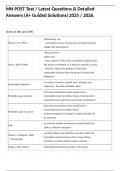
Terms in this set (249)
Exclusionary rule
Weeks v. US (1914) - warrantless seizure of items from private residence
violates 4th Amendment
"Stop and Frisk"
police may:
- stop a person if they have reasonable suspicion that
Terry v. Ohio (1968) the person committed, or is about to commit, a crime
- frisk the suspect for weapons if they have
reasonable suspicion that the person is armed and
dangerous
a suspicion based on specific facts, training, and
Reasonable Suspicion
experience; less than probable cause
facts and circumstances that would cause a
Probable cause to arrest reasonable person to believe that a crime has been
committed and a particular person has committed it
facts and circumstances that would cause a
reasonable person to believe that a
Probable cause to search
evidence/property is located in a particular place to
be searched
an over-the-clothes pat-down or minimal search by
frisk
police to discover weapons
arresting officers are limited to searches within the
Chimel v. California (1969)
immediate vicinity/control of the suspect being
- "Chimel Rule"
arrested; any other search requires warrant
Mapp v. Ohio (1961) Extended the Exclusionary Rule to the states
,Carroll v. U.S. (1925) - Automobile exception
"Carroll Doctrine" - warrantless search of a car does not violate 4th
Amendment, if there is PC to believe evidence a crime is
present in vehicle, and exigent circumstances exist to
believe vehicle could be moved before warrant is obtained
Gideon v. Wainwright Right to counsel
(1963) - extended right to counsel during criminal trial to the states
Escobedo v. Illinois (1964) Right to counsel
- criminal suspects have a right to counsel during police
interrogations
Miranda v. Arizona (1966) - law enforcement required to give formal warning
"Miranda Warning" advising criminal suspects in custody of their rights,
before interrogation
In re Gault (1967) Due process
- 14th Amendment Due Process Clause applies to juveniles
In re Winship (1970) Due process
- established burden of "proof beyond a reasonable
doubt" as standard in all federal and state cases - removed
"preponderance of evidence" standard previously used in
juvenile delinquency proceedings
Roper v. Simmons (2005) unconstitutional to impose capital punishment for crimes
committed while under 18
Atkins v. Virginia (2002) unconstitutional to impose capital punishment on people with
intellectual disabilities
Tennessee v. Garner (1985) Deadly force may not be used against an unarmed and
fleeing suspect unless necessary to prevent the escape and
unless the officer has probable cause to believe that the
suspect poses a significant threat of death or serious injury
to the officers or others
,
, Graham v. Connor (1989) Use of Force "Objective Reasonableness" standard - judged
from the perspective of a reasonable officer on the scene -
factors:
1. severity of crime at issue
2. suspect poses immediate threat to safety of officersor
others
3. actively resisting arrest or attempting to evadearrest
by fleeing
(other factors may be considered)
Scales v Minnesota (1994) Recording requirement (Minnesota only)
- custodial interrogation including Miranda
warning,waiving of rights, and all questioning shall be
electronically recorded where feasible
- must be recorded when questioning occurs at placeof
detention
Herring v. US (2009) Good faith exception
- exclusionary rule cannot be used to suppress illegally
obtained evidence if officer was acting on erroneous
warrant in good faith
Whren v. US (1996) any traffic offense committed by a driver is a legitimate legal
basis for a stop
Pena v Leombruni, US 7th officer justified in using deadly force against "crazy suspect"
Circuit (1999) who posed immediate threat of death or great bodily harm,
regardless of suspect's mental state
City of Canton, Ohio v. municipalities may be liable for inadequate training of
Harris (1989) employees, but only when "failure to train amounts to
deliberate indifference" to the public's constitutional rights
Answers (A+ Guided Solutions) .
Terms in this set (249)
Exclusionary rule
Weeks v. US (1914) - warrantless seizure of items from private residence
violates 4th Amendment
"Stop and Frisk"
police may:
- stop a person if they have reasonable suspicion that
Terry v. Ohio (1968) the person committed, or is about to commit, a crime
- frisk the suspect for weapons if they have
reasonable suspicion that the person is armed and
dangerous
a suspicion based on specific facts, training, and
Reasonable Suspicion
experience; less than probable cause
facts and circumstances that would cause a
Probable cause to arrest reasonable person to believe that a crime has been
committed and a particular person has committed it
facts and circumstances that would cause a
reasonable person to believe that a
Probable cause to search
evidence/property is located in a particular place to
be searched
an over-the-clothes pat-down or minimal search by
frisk
police to discover weapons
arresting officers are limited to searches within the
Chimel v. California (1969)
immediate vicinity/control of the suspect being
- "Chimel Rule"
arrested; any other search requires warrant
Mapp v. Ohio (1961) Extended the Exclusionary Rule to the states
,Carroll v. U.S. (1925) - Automobile exception
"Carroll Doctrine" - warrantless search of a car does not violate 4th
Amendment, if there is PC to believe evidence a crime is
present in vehicle, and exigent circumstances exist to
believe vehicle could be moved before warrant is obtained
Gideon v. Wainwright Right to counsel
(1963) - extended right to counsel during criminal trial to the states
Escobedo v. Illinois (1964) Right to counsel
- criminal suspects have a right to counsel during police
interrogations
Miranda v. Arizona (1966) - law enforcement required to give formal warning
"Miranda Warning" advising criminal suspects in custody of their rights,
before interrogation
In re Gault (1967) Due process
- 14th Amendment Due Process Clause applies to juveniles
In re Winship (1970) Due process
- established burden of "proof beyond a reasonable
doubt" as standard in all federal and state cases - removed
"preponderance of evidence" standard previously used in
juvenile delinquency proceedings
Roper v. Simmons (2005) unconstitutional to impose capital punishment for crimes
committed while under 18
Atkins v. Virginia (2002) unconstitutional to impose capital punishment on people with
intellectual disabilities
Tennessee v. Garner (1985) Deadly force may not be used against an unarmed and
fleeing suspect unless necessary to prevent the escape and
unless the officer has probable cause to believe that the
suspect poses a significant threat of death or serious injury
to the officers or others
,
, Graham v. Connor (1989) Use of Force "Objective Reasonableness" standard - judged
from the perspective of a reasonable officer on the scene -
factors:
1. severity of crime at issue
2. suspect poses immediate threat to safety of officersor
others
3. actively resisting arrest or attempting to evadearrest
by fleeing
(other factors may be considered)
Scales v Minnesota (1994) Recording requirement (Minnesota only)
- custodial interrogation including Miranda
warning,waiving of rights, and all questioning shall be
electronically recorded where feasible
- must be recorded when questioning occurs at placeof
detention
Herring v. US (2009) Good faith exception
- exclusionary rule cannot be used to suppress illegally
obtained evidence if officer was acting on erroneous
warrant in good faith
Whren v. US (1996) any traffic offense committed by a driver is a legitimate legal
basis for a stop
Pena v Leombruni, US 7th officer justified in using deadly force against "crazy suspect"
Circuit (1999) who posed immediate threat of death or great bodily harm,
regardless of suspect's mental state
City of Canton, Ohio v. municipalities may be liable for inadequate training of
Harris (1989) employees, but only when "failure to train amounts to
deliberate indifference" to the public's constitutional rights


