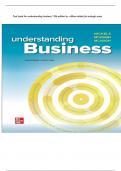
TEST BANK FOR g g
Understanding Business, 13th Edition, William Nickels
g g g g g
Chapter 1-20 Answers are at the end of Each chapter
g g g g g g g g g g
Chapter 1
g g
Student name: g
1) Describe three ways that governments can foster entrepreneurship and encourage the
g g g g g g g g g g
creation of wealth
g g g
2) Describe how businesses can use technology to be more responsive to customers.
g g g g g g g g g g g
3) Competition among businesses has never been greater. Identify and describe two ways
g g g g g g g g g g g
that businesses can become more competitive.
g g g g g g
4) What is demography? Identify two demographic trends in the United States and discuss
g g g g g g g g g g g g
how they will impactUnited States businesses.
g g g g g g
5) Describe what we mean by greening and thinking green. List five ways that people and
g g g g g g g g g g g g g g
businesses are participating in the green movement. List business opportunities that may emerge
g g g g g g g g g g g g g
from this movement.
g g g
6) Trace the evolution of American business. Identify the key trends, and discuss the
g g g g g g g g g g g g
implications these trends have for the future.
g g g g g g g
,7) An entity that seeks to earn a profit by providing a good or service is known as a(n)
g g g g g g g g g g g g g g g g g
A) industry.
B) corporation.
C) business.
D) service.
8) is the amount a business earns after deducting what it spends for salaries and
g g g g g g g g g g g g g
other expenses.
g g
A) Profit
B) Revenue
C) Interest
D) Dividends
9) A business incurs a
g g g g if its costs and expenses exceed its revenues.
g g g g g g g
A) loss
B) liability
C) debit
D) dividend
10) is the chance a business owner will lose the time and money invested in a
g g g g g g g g g g g g g g
business that proves to be unprofitable.
g g g g g g
A) Depreciation
B) Risk
C) Opportunity
D) Redundancy
11) The total amount of money that businesses take in by selling goods and services is called
g g g g g g g g g g g g g g g
, A) profit.
B) revenue.
C) loss.
D) retained earnings. g
12) A(n) g is a person who assumes the risk of starting a business.
g g g g g g g g g g
A) manager
B) entrepreneur
C) employee
D) stakeholder
13) Starting a business always involves
g g g g
A) profit.
B) loss.
C) revenue.
D) risk
14) Often in business the greater the risk, the
g g g g g g g
A) greater the potential reward.
g g g
B) lower the expected revenues.
g g g
C) lower the value provided to society.
g g g g g
D) greater the number of stakeholders.
g g g g
15) is a measure of the general well-being and satisfaction derived from a
g g g g g g g g g g g
variety of factors including political freedom, safety, education, and a clean environment.
g g g g g g g g g g g g
A) Standard of living g g
B) Quality of life g g
C) Gross national income
g g
D) Social satisfaction g
, 16) The amount of goods and services people can buy with the money they have is called
g g g g g g g g g g g g g g g
their
g
A) nominal income. g
B) consumer price index. g g
C) profit margin. g
D) standard of living. g g
17) The customers, employees, stockholders, suppliers, creditors, and others who stand to
g g g g g g g g g g
gain or lose by the policies and activities of a business represent the firm's
g g g g g g g g g g g g g g
A) market makers. g
B) economic environment. g
C) stakeholders.
D) social environment. g
18) The most important difference between for-profit businesses and nonprofit organizations
g g g g g g g g g
is that
g g
A) for-profit businesses do not benefit society.
g g g g g
B) nonprofit organizations seek to make a profit for their owners and organizers.
g g g g g g g g g g g
C) nonprofit organizations do not seek a profit for their owners or organizers.
g g g g g g g g g g g
D) nonprofit organizations do not answer to stakeholders.
g g g g g g
19) A common characteristic of most entrepreneurs is that they
g g g g g g g g
A) accept the risks involved in starting and managing a business.
g g g g g g g g g
B) have a high level of scientific and technical expertise.
g g g g g g g g
C) possess a great deal of personal wealth.
g g g g g g
D) have experience in running large, complex organizations.
g g g g g g
Understanding Business, 13th Edition, William Nickels
g g g g g
Chapter 1-20 Answers are at the end of Each chapter
g g g g g g g g g g
Chapter 1
g g
Student name: g
1) Describe three ways that governments can foster entrepreneurship and encourage the
g g g g g g g g g g
creation of wealth
g g g
2) Describe how businesses can use technology to be more responsive to customers.
g g g g g g g g g g g
3) Competition among businesses has never been greater. Identify and describe two ways
g g g g g g g g g g g
that businesses can become more competitive.
g g g g g g
4) What is demography? Identify two demographic trends in the United States and discuss
g g g g g g g g g g g g
how they will impactUnited States businesses.
g g g g g g
5) Describe what we mean by greening and thinking green. List five ways that people and
g g g g g g g g g g g g g g
businesses are participating in the green movement. List business opportunities that may emerge
g g g g g g g g g g g g g
from this movement.
g g g
6) Trace the evolution of American business. Identify the key trends, and discuss the
g g g g g g g g g g g g
implications these trends have for the future.
g g g g g g g
,7) An entity that seeks to earn a profit by providing a good or service is known as a(n)
g g g g g g g g g g g g g g g g g
A) industry.
B) corporation.
C) business.
D) service.
8) is the amount a business earns after deducting what it spends for salaries and
g g g g g g g g g g g g g
other expenses.
g g
A) Profit
B) Revenue
C) Interest
D) Dividends
9) A business incurs a
g g g g if its costs and expenses exceed its revenues.
g g g g g g g
A) loss
B) liability
C) debit
D) dividend
10) is the chance a business owner will lose the time and money invested in a
g g g g g g g g g g g g g g
business that proves to be unprofitable.
g g g g g g
A) Depreciation
B) Risk
C) Opportunity
D) Redundancy
11) The total amount of money that businesses take in by selling goods and services is called
g g g g g g g g g g g g g g g
, A) profit.
B) revenue.
C) loss.
D) retained earnings. g
12) A(n) g is a person who assumes the risk of starting a business.
g g g g g g g g g g
A) manager
B) entrepreneur
C) employee
D) stakeholder
13) Starting a business always involves
g g g g
A) profit.
B) loss.
C) revenue.
D) risk
14) Often in business the greater the risk, the
g g g g g g g
A) greater the potential reward.
g g g
B) lower the expected revenues.
g g g
C) lower the value provided to society.
g g g g g
D) greater the number of stakeholders.
g g g g
15) is a measure of the general well-being and satisfaction derived from a
g g g g g g g g g g g
variety of factors including political freedom, safety, education, and a clean environment.
g g g g g g g g g g g g
A) Standard of living g g
B) Quality of life g g
C) Gross national income
g g
D) Social satisfaction g
, 16) The amount of goods and services people can buy with the money they have is called
g g g g g g g g g g g g g g g
their
g
A) nominal income. g
B) consumer price index. g g
C) profit margin. g
D) standard of living. g g
17) The customers, employees, stockholders, suppliers, creditors, and others who stand to
g g g g g g g g g g
gain or lose by the policies and activities of a business represent the firm's
g g g g g g g g g g g g g g
A) market makers. g
B) economic environment. g
C) stakeholders.
D) social environment. g
18) The most important difference between for-profit businesses and nonprofit organizations
g g g g g g g g g
is that
g g
A) for-profit businesses do not benefit society.
g g g g g
B) nonprofit organizations seek to make a profit for their owners and organizers.
g g g g g g g g g g g
C) nonprofit organizations do not seek a profit for their owners or organizers.
g g g g g g g g g g g
D) nonprofit organizations do not answer to stakeholders.
g g g g g g
19) A common characteristic of most entrepreneurs is that they
g g g g g g g g
A) accept the risks involved in starting and managing a business.
g g g g g g g g g
B) have a high level of scientific and technical expertise.
g g g g g g g g
C) possess a great deal of personal wealth.
g g g g g g
D) have experience in running large, complex organizations.
g g g g g g