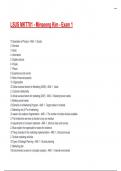
LSUS MKT701 - Minseong Kim - Exam 1
10 Examples of Product - ANS -1. Goods
2. Services
3. Ideas
4. Information
5. Digital products
6. People
7. Places
8. Experiences and events
9. Real or financial property
10. Organization
\2 Critical success factors for Marketing (2005) - ANS -1. Value
2. Customer relationship
\2 critical success factors for marketing (2007) - ANS -1. Meeting human needs
2. Meeting social needs
\2 Elements of a Marketing Program - ANS -1. Target market or markets
2. Marketing mix (4 P's of marketing)
\2 reasons for audience fragmentation - ANS -1. The number of media choices available
2. The limited time we have to devote to any one medium
\2 requirements of a mission statement - ANS -1. Must be clear and concise
2. Must explain the organization's reason for existence
\2 Things included in the marketing implementation - ANS -1. Structural issues
2. Tactical marketing activities
\2 Types of Strategic Planning - ANS -1. Tactical planning
2. Marketing plan
\3 Environments covered in a situation analysis - ANS -1. Internal environment
, 2. Customer environment
3. External environment
\3 Marketing Strategy Decisions - ANS -1. Market segmentation and target marketing
2. Marketing program decisions
3. Branding and positioning
\3 Organizational aspects of a marketing plan - ANS -1. Plans are often prepared by marketing managers, brand
managers, or product managers
2. Authority to approve the plan is vested in upper-level executives
3. Final approval of the plan its with the President, Chairperson, or CEO
\3 Parts to Evaluation & Control - ANS -1. Marketing control
2. Financial assessment
3. Marketing audit
\3 Requirements of Functional Strategy - ANS -1. Fits the needs and purposes of the functional area
2. Realistic with available resources and environment
3. Consistent with organization's mission, goals, and objectives
\3 Strategies to develop and leverage competitive advantage - ANS -1. Operational excellence
2. Product leadership
3. Customer intimacy
\3 Ways to Analyze the Internal Environment - ANS -1. Review current marketing objectives, strategy, and performance,
i.e., look at consistency of marketing goals w/ corporate goals and reasons behind improving or declining performance
2. Review current and anticipated organizational resources, i.e., current state of organizational resources and measures
required to use resources more effectively
3. Review current and anticipated cultural and structural issues, i.e., internal culture, overall customer orientation,
employee motivation and commitment to the organization
\4 Basic Marketing Concepts - ANS -1. Market
2. Exchange
3. Product
4. Utility
\4 Basic Types of Competition - ANS -1. Brand competitors
10 Examples of Product - ANS -1. Goods
2. Services
3. Ideas
4. Information
5. Digital products
6. People
7. Places
8. Experiences and events
9. Real or financial property
10. Organization
\2 Critical success factors for Marketing (2005) - ANS -1. Value
2. Customer relationship
\2 critical success factors for marketing (2007) - ANS -1. Meeting human needs
2. Meeting social needs
\2 Elements of a Marketing Program - ANS -1. Target market or markets
2. Marketing mix (4 P's of marketing)
\2 reasons for audience fragmentation - ANS -1. The number of media choices available
2. The limited time we have to devote to any one medium
\2 requirements of a mission statement - ANS -1. Must be clear and concise
2. Must explain the organization's reason for existence
\2 Things included in the marketing implementation - ANS -1. Structural issues
2. Tactical marketing activities
\2 Types of Strategic Planning - ANS -1. Tactical planning
2. Marketing plan
\3 Environments covered in a situation analysis - ANS -1. Internal environment
, 2. Customer environment
3. External environment
\3 Marketing Strategy Decisions - ANS -1. Market segmentation and target marketing
2. Marketing program decisions
3. Branding and positioning
\3 Organizational aspects of a marketing plan - ANS -1. Plans are often prepared by marketing managers, brand
managers, or product managers
2. Authority to approve the plan is vested in upper-level executives
3. Final approval of the plan its with the President, Chairperson, or CEO
\3 Parts to Evaluation & Control - ANS -1. Marketing control
2. Financial assessment
3. Marketing audit
\3 Requirements of Functional Strategy - ANS -1. Fits the needs and purposes of the functional area
2. Realistic with available resources and environment
3. Consistent with organization's mission, goals, and objectives
\3 Strategies to develop and leverage competitive advantage - ANS -1. Operational excellence
2. Product leadership
3. Customer intimacy
\3 Ways to Analyze the Internal Environment - ANS -1. Review current marketing objectives, strategy, and performance,
i.e., look at consistency of marketing goals w/ corporate goals and reasons behind improving or declining performance
2. Review current and anticipated organizational resources, i.e., current state of organizational resources and measures
required to use resources more effectively
3. Review current and anticipated cultural and structural issues, i.e., internal culture, overall customer orientation,
employee motivation and commitment to the organization
\4 Basic Marketing Concepts - ANS -1. Market
2. Exchange
3. Product
4. Utility
\4 Basic Types of Competition - ANS -1. Brand competitors