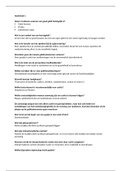
HOW TO ANSWER QUESTIONS: TEST TAKING STRATEGIES
Select all that apply questions
o Treat each answer as true or false
o Treat each answer as individuals
o Do not compare answers to each other
Priority questions
o ABCs—follow order and if one is compromised that is what needs to be fixed
immediately
Airway
Breathing
Circulation
o Determining which patient is priority (look for key words as well)
Stable patient
Chronic
Post op > 12 hours
Ready for discharge
S/S common for dx
Admitted for >24 hours
Unstable patient (PRIORITY)
Acute***
Post op <12 hours
Changed assessments
Newly diagnosed
S/S uncommon for dx
Came in unexpected
Nursing Process
o Assess until you have enough information to act
o If the question gives you all your assessment piecesACT
o Assess before calling the doctor
o ADPIE
Delegation questions
o Nurses (RN) use T.A.P.E
Teach, Assess (*Initial assessment), Plan, Evaluate
Think about which patients will require teaching/ new
assessment/ evaluation
Unstable/Acute patients
Patients requiring IV medication
o LPN
CANNOT use T.A.P.E
Can Reassess/Re-educate after RN provide initial assessment and
teaching
Stable/chronic patients
o CNA/UAP
ADLs
Stable patients
, o
DYSRHYTMIAS
https://quizlet.com/733685216/flash-cards/
https://quizlet.com/336957045/chapter-35-dysrhythmiaslewis-medical-surgical-nursing-10th-
edition-flash-cards/ (QUESTIONS)
ECG Complex:
P Wave: SA node firing off then travels across atrium (PR Interval)
o NORMAL PR INTERVAL: 0.12 - 0.20
QRS: Depolarization of ventricles
o NORMAL QRS: 0.06 - 0.12
T Wave: Repolarization of ventricles/recovery period (heart resting and waiting for
next impulse)
QT Interval: distance it takes for heart to put out an impulse and rest to be ready for
the next one (time taken to complete depolarization and repolarization)
o NORMAL QT INTERVAL: 0.36 - 0.44
U wave is seen when a person has a low potassium level
,Look at the ST segment to see if there’s injury to the heartK
ST DEPRESSION: ischemia
ST ELEVATION: active injury such as MIK
DYSRHYTHMIA: abnormal, disordered rhythm of the heart and interruption of automaticity
Decreases cardiac output, can cause clots and be fatal
Electro-Physiology Studies: when patient has problem with SA node; patient is put into fatal
rhythm with staff ready to do CPR to find out what antiarrhythmic drugs will work to fix the
patient’s issue
PACEMAKER: electronic device used in place of SA NodeK
Temporary: pulse generator is outside of body
Transvenous: wire threaded through cordis/central line, implanted in epicardium
Percutaneous: pulse generator in cardiac monitor provides electrical stimulationKvia
patches applied to anterior and posterior chest walls
Permanent: pulse generator is implanted in abdomen or axilla; ProvidesK
electrical stimulation for heart to beat
The pacemaker will either handle setting the rhythm completely, or will act as a
safety net and sense when the rhythm becomes abnormal and kick on and
transmit an electrical charge to produce a contraction*
Implantable Cardioverter Defibrillator (ICD):
For someone that has dangerous rhythms and we’ve taken them to the electro-
physiology studies lab and they still have fatal rhythms despite drug therapy they get
one of these put in their chest that sits in there and if they go into that fatal rhythm it
shocks them in the chest (will feel uncomfortable like a punch in the chest but it
won’t hurt)K
It fires a small amount of electricity to interrupt the bad rhythm so that the natural
pacemaker of the heart can get through
, DEFIBRILLATION: Used when there is no pulse
Most effective way to terminate ventricular fibrillation
Most effective when patient not hypoxic or acidotic
Electrical current depolarizes cells of myocardium, leading to subsequent
repolarization of myocardial cells which allows the SA NODE to resume role as
pacemaker
CARDIOVERSION: Synchronized-Patient must have a pulse
Delivers electrical current 10 milliseconds after sensing R wave in order to convert
ventricular tachycardia, SVT, A-fib, A-flutter to sinus rhythm
May use sedation if patient awake
Getting shocked on the T wave will cause the patient’s rhythm to stop for a second
and can kill them
Consent required if patient awake
If patient has A-fib, they must be on anticoagulants for a few weeks before
cardioversion to reduce the risk of a clot dislodging during the procedureK
DETERMINING THE RHYTHM: six questions to answer:
1. Is the rhythm regular? (is there the same distance between each complex?)
2. Is there a consistent P wave across the strip?
3. What is the rate? Less than 60 is bradycardia more than 100 is tachycardia (60-100 is
NSR)
4. What is the distance of the PR interval (# of blocks underneath) (this is checking the
function of the atrium) .12-.20 is normal (three to five boxes)
5. What is the distance of the QRS (# of blocks underneath); this is checking the
function of the ventricle .06-.12 is normal (one and a half box to three boxes)
6. What is the QT interval: starts at the Q until the end of the T wave where it comes
back to the isometric line (normal is .36 to .44)
NORMAL SINUS RHYTHM: normal rate, normal everything, patient is healthy
Select all that apply questions
o Treat each answer as true or false
o Treat each answer as individuals
o Do not compare answers to each other
Priority questions
o ABCs—follow order and if one is compromised that is what needs to be fixed
immediately
Airway
Breathing
Circulation
o Determining which patient is priority (look for key words as well)
Stable patient
Chronic
Post op > 12 hours
Ready for discharge
S/S common for dx
Admitted for >24 hours
Unstable patient (PRIORITY)
Acute***
Post op <12 hours
Changed assessments
Newly diagnosed
S/S uncommon for dx
Came in unexpected
Nursing Process
o Assess until you have enough information to act
o If the question gives you all your assessment piecesACT
o Assess before calling the doctor
o ADPIE
Delegation questions
o Nurses (RN) use T.A.P.E
Teach, Assess (*Initial assessment), Plan, Evaluate
Think about which patients will require teaching/ new
assessment/ evaluation
Unstable/Acute patients
Patients requiring IV medication
o LPN
CANNOT use T.A.P.E
Can Reassess/Re-educate after RN provide initial assessment and
teaching
Stable/chronic patients
o CNA/UAP
ADLs
Stable patients
, o
DYSRHYTMIAS
https://quizlet.com/733685216/flash-cards/
https://quizlet.com/336957045/chapter-35-dysrhythmiaslewis-medical-surgical-nursing-10th-
edition-flash-cards/ (QUESTIONS)
ECG Complex:
P Wave: SA node firing off then travels across atrium (PR Interval)
o NORMAL PR INTERVAL: 0.12 - 0.20
QRS: Depolarization of ventricles
o NORMAL QRS: 0.06 - 0.12
T Wave: Repolarization of ventricles/recovery period (heart resting and waiting for
next impulse)
QT Interval: distance it takes for heart to put out an impulse and rest to be ready for
the next one (time taken to complete depolarization and repolarization)
o NORMAL QT INTERVAL: 0.36 - 0.44
U wave is seen when a person has a low potassium level
,Look at the ST segment to see if there’s injury to the heartK
ST DEPRESSION: ischemia
ST ELEVATION: active injury such as MIK
DYSRHYTHMIA: abnormal, disordered rhythm of the heart and interruption of automaticity
Decreases cardiac output, can cause clots and be fatal
Electro-Physiology Studies: when patient has problem with SA node; patient is put into fatal
rhythm with staff ready to do CPR to find out what antiarrhythmic drugs will work to fix the
patient’s issue
PACEMAKER: electronic device used in place of SA NodeK
Temporary: pulse generator is outside of body
Transvenous: wire threaded through cordis/central line, implanted in epicardium
Percutaneous: pulse generator in cardiac monitor provides electrical stimulationKvia
patches applied to anterior and posterior chest walls
Permanent: pulse generator is implanted in abdomen or axilla; ProvidesK
electrical stimulation for heart to beat
The pacemaker will either handle setting the rhythm completely, or will act as a
safety net and sense when the rhythm becomes abnormal and kick on and
transmit an electrical charge to produce a contraction*
Implantable Cardioverter Defibrillator (ICD):
For someone that has dangerous rhythms and we’ve taken them to the electro-
physiology studies lab and they still have fatal rhythms despite drug therapy they get
one of these put in their chest that sits in there and if they go into that fatal rhythm it
shocks them in the chest (will feel uncomfortable like a punch in the chest but it
won’t hurt)K
It fires a small amount of electricity to interrupt the bad rhythm so that the natural
pacemaker of the heart can get through
, DEFIBRILLATION: Used when there is no pulse
Most effective way to terminate ventricular fibrillation
Most effective when patient not hypoxic or acidotic
Electrical current depolarizes cells of myocardium, leading to subsequent
repolarization of myocardial cells which allows the SA NODE to resume role as
pacemaker
CARDIOVERSION: Synchronized-Patient must have a pulse
Delivers electrical current 10 milliseconds after sensing R wave in order to convert
ventricular tachycardia, SVT, A-fib, A-flutter to sinus rhythm
May use sedation if patient awake
Getting shocked on the T wave will cause the patient’s rhythm to stop for a second
and can kill them
Consent required if patient awake
If patient has A-fib, they must be on anticoagulants for a few weeks before
cardioversion to reduce the risk of a clot dislodging during the procedureK
DETERMINING THE RHYTHM: six questions to answer:
1. Is the rhythm regular? (is there the same distance between each complex?)
2. Is there a consistent P wave across the strip?
3. What is the rate? Less than 60 is bradycardia more than 100 is tachycardia (60-100 is
NSR)
4. What is the distance of the PR interval (# of blocks underneath) (this is checking the
function of the atrium) .12-.20 is normal (three to five boxes)
5. What is the distance of the QRS (# of blocks underneath); this is checking the
function of the ventricle .06-.12 is normal (one and a half box to three boxes)
6. What is the QT interval: starts at the Q until the end of the T wave where it comes
back to the isometric line (normal is .36 to .44)
NORMAL SINUS RHYTHM: normal rate, normal everything, patient is healthy