100% de satisfacción garantizada Inmediatamente disponible después del pago Tanto en línea como en PDF No estas atado a nada 4,6 TrustPilot
logo-home
Examen

SERVSAFE MANAGER 7TH EDITION - STUDY GUIDE QUESTIONS AND ANSWERS

Puntuación
-
Vendido
-
Páginas
24
Grado
A+
Subido en
04-04-2025
Escrito en
2024/2025

SERVSAFE MANAGER 7TH EDITION - STUDY GUIDE QUESTIONS AND ANSWERS "When has food been time temperature abused? - CORRECT ANSWER when it has stayed too long at temperatures that are good for the growth of pathogens" "How can pathogens be spread to food? - CORRECT ANSWER if equipment has not been cleaned and sanitized correctly between uses" "Define cross contamination. - CORRECT ANSWER when pathogens are transferred from one surface or food to another" "What find of food do pathogens grow well in? - CORRECT ANSWER TCS food" "What can some bacteria change into? - CORRECT ANSWER spores" "Why do some bacteria change into spores? - CORRECT ANSWER to preserve themselves when lacking nutrients" "What can bacteria produce in food? - CORRECT ANSWER toxins that can make people sick" "What is the leading cause of foodborne illnesses? - CORRECT ANSWER viruses" "What cannot grow in food? - CORRECT ANSWER viruses" "What can viruses survive? - CORRECT ANSWER refrigeration and freezing temperatures" "What can help prevent the spread of viruses? - CORRECT ANSWER good personal hygiene" "What do parasites need to survive? - CORRECT ANSWER to be in another animal" "What can parasites contaminate? - CORRECT ANSWER food and water" "What kind of water is often contaminated by parasites? - CORRECT ANSWER water used to irrigate produce" "How can foodborne illnesses caused by parasites be prevented? - CORRECT ANSWER by purchasing products from approved, reputable suppliers" "What are example of fungi? - CORRECT ANSWER mold and yeast" "What does fungi do? - CORRECT ANSWER spoil food" "What can some molds produce? - CORRECT ANSWER harmful toxins" "What should be done with food that has mold? - CORRECT ANSWER it should be discarded unless the mold is a natural part of the product" "What can spoil food quickly? - CORRECT ANSWER yeast" "What should be done with food spoiled by yeast? - CORRECT ANSWER it should be thrown out" "What can be a natural part of a fish? - CORRECT ANSWER fish toxins" "How can fish become toxic? - CORRECT ANSWER when fish eat smaller fish containing the toxin" "How can shellfish, such as oysters, become contaminated? - CORRECT ANSWER when they eat marine algae that have a toxin" "What is the most important prevention measure for seafood toxins? - CORRECT ANSWER purchasing products from approved, reputable suppliers" "How are foodborne illnesses linked with mushrooms caused? - CORRECT ANSWER by eating toxic wild mushrooms collected by amateur hunters" "What can naturally occuring plant toxins cause? - CORRECT ANSWER foodborne illnesses" "When can physical contamination occur? - CORRECT ANSWER when foreign objects get into the food and when natural objects are left in food" "What kind of sink must hands be washed at? - CORRECT ANSWER a sink designated for hand washing" "What must be cared for and washed correctly? - CORRECT ANSWER hands" "What must be done if a staff member has a wound or boil? - CORRECT ANSWER it must be covered correctly" "What is the range of 41 F and 135 F called? - CORRECT ANSWER the temperature danger zone" "How can time temperature abuse be avoided? - CORRECT ANSWER by having policies and procedures that include monitoring food and recording temperatures and times, making sure the correct types of thermometers are available, using timbers to check how long food is in the temperature danger zone, and making sure food handlers know what to do if time and temperature standards are not met" "What is the most important tool you can use to prevent time temperature abuse? - CORRECT ANSWER a thermometer" "What should be done to thermometers before and after each use? - CORRECT ANSWER they should be cleaned and sanitized" "When inspecting delivered food, what should you make sure of? - CORRECT ANSWER that the food is received at safe temperatures" "What temperature should cold TCS food be received at? - CORRECT ANSWER 41 F or lower, unless otherwise specified" "What temperature should hot TCS food be received at? - CORRECT ANSWER 135 F or higher" "How should frozen food always be received? - CORRECT ANSWER frozen" "Regarding paperwork, what should you make sure of when inspecting delivered foods? - CORRECT ANSWER that the items are labeled correctly and have the correct documentation and stamps" "What should packing do? - CORRECT ANSWER protect food and food contact surfaces from contamination" "How should packaging appear? - CORRECT ANSWER intact and clean" "What should be ensured of food quality? - CORRECT ANSWER that it is acceptable and meets your operations standards" "What should be done when food items are recalled by manufacturers? - CORRECT ANSWER identify these items, remove them from inventory, secure them in an appropriate location, and mark the so staff does not use or discard them" "When must key drop deliveries be inspected? - CORRECT ANSWER as soon as staff arrive" "What must be ensure of key drop deliveries? - CORRECT ANSWER that they are from approved suppliers, are placed in the correct storage location, are not contaminated, and are honestly presented" "What can be a sign that food has been time temperature abused and is unsafe? - CORRECT ANSWER poor food quality" "What should be defined with your suppliers? - CORRECT ANSWER specific safety and quality criteria for the food regarding its apprentice, texture, and odor" "What must be labeled? - CORRECT ANSWER any item not stored in its original container" "When storing ready to eat food, what should it be stored above? - CORRECT ANSWER raw meat, poultry, and seafood" "What food items may have special storage requirements? - CORRECT ANSWER meat, poultry, fish, shellfish, eggs, fresh produce, ROP food, UHT and aseptically packaged food, canned food, and dry food" "When preparing food, how can cross contamination and time temperature abuse be prevented? - CORRECT ANSWER prepping food in small batches, keeping workstations, cutting boards, and utensils clean and sanitized, only removing food from the cooler as you can prep in a short period, returning prepped food that is not going to be immediately cooked to the cooler, following guidelines for the use of additives, and thawing food correctly" "When should additional prep guidelines be followed? - CORRECT ANSWER when handling specific food items, handling ice, and when using preparation practices that require a variance" "When should food be thrown away? - CORRECT ANSWER when it has become unsafe and cannot become safely reconditioned, and if it has not been presented honestly" "How should frozen foods be thawed? - CORRECT ANSWER in the cooler, under running water, in a microwave, or as part of the cooking process" "How should food never be thawed? - CORRECT ANSWER at room temperature" "Operations that parcook food must have what? - CORRECT ANSWER written procedures to explain how food cooked this way will be prepped and stored" "Who must approve parcooked food procedures? - CORRECT ANSWER the regulatory authority" "How should food be reheated and cooked? - CORRECT ANSWER at required minimum internal temperatures for a specific amount of time" "What internal temperature and time should TCS foods that will be hot held be reheated at? - CORRECT ANSWER 165 F for 15 seconds" "What should be ensured when reheating food? - CORRECT ANSWER that it reaches the required temperature within 2 hours" "What temperature must meat, seafood, poultry, and eggs be reheated at? - CORRECT ANSWER 165 F" "How can you make food cool faster? - CORRECT ANSWER by reducing its size" "How often should the internal temperature of TCS foods be checked? - CORRECT ANSWER every 4 hours" "What are examples of temporary units? - CORRECT ANSWER catering, mobile units, and vending machines" "What must temporary units keep food safe from? - CORRECT ANSWER weather, dirt, and pests" "What must mobile units have to operate? - CORRECT ANSWER a special permit or license to operate" "How often should the shelf life of food in vending machines be checked? - CORRECT ANSWER daily" "Define active managerial control. - CORRECT ANSWER the manager's responsibility to control the risk factors of foodborne illness" "Define public health interventions. - CORRECT ANSWER recommendations from the FDA for controlling the common risk factors for foodborne illness" "What is the purpose of the HACCP plan? - CORRECT ANSWER to identify significant biological, chemical, or physical hazards at specific points within a product's flow" "What are examples of highly specialized food processes that can be a serious health risk if procedures are not followed? - CORRECT ANSWER curing food and smoking food" "What is the reason behind curing or smoking food? - CORRECT ANSWER to extend shelf life" "In the event of a crisis, what should your written plan focus on? - CORRECT ANSWER preparation, response, and recovery" "What should be identified in each phase of your written crisis plan? - CORRECT ANSWER resources needed and procedures to be followed" "Who must approve plans for new construction or extensive remodeling? - CORRECT ANSWER the local regulatory authority and the local building department" "When choosing flooring, wall, and ceiling materials, what should you ensure? - CORRECT ANSWER that they are smooth and durable" "Why should you choose smooth and durable flooring, wall, and ceiling materials? - CORRECT ANSWER so it is easier to clean" "What should be smooth, nonabsorbent, and easy clean? - CORRECT ANSWER equipment that will come in contact with food" "What are the requirements of floor mounted equipment? - CORRECT ANSWER that the legs are at least 6 in. off the ground or it is sealed to a masonry base" "What are the requirements of tabletop equipment? - CORRECT ANSWER that they are put on legs at least 4 in. high or are sealed to the counter top" "Where are hand washing stations required? - CORRECT ANSWER in areas used for food prep, service, and dishwashing" "What should hand washing stations include? - CORRECT ANSWER hot and cold running, drinkable water, soap, a way to dry hands, a sign to remind staff to wash hands, and a garbage container if paper towels are provided" "Define backflow. - CORRECT ANSWER the reverse flow of contaminants through a cross connection into a drinkable water supply" "How can backflow be prevented? - CORRECT ANSWER by vacuuming breakers, an air gap, double checking valve backflow preventers, and reduced pressure zone backflow preventers" "What is the best way to prevent backflow? - CORRECT ANSWER an air gap" "What are the requirements of garbage containers? - CORRECT ANSWER they must be leak proof, water proof, and pest proof" "What does cleaning do? - CORRECT ANSWER remove food and other dirt from a surface" "What does sanitizing do? - CORRECT ANSWER reduce the number of pathogens on a surface to safe levels" "What must surfaces be sanitized with? - CORRECT ANSWER hot water or a chemical sanitizing solution" "What are the categories of cleaners? - CORRECT ANSWER detergents, degreasers, delimers, and abrasive cleaners" "How often should food contact surfaces be cleaned? - CORRECT ANSWER after every use" "What is the process of cleaning and sanitizing? - CORRECT ANSWER remove food from the surface, wash and rinse, sanitize, then allow the surface to air dry" "Before using chemicals, what should be done to the food around them? - CORRECT ANSWER it should be covered or removed from the area" "What does an IPM program do? - CORRECT ANSWER uses prevention measures to keep pests from entering the operation and control measures to eliminate any pests that do get inside" "What kind of environment do roaches live and breed in? - CORRECT ANSWER dark, warm, and moist places" "What are signs of roaches? - CORRECT ANSWER a strong, oily odor, droppings that look like grains of pepper, and egg cases" "What are signs of rodents? - CORRECT ANSWER droppings, tracks, holes, nesting materials, and signs of gnawing" "What are PCOs trained to do? - CORRECT ANSWER determine the best pesticide for each pest and how and where to apply it" "What are the levels of government control regarding food safety in the US? - CORRECT ANSWER federal, state, and local" "At what levels is the FDA Food Code written and enforced? - CORRECT ANSWER state and local" "How can a staff's food safety training needs be identified? - CORRECT ANSWER by testing their knowledge, observing their performance, and noting their areas of weakness" Define the requirements for the designation "foodborne-illness outbreak" - CORRECT ANSWER - Two+ people have the same symptoms after eating the same food. - An investigation is conducted by state & local regulatory authorities - The outbreak is confirmed by a laboratory analysis" "2. List the groups that are included in the high risk population for contracting a foodborne illness? - CORRECT ANSWER - Elderly people - Preschool-age children - People w/ compromised immune systems (patients in hospitals, taking certain medications, under-going cancer treatments, organ transplant recipients)" "3. List the 13 potentially hazardous foods as discussed in the text. - CORRECT ANSWER - Milk & dairy products - Shell eggs - Meat: beef, pork & lamb - Poultry - Fish - Shellfish & crustaceans - Baked potatoes - Heat-treated plant food (cooked rice, beans & vegtables) - Soy proteins - Sprouts & sprout seeds - Sliced melons, tomatoes & leafy greens - Untreated garlic & oil mixtures" "4. Define and give an example of a biological contaminant? - CORRECT ANSWER An illness causing microorganisims that cause food borne illness. They include: viruses, parasites, fungi, mushroom, sea-food toxins & bacteria." "5. What Acronym reminds us of what is needed for the growth of micro-organisms and what does each letter stand for? - CORRECT ANSWER FATTOM (Food, acidity, temperature, time, oxygen & moisture)" "6. Define the requirements for the designation "foodborne infection" - CORRECT ANSWER A person eats food containing pathogens, which then grow in the intestines and cause illness" "7. Which microorganisms are likely to be found in raw oysters? - CORRECT ANSWER Vibrio vulnificus," "8. What are the requirements that are needed for bacteria to grow and reproduce? - CORRECT ANSWER FATTOM" "9. List 5 items that could lead to the contamination of food? - CORRECT ANSWER 1. Purchasing food from unsafe sources 2. Failing to cook food adequately 3. Holding food at improper temperatures 4. Using contaminated equipment 5. Poor Personal Hygiene 6. Storing cleaning chemicals near food in the dry-storage area" "10. Several customers were diagnosed with scombroid poisoning after eating mackerel at a local seafood restaurant. What could have caused this and how could it have been prevented? - CORRECT ANSWER By purchasing the mackerel from a reputable supplier who practices strict time temperature control" "11. An employee is preparing sandwiches in a deli. List some ways he/she might contaminate food? - CORRECT ANSWER - Not sanitizing equipment - Not practicing personal hygiene - Not following safety standards" "12. While chopping vegetables, a food handler cuts her finger. What should she do? - CORRECT ANSWER She should wash her hands, cover the cut with a clean bandage or a finger cot, put a single-use glove over it and return to work." "13. List the 5 proper procedures for washing hands in the correct order. - CORRECT ANSWER 1. Wet hands & arms 2. Apply soap 3. Scrub hands and arms vigorously for 10-15 seconds 4. Rinse hands & arms thoroughly 5. Dry hands and arms with a single-use paper towel or a hand dryer" "14. An employee at a fine-dining Italian restaurant comes to work with a sore throat and fever but still desires to work. What should the manager have him do? - CORRECT ANSWER Restrict the food handler from the working with exposed food, utensils, and equipment (host or hostess) Exclude the food handler from the operation if you primarily serve a high-risk population The food handler can return to the operation and/or work with or around food where he or she has a written release from a medical practitioner" "15. Make a list of employee behaviors that pose a hazard to the safety of food? - CORRECT ANSWER - Scratching the scalp - Running fingers through the hair - Wiping or touching the nose - Rubbing an ear - Touching a pimple or an infected wound/boil - Wearing and touching a dirty uniform - Coughing or sneezing into the hand - Spitting in the operation" "16. List different ways in which the temperature of food items can be checked. - CORRECT ANSWER - Bimetallic stemmed thermometers - Thermocouples - Thermistors" "17. What conditions indicate that a shipment of whole chicken is unacceptable? - CORRECT ANSWER - purple or green discoloration around the neck - stickiness under wings and around joints - abnormal or unpleasant odor" "18. What are the requirements for food items to be considered properly stored in a dry-storage area? - CORRECT ANSWER - Out of sunlight - 6in off the ground - 50 - 70 degrees - 50 - 60% humidity" "19. What does the acronym (FIFO) stand for, and why should employees follow it? - CORRECT ANSWER First-in, First-out. Employees should follow it because it maintains quality and limits the growth of pathogens" "20. Order of Storage - CORRECT ANSWER - Cooked & Ready to eat - Whole fish - Roasts, whole meat, steaks - Ground meets - Poultry" "21. What are the proper methods for thawing food? - CORRECT ANSWER - In fridge @ < 41 - Apart of the cooking process - Under < 70 degree water - Microwave (if used immediately after)" "Pork (Chops, medallions): - CORRECT ANSWER 145 for 15 minutes" "Pork (roasts): - CORRECT ANSWER 145 for 4 minutes" "Pork (ground): - CORRECT ANSWER 155 for 15 seconds" "Beef (steaks): - CORRECT ANSWER 145 for 15 seconds" "Beef (roasts): - CORRECT ANSWER 145 for 4 minutes" "Beef (ground): - CORRECT ANSWER 155 for 15 seconds" "Meats (injected): - CORRECT ANSWER 155 for 15 seconds" "Meats (stuffed): - CORRECT ANSWER 165 for 15 seconds" "Fish (steaks): - CORRECT ANSWER 145 for 15 seconds" "Fish (ground): - CORRECT ANSWER 155 for 15 seconds" "Eggs (shell - immediate service): - CORRECT ANSWER 145 for 15 seconds" "Eggs (shell - later service holding): - CORRECT ANSWER 155 for 15 seconds" "Fruit (cooked for hot holding): - CORRECT ANSWER 135 - 15 seconds" "Vegetables (cooked for hot holding): - CORRECT ANSWER 135 - 15 seconds" "Tea (auto brew): - CORRECT ANSWER 195 for 1 minute" "Tea (steeping brew): - CORRECT ANSWER 175 for 5 minutes" "Microwave cooking (all items): - CORRECT ANSWER 165 after waiting for 2 minutes and checking multiple area" "Poultry (whole) - CORRECT ANSWER 165 for 15 seconds" "poultry (ground) - CORRECT ANSWER 165 for 15 seconds" "23. List the steps, in order, for cooling potentially hazardous food. - CORRECT ANSWER - cool it from 135 - 70 within 2 hours - cool it to 70 - 41 within the next 2 hours" "24. List the acceptable methods for cooling potentially hazardous food. - CORRECT ANSWER - Ice water bath - Blast chiller - Ice paddle - Ice or cold water as ingredient" "25. When reheating leftover foods for hot-holding, they should be reheated to at least: - CORRECT ANSWER - 165 within 2 hours" "26. What are the requirements for potentially hazardous food cooked in a microwave oven? - CORRECT ANSWER - cover the food - rotate or stir half way through - let stand for 2 mins after cooking - check temp in multiple places - cook foods to at least 165 in the microwave" "27. List the ways in which plates, serving utensils, glassware, cups & silverware can become contaminated: - CORRECT ANSWER - Touching the food-contact areas of dishes or glassware -Stacking glasses when carrying them -Holding flatware by food-contact surfaces" "28. List ways in which foods can be held improperly for service. - CORRECT ANSWER - Holding food without temperature control ( not above 135 ) - Corrective actions not taken - No sneeze guards" "29. What hazard is associated with allowing customers to reuse plates or silverware for refills at a self-service bar? - CORRECT ANSWER Cross-contamination" "30. A pan of lasagna is hot held at 125°F (52°C) for less than two hours. List the options available to you as a manager. - CORRECT ANSWER - Reheat to 165 within 2 hours" "31. List the five most common risk factors for foodborne illness that have been identified by the Centers for Disease Control and Prevention's (CDC)? - CORRECT ANSWER - Holding TCS foods at the wrong temperatures - Cooking foods to the wrong temperatures - Using contaminated utensils and equipment - Failing to follow personal hygiene rules -Purchasing food for unsafe sources" "32. List the items required at all hand washing stations. - CORRECT ANSWER - Running warm water - Soap - Paper towels or hand dryer" "33. An establishment has a backup of raw sewage. List the options available to you as a manager. - CORRECT ANSWER - A backup of raw sewage on the floor is cause for immediate closing of establishment, correction of problem and thorough cleaning" "34. What is a backflow and how can it be prevented? - CORRECT ANSWER A back flow is the unwanted, reverse flow of contaminates through a cross-connection into a potable water system - It can be prevented by not attaching a nose to a faucet unless a back flow-prevention device (vacuum breaker) is attached" "35. Give examples that indicate your ventilation is adequate? - CORRECT ANSWER - No buildup of grease or condensation on ceilings" "36. What items will affect the efficiency of a sanitizer? - CORRECT ANSWER - Concentration - Temperature - Contact time - Water hardness - pH" "37. List the signs that indicate you have a problem with the following pests: Cockroaches, Flies, Rodents, Birds, Bats, Raccoons, Squirrels: - CORRECT ANSWER Cockroaches: strong oily odor, black pepper speck droppings, capsule shaped eggs Flies: visibility Rodents: droppings, tracks along coving, nesting material Birds: viability Bats, raccoons & squirrels: nesting" "38. List the steps involved in cleaning and sanitizing items in a three-compartment sink. - CORRECT ANSWER 1. Scrape items before washing them 2. Wash items in the FIRST sink @ 110 degrees 3. Rinse items in the second sink 4. Sanitize items in the third sink 5. Air dry items on a clean and sanitized surface & place them upside down so they will drain" "39. List ways in which (non-food) items have not been stored properly? - CORRECT ANSWER Storing tableware, utensils & equipment in any way other than: - at least 6 inches off the floor and protected from dirt and condensation - clean and sanitize drawers and shelves before clean items are stored - clean and sanitize trays and carts used to carry clean tableware and utensils - store glasses and cups upside down" "40. Which agencies are responsible for inspecting foodservice operations and what are their jurisdictions? - CORRECT ANSWER - USDA (U.S Department of Agriculture) - FDA (Food and drug administration) - City, county & state" "41. List ways in which a food handler's hands can become contaminated. - CORRECT ANSWER - Touching raw food - Sneezing, coughing or scratching - Poor personal hygiene" "42. List the critical components of an integrated pest management program. - CORRECT ANSWER - Deny pests access to the establishment - Deny pests food, water, and a hiding or nesting place - Work with a licensed PCO to eliminate pests that do enter" "43. Define 'coving' and list why it is useful. - CORRECT ANSWER Coving is the curving between a sharp wall so it makes a slide or curve for easier cleaning" "44. List the items involved in a successful food safety training program? - CORRECT ANSWER - Clearly defined and measurable objectives - training that supports the objectives - evaluation to ensure the objectives have been achieved - a work climate that reinforces training - management support" "45. Which method of training is the most effective at demonstrating a new task? - CORRECT ANSWER - the "tell/show/tell/show" method" "46. Define a USDA Inspection stamp, and what it is used for. - CORRECT ANSWER - A round stamp indicating that the meat product has been inspected and passed by the inspecting agency - Inspection is MANDATORY and means that the product and processing plant have met certain standards - Inspected DOES NOT mean that the product is free of microorganisms" "47. Define a USDA Grading stamp, and what it is used for. - CORRECT ANSWER - A shield design stamp that indicates the grade of the meat - grading is VOLUNTARY and indicates the palatability and level of quality of the product" "48. List the three different sanitizers and the advantages & disadvantages of each. - CORRECT ANSWER Chlorine - Advantages (most commonly used sanitizer, kills a wide range of vegetative microorganisms, least expensive of the tree, effective in hard water) - Disadvantages (inactivated by the presence of soil, corrosive to some metals such as stainless steel and aluminum Iodine - Advantages (remains active for a short period of time after it has dried, non-irritating to the skin - Disadvantages (most expensive of the three) Quats (quaternary ammonium compounds) - Advantages (noncorrosive, not as quickly inactivated by soil as chlorine) - Disadvantages (hard water reduces effectiveness)" "49. List the minimal lighting requirements and the areas they are required in. - CORRECT ANSWER - A foot-candle is a measure of light intensity. A foot candle is defined as the amount of light received by 1 square foot of surface area that is 1 foot from a point source of light equivalent to one candle - 50 foot-candles (food prep areas) - 20 food candles (hand washing or dishwashing areas, buffets and salad bars, displays for produce or packaged foods) - 10 foot (dry-storage, dining rooms)" "50. What does the acronym (MSDS) stand for and what is its purpose. - CORRECT ANSWER - Material data safety sheet - Purpose is to give the employees right to know about hazardous chemicals" "51. The textbook lists 8 items associated with the MSDS. What are they? - CORRECT ANSWER 1. information about safe use 2. 3. any type of precautions 4. appropriate personal protective materials 5. first-aid information 6. date prepared 7. identity of hazard ingredients" "52. List the 5 steps in developing a cleaning program. - CORRECT ANSWER 1. identify cleaning needs 2. creating a master cleaning schedule 3. choosing cleaning materials 4. implementing the cleaning program 5. monitoring the program" "53. What are the three rules to an integrated pest management program (IPM)? - CORRECT ANSWER - deny pests access to the establishment - deny pests food, water and a hiding or nesting place - work w/ a licensed PCO to eliminate pests that do enter" "55. What does the acronym (HACCP) stand for? - CORRECT ANSWER Hazard Analysis Critical Control Point" "56. List the ways in which HACCP is designed to be effective. - CORRECT ANSWER 1. Conduct a hazard analysis 2. Determine critical control points (CCPs) 3. Establish critical limits 4. Establish monitoring procedures 5. Identify corrective actions 6. Verify that the system works 7. Establish procedures for record keeping and documentation" "57. List the 7 steps to an effective food safety inspection. - CORRECT ANSWER a. Ask for Identification b. Cooperate c. Take notes d. Keep the relationship professional e. Be prepared to provide records requested by the inspector f. Discuss violations and time frames for correction with the inspector g. Follow up" "58. List the different training delivery methods - CORRECT ANSWER - lecture - demo - role-play - technology" "59. What are the three types of food contamination? - CORRECT ANSWER - biological - chemical - physical" “Define foodborne illness. - CORRECT ANSWER a disease transmitted to people by food" "When is a foodborne illness considered an outbreak? - CORRECT ANSWER when 2 or more people have the same symptoms after eating the same food" "What food saftey challenges do operations face? - CORRECT ANSWER time pressure, potentially unsafe supplies, high risk populations, and staff related challenges" "What does a foodborne illness cost? - CORRECT ANSWER guests and operations" "After a foodborne illness, what may an operation experience? - CORRECT ANSWER negative publicity, decreased business, lawsuits, legal fees, increased insurance premiums, and personnel issues" "What are the types of contaminants that threaten food safety? - CORRECT ANSWER biological, chemical, and physical" "Which type of contaminant poses the greatest danger? - CORRECT ANSWER biological contaminants" "What can happen if a food handler does not follow the correct procedures? - CORRECT ANSWER they can threaten the safety of food" "How can a food handler threaten the safety of food? - CORRECT ANSWER by failing to cook the food enough, holding food at incorrect temperatures, contaminating equipment, and practicing poor personal hygiene" "How can the growth of pathogens be prevented in food? - CORRECT ANSWER by giving the food time and temperature control" "What groups of people are considered high risk? - CORRECT ANSWER young children, the elderly, people with cancer or on chemotherapy, people with HIV/AIDS, transplant recipients, and people on certain medications" "What are important prevention measures to keep food safe? - CORRECT ANSWER controlling time and temperature, preventing cross contamination, practicing good personal hygiene, purchasing from approved, reputable suppliers, and cleaning and sanitizing items correctly" "What conditions do bacteria need to grow? - CORRECT ANSWER FAT TOM- food, acidity, temperature, time, oxygen, and moisture" "What temperatures are in the temperature danger zone? - CORRECT ANSWER 41 F to 135 F" "How can physical contamination be prevented? - CORRECT ANSWER closely inspect the food you receive and take steps to make sure food will not become physically contaminated during its flow through your operation" "How can chemical contamination be prevented? - CORRECT ANSWER use only utensils and equipment that are made for food handling, store chemicals away from food, utensils, and equipment used for food, and follow chemical manufacturers' directions for use" "How can deliberate contamination be prevented? - CORRECT ANSWER make food very difficult to tamper with" "What does a food defense program address? - CORRECT ANSWER where food can be at risk" "Who should be aware of the most common food allergens? - CORRECT ANSWER managers and staff" "What are the most common food allergens? - CORRECT ANSWER milk, eggs, fish, crustacean shellfish, wheat, soy, peanuts, and tree nuts" "What should service staff be able to tell guests about? - CORRECT ANSWER menu items that contain potential allergens" "What does kitchen staff need to make sure of? - CORRECT ANSWER that allergens are not transferred from food containing an allergen to good being served to a guest" "When do food handlers pose a greater threat for contaminating food? - CORRECT ANSWER when they have a foodborne illness, wounds or boils that contain a pathogen, contact with someone who is ill, go to the bathroom and do not was their hands, touch themselves, wearing or touching a dirty uniform, coughing or sneezing into their hands, spitting in the operation, and has symptoms of a foodborne illness" "What symptoms make a food handler unable to work around food? - CORRECT ANSWER sneezing, coughing, vomiting, diarrhea, or jaundice" "What parts of their body could a food handler touch that they should not when working with food? - CORRECT ANSWER their scalp, hair, nose, ear,s pimple, or wound" "When must hands be washed? - CORRECT ANSWER before preparing food, working with clean equipment and utensils, putting on single use gloves, after returning from the restroom, and starting a new task" "What should never be used in place of hand washing? - CORRECT ANSWER hand antiseptics" "When must single use gloves be worn? - CORRECT ANSWER when handling ready to eat food" "What should be done before putting on gloves? - CORRECT ANSWER wash hands" "What should one ensure when using single use gloves? - CORRECT ANSWER that they are the correct size" "What should you avoid when putting on gloves? - CORRECT ANSWER touching them" "When should gloves be changed? - CORRECT ANSWER if they are dirty or torn, before starting a new task, after an interruption of your task, after handling raw meat, seafood, or poultry, after 4 hours of continuous use, and before handling ready to eat food" "What should you never do if you are serving a primarily high risk population? - CORRECT ANSWER handle ready to eat food with bare hands" "What should food handlers do before going to work? - CORRECT ANSWER shower or bathe" "What must food handlers do before handling food or working in prep areas? - CORRECT ANSWER put on clean clothes and a hair restraint and remove jewelry from hands and arms" "What should be done with aprons when staff members leave the prep area? - CORRECT ANSWER they should always be removed and stored away" "What should food handlers never do in food prep or service areas, or areas designated for cleaning? - CORRECT ANSWER eat, smoke, or chew gum" "What are staff required to report to management? - CORRECT ANSWER health problems" "What should managers watch for? - CORRECT ANSWER staff illnesses" "Who must managers exclude or restrict? - CORRECT ANSWER food handlers who have certain symptoms or medical conditions" "Define the flow of food. - CORRECT ANSWER the path food takes in your operation from purchasing to service" "What are the major concerns during the flow of food? - CORRECT ANSWER cross contamination and time temperature abuse" "How can cross contamination be prevented? - CORRECT ANSWER keep ready to eat and raw food separated, use separate equipment for each type food, and clean and sanitize all work surfaces, equipment, and utensils before and after each task" "What should be done if separate equipment cannot be used? - CORRECT ANSWER prep ready to eat food, and raw meat, poultry, and fish at different times" "What minimizes the chances of contamination? - CORRECT ANSWER prepping ready to eat food first and buying food items that do not require much preparation or handling" "When checking food temperatures, where should the thermometer stem or probe be placed, and what should be done next? - CORRECT ANSWER into the thickest part of the food and take another reading in a different spot" "Before recording the temperature of a food, what should you wait for? - CORRECT ANSWER for the thermometer reading to steady" "When using a bimetallic stemmed thermometer, how should it be placed in the food? - CORRECT ANSWER put it into the food from the tip to the end of the sensing area" "When is the only time glass thermometers should be used with food items? - CORRECT ANSWER it they are enclosed in shatterproof casing" "What should be done to thermometers to keep the accurate? - CORRECT ANSWER calibrate them regularly" "What are the methods for calibrating thermometers? - CORRECT ANSWER the ice point method and the boiling point method" "Who should food be purchased from - CORRECT ANSWER approved and reputable suppliers who have been inspected and meet applicable local, state, and federal laws" "What must be done with deliveries immediately upon arrival? - CORRECT ANSWER they must be inspected by designated staff" "What must a staff member have to inspect delivered foods? - CORRECT ANSWER training to follow food safety guidelines and the proper tools" "When inspecting delivered items, what should you start with? - CORRECT ANSWER inspecting the overall condition of the delivery trucks" "What should you do when inspecting delivered food? - CORRECT ANSWER count quantities, check for damage, look for items that may have been repacked or mishandled, spot check weights, and take sample temperatures of all TCS food" "What must labels include? - CORRECT ANSWER the common name of the food or a statement that clearly and accurately identifies it" "If a TCS food is prepped in house and will be stored longer than 24 hours, what should be printed on the label? - CORRECT ANSWER the date" "After how many days in storage must a TCS food be discarded? - CORRECT ANSWER 7 days" "What temperature should a TCS food be stored at? - CORRECT ANSWER 41 F" "What information must be labeled on food that is packaged in the operation and sold to the customers for home use? - CORRECT ANSWER the food name, quantity, ingredients, artificial colors and flavors, chemical preservatives, major allergens, and the manufacturer's, packer's, or distributor's name and place of business" "Where should food, linen, and single use items be stored? - CORRECT ANSWER designated storage areas, away from walls" "How high off the ground must storage shelves be? - CORRECT ANSWER 6 in" "Why should stored food items always be rotated? - CORRECT ANSWER so that older items are used first" "What should be done with TCS foods? - CORRECT ANSWER randomly sample the internal temperature of stored food, and follow storage and maintenance guidelines" "Why should you follow storage and maintenance guidelines ? - CORRECT ANSWER to ensue coolers and freezers can function properly" "What is the process of reheating meat, seafood, poultry, and eggs? - CORRECT ANSWER cover the food, rotate or stir it halfway through, let the food stand for at least 2 minutes, then check the temperature in at least 2 places" "What must a menu tell guests? - CORRECT ANSWER when a TCS food is served raw or undercooked" "What must you advise guests who order food that is raw or under cooked? - CORRECT ANSWER there is increased risk of a food foodborne illness" "What does the FDA advise against offering on children's menus? - CORRECT ANSWER raw and undercooked food" "What should operations that mainly serve high risk populations never serve? - CORRECT ANSWER raw seed sprouts, raw or under cooked eggs, meat, or seafood, and unpasteurized milk or juice" "At what temperature must TCS foods be cooled from and within how long? - CORRECT ANSWER 135 F to 70 F, within 2 hours" "After the first 2 hours, at what temperature must a TCS food be cooled from and within how long? - CORRECT ANSWER 70 F to 41 F or lower, within the next 4 hours"

Mostrar más Leer menos
Institución
Servesafe
Grado
Servesafe


Ups! No podemos cargar tu documento ahora. Inténtalo de nuevo o contacta con soporte.

Escuela, estudio y materia

Institución
Servesafe
Grado
Servesafe

Información del documento

Subido en
4 de abril de 2025
Número de páginas
24
Escrito en
2024/2025
Tipo
Examen
Contiene
Preguntas y respuestas

Temas

Vista previa del contenido

SERVSAFE MANAGER 7TH EDITION - STUDY GUIDE QUESTIONS AND ANSWERS

"When has food been time temperature abused? - CORRECT ANSWER when it has stayed
too long at temperatures that are good for the growth of pathogens"

"How can pathogens be spread to food? - CORRECT ANSWER if equipment has not been
cleaned and sanitized correctly between uses"

"Define cross contamination. - CORRECT ANSWER when pathogens are transferred from
one surface or food to another"

"What find of food do pathogens grow well in? - CORRECT ANSWER TCS food"


"What can some bacteria change into? - CORRECT ANSWER spores"

"Why do some bacteria change into spores? - CORRECT ANSWER to preserve themselves
when lacking nutrients"

"What can bacteria produce in food? - CORRECT ANSWER toxins that can make people sick"

"What is the leading cause of foodborne illnesses? - CORRECT ANSWER viruses"

"What cannot grow in food? - CORRECT ANSWER viruses"

"What can viruses survive? - CORRECT ANSWER refrigeration and freezing temperatures"

"What can help prevent the spread of viruses? - CORRECT ANSWER good personal hygiene"

"What do parasites need to survive? - CORRECT ANSWER to be in another animal"

"What can parasites contaminate? - CORRECT ANSWER food and water"

"What kind of water is often contaminated by parasites? - CORRECT ANSWER water used to
irrigate produce"

"How can foodborne illnesses caused by parasites be prevented? - CORRECT ANSWER by
purchasing products from approved, reputable suppliers"


1

,"What are example of fungi? - CORRECT ANSWER mold and yeast"

"What does fungi do? - CORRECT ANSWER spoil food"

"What can some molds produce? - CORRECT ANSWER harmful toxins"

"What should be done with food that has mold? - CORRECT ANSWER it should be discarded
unless the mold is a natural part of the product"

"What can spoil food quickly? - CORRECT ANSWER yeast"

"What should be done with food spoiled by yeast? - CORRECT ANSWER it should be thrown
out"

"What can be a natural part of a fish? - CORRECT ANSWER fish toxins"

"How can fish become toxic? - CORRECT ANSWER when fish eat smaller fish containing the
toxin"

"How can shellfish, such as oysters, become contaminated? - CORRECT ANSWER when they
eat marine algae that have a toxin"

"What is the most important prevention measure for seafood toxins? - CORRECT ANSWER
purchasing products from approved, reputable suppliers"

"How are foodborne illnesses linked with mushrooms caused? - CORRECT ANSWER by
eating toxic wild mushrooms collected by amateur hunters"

"What can naturally occuring plant toxins cause? - CORRECT ANSWER foodborne illnesses"

"When can physical contamination occur? - CORRECT ANSWER when foreign objects get
into the food and when natural objects are left in food"


"What kind of sink must hands be washed at? - CORRECT ANSWER a sink designated for
hand washing"


2

, "What must be cared for and washed correctly? - CORRECT ANSWER hands"


"What must be done if a staff member has a wound or boil? - CORRECT ANSWER it must be
covered correctly"


"What is the range of 41 F and 135 F called? - CORRECT ANSWER the temperature danger
zone"

"How can time temperature abuse be avoided? - CORRECT ANSWER by having policies and
procedures that include monitoring food and recording temperatures and times, making sure
the correct types of thermometers are available, using timbers to check how long food is in the
temperature danger zone, and making sure food handlers know what to do if time and
temperature standards are not met"

"What is the most important tool you can use to prevent time temperature abuse? -
CORRECT ANSWER a thermometer"

"What should be done to thermometers before and after each use? - CORRECT ANSWER
they should be cleaned and sanitized"


"When inspecting delivered food, what should you make sure of? - CORRECT ANSWER that
the food is received at safe temperatures"

"What temperature should cold TCS food be received at? - CORRECT ANSWER 41 F or lower,
unless otherwise specified"

"What temperature should hot TCS food be received at? - CORRECT ANSWER 135 F or
higher"

"How should frozen food always be received? - CORRECT ANSWER frozen"

"Regarding paperwork, what should you make sure of when inspecting delivered foods? -
CORRECT ANSWER that the items are labeled correctly and have the correct documentation
and stamps"


3

$16.99
Accede al documento completo:

100% de satisfacción garantizada
Inmediatamente disponible después del pago
Tanto en línea como en PDF
No estas atado a nada


Documento también disponible en un lote

Thumbnail
Package deal
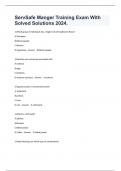
SERVSAFE MANAGER 7TH EDITION
-
5 2025
$ 81.95 Más información

Conoce al vendedor

Seller avatar
Los indicadores de reputación están sujetos a la cantidad de artículos vendidos por una tarifa y las reseñas que ha recibido por esos documentos. Hay tres niveles: Bronce, Plata y Oro. Cuanto mayor reputación, más podrás confiar en la calidad del trabajo del vendedor.
Andreas4114 Teachme2-tutor
Ver perfil
Seguir Necesitas iniciar sesión para seguir a otros usuarios o asignaturas
Vendido
30
Miembro desde
1 año
Número de seguidores
1
Documentos
802
Última venta
1 día hace

3.8

4 reseñas

5
2
4
1
3
0
2
0
1
1

Recientemente visto por ti

Por qué los estudiantes eligen Stuvia

Creado por compañeros estudiantes, verificado por reseñas

Calidad en la que puedes confiar: escrito por estudiantes que aprobaron y evaluado por otros que han usado estos resúmenes.

¿No estás satisfecho? Elige otro documento

¡No te preocupes! Puedes elegir directamente otro documento que se ajuste mejor a lo que buscas.

Paga como quieras, empieza a estudiar al instante

Sin suscripción, sin compromisos. Paga como estés acostumbrado con tarjeta de crédito y descarga tu documento PDF inmediatamente.

Student with book image

“Comprado, descargado y aprobado. Así de fácil puede ser.”

Alisha Student

Preguntas frecuentes