Human Anatomy & Physiology, 8e (Marieb/Hoehn)
Chapter 1 The Human Body: An Orientation
Matching Questions
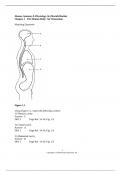
Figure 1.1
Using Figure 1.1, match the following cavities:
1) Thoracic cavity.
Answer: C
Diff: 1 Page Ref: 14-16; Fig. 1.9
2) Cranial cavity.
Answer: A
Diff: 1 Page Ref: 14-16; Fig. 1.9
3) Abdominal cavity.
Answer: D
Diff: 1 Page Ref: 14-16; Fig. 1.9
1
Copyright © 2010 Pearson Education, Inc.
,4) Vertebral cavity.
Answer: B
Diff: 1 Page Ref: 14-16; Fig. 1.9
Figure 1.2
Using Figure 1.2, match the following regions:
5) Umbilical region.
Answer: C
Diff: 1 Page Ref: 20; Fig. 1.12
6) Right hypochondriac.
Answer: B
Diff: 1 Page Ref: 20; Fig. 1.12
7) Hypogastric (pubic) region.
Answer: D
Diff: 1 Page Ref: 20; Fig. 1.12
8) Epigastric region.
Answer: A
Diff: 1 Page Ref: 20; Fig. 1.12
2
Copyright © 2010 Pearson Education, Inc.
, 9) Right iliac (inguinal) region.
Answer: E
Diff: 1 Page Ref: 20; Fig. 1.12
Match the following systems to their functions:
A) Skeletal
B) Nervous
C) Integumentary
D) Muscular
10) Directly causes mechanical motion.
Diff: 1 Page Ref: 6; Fig. 1.3c
11) Responds to environmental changes by transmitting electrical impulses.
Diff: 1 Page Ref: 6; Fig. 1.3d
12) Provides support and levers for muscles to work on.
Diff: 1 Page Ref: 6; Fig. 1.3b
13) Protects underlying organs from mechanical damage and synthesizes vitamin D.
Diff: 2 Page Ref: 6; Fig. 1.3a
Answers: 10) D 11) B 12) A 13) C
Match the following systems to their functions:
A) Endocrine
B) Cardiovascular
C) Lymphatic
D) Immune
14) Controls the body with chemical molecules called hormones.
Diff: 2 Page Ref: 6; Fig. 1.3e
15) Delivers oxygen and nutrients to the tissues.
Diff: 1 Page Ref: 6; Fig. 1.3f
16) Produces antibodies that neutralize foreign substances.
Diff: 1 Page Ref: 7; Fig. 1.3g
17) Removes and filters excess fluid from tissues.
Diff: 1 Page Ref: 7; Fig. 1.3g
Answers: 14) A 15) B 16) D 17) C
3
Copyright © 2010 Pearson Education, Inc.
Chapter 1 The Human Body: An Orientation
Matching Questions
Figure 1.1
Using Figure 1.1, match the following cavities:
1) Thoracic cavity.
Answer: C
Diff: 1 Page Ref: 14-16; Fig. 1.9
2) Cranial cavity.
Answer: A
Diff: 1 Page Ref: 14-16; Fig. 1.9
3) Abdominal cavity.
Answer: D
Diff: 1 Page Ref: 14-16; Fig. 1.9
1
Copyright © 2010 Pearson Education, Inc.
,4) Vertebral cavity.
Answer: B
Diff: 1 Page Ref: 14-16; Fig. 1.9
Figure 1.2
Using Figure 1.2, match the following regions:
5) Umbilical region.
Answer: C
Diff: 1 Page Ref: 20; Fig. 1.12
6) Right hypochondriac.
Answer: B
Diff: 1 Page Ref: 20; Fig. 1.12
7) Hypogastric (pubic) region.
Answer: D
Diff: 1 Page Ref: 20; Fig. 1.12
8) Epigastric region.
Answer: A
Diff: 1 Page Ref: 20; Fig. 1.12
2
Copyright © 2010 Pearson Education, Inc.
, 9) Right iliac (inguinal) region.
Answer: E
Diff: 1 Page Ref: 20; Fig. 1.12
Match the following systems to their functions:
A) Skeletal
B) Nervous
C) Integumentary
D) Muscular
10) Directly causes mechanical motion.
Diff: 1 Page Ref: 6; Fig. 1.3c
11) Responds to environmental changes by transmitting electrical impulses.
Diff: 1 Page Ref: 6; Fig. 1.3d
12) Provides support and levers for muscles to work on.
Diff: 1 Page Ref: 6; Fig. 1.3b
13) Protects underlying organs from mechanical damage and synthesizes vitamin D.
Diff: 2 Page Ref: 6; Fig. 1.3a
Answers: 10) D 11) B 12) A 13) C
Match the following systems to their functions:
A) Endocrine
B) Cardiovascular
C) Lymphatic
D) Immune
14) Controls the body with chemical molecules called hormones.
Diff: 2 Page Ref: 6; Fig. 1.3e
15) Delivers oxygen and nutrients to the tissues.
Diff: 1 Page Ref: 6; Fig. 1.3f
16) Produces antibodies that neutralize foreign substances.
Diff: 1 Page Ref: 7; Fig. 1.3g
17) Removes and filters excess fluid from tissues.
Diff: 1 Page Ref: 7; Fig. 1.3g
Answers: 14) A 15) B 16) D 17) C
3
Copyright © 2010 Pearson Education, Inc.