4PAHPDFF Psychology and the Individual Week 8
BSc Psychology Year 1 Learning About the World Around You
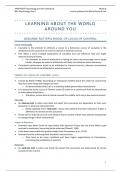
LEARNING ABOUT THE WORLD
AROUND YOU
DESCRIBE ROTTER’S MODEL OF LOCUS OF CONTROL
Locus of Causality
• Causality is the attempt to attribute a cause to a behaviour—locus of causality is the
attribution to the causes of an event to internal or external sources
• This offers a more in-depth explanation of causality and can influence how one might
respond to future events
o For example, an internal attribution to failing an exam may encourage one to study
harder, whereas an external attribution will likely not influence future behaviour
• Consistent performance tends to be attributed to internal sources, whereas inconsistent
performance tends to be attributed to external sources
MODEL OF LOCUS OF CONTROL (LOC)
• Coined by Rotter (1966), describing an individual’s beliefs about the extent of control that
they have over things that happen to them
o He demonstrated that LoC is a relatively stable personality characteristic
• It is measured by the Locus of Control scale (IE scale) on a continuum from an internalised
to externalised orientation
o Therefore, scores tend to cluster around the middle, with only a few extreme scores
Internals
• An internal LoC is when one holds the belief that outcomes are dependent on their own
behaviour or personal characteristics
o Rotter labelled them ‘internals’—those who believe that their behaviour makes a
difference to reinforcement outcomes
• Those with an internal LoC are more likely to feel in control of their lives and feel empowered
to change things in their environment
Impact on Behaviour
• Internals have been found to cope better with physical illness and are more likely to get
involved in treatment, becoming better informed (Powell, 1992)
• It has been associated with greater weight loss (Anastasiou et al., 2015)
• Internals tend to achieve greater academic success than
o They tend to be more confident and have higher expectations of themselves,
increasing the probability of success
Externals
• An external LoC is when one holds the belief that outcomes are determined by forces
outside of their control
1
, 4PAHPDFF Psychology and the Individual Week 8
BSc Psychology Year 1 Learning About the World Around You
o Rotter labelled them ‘externals’: those who believe that reinforcement depends on
external forces
• These people are more likely to feel powerless and helpless to change things and to be
dependent on others
Impact on Behaviour
• Those with an external LoC are more likely to feel powerless and helpless to change things
and to be dependent on others
• There are more externals among those with mental health problems (Lefcourt, 1992)
• External scores positively correlate with levels of depression (Benassi et al., 1988)
Influences on LoC
• Internality tends to increase with age and be more stable by middle age
o Warm and supportive parents who encourage independence in their children have
been found to foster the development of an internal LoC in their children (De Man et
al., 1962)
• Social learning theory suggests that outcome expectations are strengthened through
reinforcement
o Personal experiences and reinforcement history are related to the extent to which
one attributes outcomes to their own actions
• Attitudes, beliefs, and expectations associated with an individual’s LoC develop, are
reinforced, and strengthened through social interactions, environmental influences, and
individual differences
BEHAVIOUR POTENTIAL
• The behaviour potential determines the likelihood of a specific behaviour occurring in a
particular situation (Rotter, 1966)
o To predict behaviour, we need to know what the options are and what the individual
sees as being the possible outcomes for each option
𝐵𝑒ℎ𝑎𝑣𝑖𝑜𝑢𝑟 𝑝𝑜𝑡𝑒𝑛𝑡𝑖𝑎𝑙 = 𝑅𝑒𝑖𝑛𝑓𝑜𝑟𝑐𝑒𝑚𝑒𝑛𝑡 𝑣𝑎𝑙𝑢𝑒 𝑥 𝐸𝑥𝑝𝑒𝑐𝑡𝑎𝑛𝑐𝑦
• Expectancy is our subjective estimate of the likely outcome of a course of behaviour
o This is usually based on our experience of the same or similar situations
• Reinforcement value refers to our preferences amongst the possible reinforcements
available as a result of the behaviours
• The behaviour that is most likely to occur is the behaviour with the highest rating
• In novel situations we rely on generalised expectancies (Rotter, 1966), determined by
whether we believe that reinforcement is controlled by outside forces or our own behaviour
EXPLANATORY STYLES
• Seligman’s (1988) theory of explanatory styles, explains how people interpret events—
especially negative ones—and how the interpretations impact mental health and resilience
1. Personal (Internal vs. External) – How much responsibility a person takes for an event.
o Internal: “This is my fault.” (blaming oneself)
o External: “This just happened, it’s not my fault.” (attributing it to circumstances)
2
BSc Psychology Year 1 Learning About the World Around You
LEARNING ABOUT THE WORLD
AROUND YOU
DESCRIBE ROTTER’S MODEL OF LOCUS OF CONTROL
Locus of Causality
• Causality is the attempt to attribute a cause to a behaviour—locus of causality is the
attribution to the causes of an event to internal or external sources
• This offers a more in-depth explanation of causality and can influence how one might
respond to future events
o For example, an internal attribution to failing an exam may encourage one to study
harder, whereas an external attribution will likely not influence future behaviour
• Consistent performance tends to be attributed to internal sources, whereas inconsistent
performance tends to be attributed to external sources
MODEL OF LOCUS OF CONTROL (LOC)
• Coined by Rotter (1966), describing an individual’s beliefs about the extent of control that
they have over things that happen to them
o He demonstrated that LoC is a relatively stable personality characteristic
• It is measured by the Locus of Control scale (IE scale) on a continuum from an internalised
to externalised orientation
o Therefore, scores tend to cluster around the middle, with only a few extreme scores
Internals
• An internal LoC is when one holds the belief that outcomes are dependent on their own
behaviour or personal characteristics
o Rotter labelled them ‘internals’—those who believe that their behaviour makes a
difference to reinforcement outcomes
• Those with an internal LoC are more likely to feel in control of their lives and feel empowered
to change things in their environment
Impact on Behaviour
• Internals have been found to cope better with physical illness and are more likely to get
involved in treatment, becoming better informed (Powell, 1992)
• It has been associated with greater weight loss (Anastasiou et al., 2015)
• Internals tend to achieve greater academic success than
o They tend to be more confident and have higher expectations of themselves,
increasing the probability of success
Externals
• An external LoC is when one holds the belief that outcomes are determined by forces
outside of their control
1
, 4PAHPDFF Psychology and the Individual Week 8
BSc Psychology Year 1 Learning About the World Around You
o Rotter labelled them ‘externals’: those who believe that reinforcement depends on
external forces
• These people are more likely to feel powerless and helpless to change things and to be
dependent on others
Impact on Behaviour
• Those with an external LoC are more likely to feel powerless and helpless to change things
and to be dependent on others
• There are more externals among those with mental health problems (Lefcourt, 1992)
• External scores positively correlate with levels of depression (Benassi et al., 1988)
Influences on LoC
• Internality tends to increase with age and be more stable by middle age
o Warm and supportive parents who encourage independence in their children have
been found to foster the development of an internal LoC in their children (De Man et
al., 1962)
• Social learning theory suggests that outcome expectations are strengthened through
reinforcement
o Personal experiences and reinforcement history are related to the extent to which
one attributes outcomes to their own actions
• Attitudes, beliefs, and expectations associated with an individual’s LoC develop, are
reinforced, and strengthened through social interactions, environmental influences, and
individual differences
BEHAVIOUR POTENTIAL
• The behaviour potential determines the likelihood of a specific behaviour occurring in a
particular situation (Rotter, 1966)
o To predict behaviour, we need to know what the options are and what the individual
sees as being the possible outcomes for each option
𝐵𝑒ℎ𝑎𝑣𝑖𝑜𝑢𝑟 𝑝𝑜𝑡𝑒𝑛𝑡𝑖𝑎𝑙 = 𝑅𝑒𝑖𝑛𝑓𝑜𝑟𝑐𝑒𝑚𝑒𝑛𝑡 𝑣𝑎𝑙𝑢𝑒 𝑥 𝐸𝑥𝑝𝑒𝑐𝑡𝑎𝑛𝑐𝑦
• Expectancy is our subjective estimate of the likely outcome of a course of behaviour
o This is usually based on our experience of the same or similar situations
• Reinforcement value refers to our preferences amongst the possible reinforcements
available as a result of the behaviours
• The behaviour that is most likely to occur is the behaviour with the highest rating
• In novel situations we rely on generalised expectancies (Rotter, 1966), determined by
whether we believe that reinforcement is controlled by outside forces or our own behaviour
EXPLANATORY STYLES
• Seligman’s (1988) theory of explanatory styles, explains how people interpret events—
especially negative ones—and how the interpretations impact mental health and resilience
1. Personal (Internal vs. External) – How much responsibility a person takes for an event.
o Internal: “This is my fault.” (blaming oneself)
o External: “This just happened, it’s not my fault.” (attributing it to circumstances)
2