3/22/25, 5:31 PM Study Guide for NU664C Midterm Exam | COMPLETE QUESTIONS AND ANSWERS | 2025 LATEST UPDATED | ALREADY GRA…
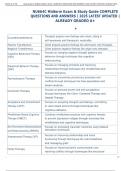
NU664C Midterm Exam & Study Guide COMPLETE
QUESTIONS AND ANSWERS | 2025 LATEST UPDATED |
ALREADY GRADED A+
Therapist projects own feelings onto client, aiding in
Countertransference
self-awareness and therapeutic neutrality.
Positive Transference Client projects positive feelings like admiration onto therapist.
Negative Transference Client projects negative feelings like anger onto therapist.
Focuses on changing negative thought patterns and
Cognitive Behavioral Therapy
(CBT) behaviors through techniques like cognitive
restructuring.
Focuses on managing emotions and improving
Dialectical Behavior Therapy
(DBT) relationships through techniques like mindfulness and
distress tolerance.
Focuses on uncovering unconscious processes and
Psychodynamic Therapy
conflicts through techniques like free association and
dream analysis.
Focuses on personal growth and self-actualization
Humanistic Therapy
through techniques like Client- Centered Therapy and
Gestalt Therapy.
Acceptance and Commitment Focuses on accepting thoughts and feelings, committing
Therapy (ACT) to value-based actions through techniques like
cognitive defusion.
Mindfulness-Based Cognitive Combines mindfulness practices with cognitive therapy
Therapy (MBCT) to prevent depression relapse through exercises like
mindfulness and cognitive techniques.
Eye Movement Desensitization Focuses on processing traumatic memories using bilateral
and Reprocessing (EMDR) stimulation techniques.
Focuses on improving relationships and social
Interpersonal Therapy (IPT)
functioning through techniques like role transitions
and managing grief.
Focuses on improving family communication and
Family Therapy
resolving conflicts through techniques like structural
-… 1/1
0
, 3/22/25, 5:31 PM Study Guide for NU664C Midterm Exam | COMPLETE QUESTIONS AND ANSWERS | 2025 LATEST UPDATED | ALREADY GRA…
therapy.
Utilizes group dynamics and support to address
Group Therapy
individual issues through techniques like support
groups.
Fully concentrating, understanding, responding, and
Active Listening
remembering what the client says.
Empathy Understanding and sharing the feelings of the client.
Genuineness Being authentic and honest in the therapeutic relationship.
Respect and Unconditional Accepting and valuing the client without judgment.
Positive Regard
Clarification Ensuring understanding of the client's statements.
Silence Using intentional pauses to allow the client to process thoughts
and emotions.
Open-Ended Questions Encourage clients to explore their thoughts and feelings in depth.
Closed-Ended Questions Used to gather specific information.
Rephrasing the client's statements to show
Paraphrasing
understanding and encourage further discussion.
Reflection Echoing the client's feelings to show empathy and understanding.
Providing a concise overview of the main points
Summarization
discussed to ensure clarity and focus.
Validation Acknowledging and affirming the client's feelings and
experiences.
Helping the client concentrate on specific issues that are
Focusing
most relevant to their concerns.
-… 2/1
0