

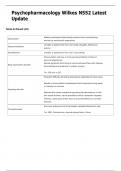
Psychopharmacology Wilkes N552 Latest
Update
Terms in this set (42)
defense mechanism that protects a person from overwhelming
Dissociation
anxiety by emotionally separating
unreality or detachment from one's body, thoughts, feeling and
Depersonalization
actions
Derealization: unreality or detachment from one's surroundings
Preoccupation with one or more perceived defects or flaws in
physical appearance
Spends significant time trying to correct perceived flaw with makeup,
Body dysmorphic disorder
dermatological procedures or plastic surgery
Txt: SSRI and or CBT
Persistent difficulty discarding possessions regardless of actual value
Results in accumulation of possessions that compromise living space
or inability to function
Hoarding disorder
Patients who remain resistant to psychosocial interventions, or who
lack access to them, can be provided a trial of a serotonin-reuptake
inhibitor, particularly if they have a comorbid affective or anxiety
disorder;
Recurrent pulling out one's hair despite repeated attempts to stop.
Trichotillomania
Txt: SSRI, Clomipramine; atypical antipsychotics, lithium
, Recurrent skin picking that results in lesions despite attempts to stop.
Cognitive-behavioral therapies may be beneficial for patients
Excoriation Disorder
accepting psychiatric referral
Txt: SSRIS, antipsychotics, anxiolytics
Re-experiencing of an extremely traumatic event accompanied by
Posttraumatic Stress Disorder
symptoms of increased arousal and avoidance of stimuli associate
(PTSD)
with the trauma.
1st line: SSRIS (Zoloft, Celexa) or SNRIS (Venlafaxine)
FDA approved meds: Sertraline (Zoloft) and Paroxetine (Paxil)
PTSD treatment
Alpha-1 agonist (Prazosin)= targets flashbacks; nightmares and
hypervigilance
Psychotherapy (CBC- exposure therapy etc.)
is a potentially debilitating disorder that can occurs after a traumatic
event.
• PTSD
Commonly described in war veterans •
Can also present in those experiencing non- war events
• Clinical syndrome is characterized by 4 clusters of symptoms:
Re-experiencing the trauma (with intrusive thoughts, nightmares, or
flashbacks) •
PTSD Emotional numbing •
Avoidance behaviors •
Persistent hyperarousal and mood symptoms (depression, irritability,
anger)
When an individual experiences a traumatic event and displays
anxiety symptoms that lasts for only a short duration, the condition is
opposed to PTSD.
Difference between Acute Stress
Disorder and PTSD: For the diagnosed as ASD as condition to be diagnosed as ASD,
symptoms must occur within one month of trauma and last for not
more than one month. The symptoms of ASD, however, are similar to
those observed in PTSD.
Update
Terms in this set (42)
defense mechanism that protects a person from overwhelming
Dissociation
anxiety by emotionally separating
unreality or detachment from one's body, thoughts, feeling and
Depersonalization
actions
Derealization: unreality or detachment from one's surroundings
Preoccupation with one or more perceived defects or flaws in
physical appearance
Spends significant time trying to correct perceived flaw with makeup,
Body dysmorphic disorder
dermatological procedures or plastic surgery
Txt: SSRI and or CBT
Persistent difficulty discarding possessions regardless of actual value
Results in accumulation of possessions that compromise living space
or inability to function
Hoarding disorder
Patients who remain resistant to psychosocial interventions, or who
lack access to them, can be provided a trial of a serotonin-reuptake
inhibitor, particularly if they have a comorbid affective or anxiety
disorder;
Recurrent pulling out one's hair despite repeated attempts to stop.
Trichotillomania
Txt: SSRI, Clomipramine; atypical antipsychotics, lithium
, Recurrent skin picking that results in lesions despite attempts to stop.
Cognitive-behavioral therapies may be beneficial for patients
Excoriation Disorder
accepting psychiatric referral
Txt: SSRIS, antipsychotics, anxiolytics
Re-experiencing of an extremely traumatic event accompanied by
Posttraumatic Stress Disorder
symptoms of increased arousal and avoidance of stimuli associate
(PTSD)
with the trauma.
1st line: SSRIS (Zoloft, Celexa) or SNRIS (Venlafaxine)
FDA approved meds: Sertraline (Zoloft) and Paroxetine (Paxil)
PTSD treatment
Alpha-1 agonist (Prazosin)= targets flashbacks; nightmares and
hypervigilance
Psychotherapy (CBC- exposure therapy etc.)
is a potentially debilitating disorder that can occurs after a traumatic
event.
• PTSD
Commonly described in war veterans •
Can also present in those experiencing non- war events
• Clinical syndrome is characterized by 4 clusters of symptoms:
Re-experiencing the trauma (with intrusive thoughts, nightmares, or
flashbacks) •
PTSD Emotional numbing •
Avoidance behaviors •
Persistent hyperarousal and mood symptoms (depression, irritability,
anger)
When an individual experiences a traumatic event and displays
anxiety symptoms that lasts for only a short duration, the condition is
opposed to PTSD.
Difference between Acute Stress
Disorder and PTSD: For the diagnosed as ASD as condition to be diagnosed as ASD,
symptoms must occur within one month of trauma and last for not
more than one month. The symptoms of ASD, however, are similar to
those observed in PTSD.

