
Land Law
Land law is the study of rights over the land. The crown owns all land in England and Wales.
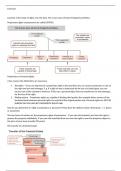
Proprietary rights of possession are called ESTATES.
Proprietary vs Personal rights:
2 key reasons the distinctions are necessary.
1. Remedies – if you are deprived of a proprietary right in the land then you can recover possession or use of
the right and not seek damages. E.g. if a right of way is obstructed by the use of a locked gate, you can
recover use of the easement. However, if this was a personal right, then you would have to seek damages
for the loss of the right.
2. Binding nature – Proprietary rights are capable of binding third parties (for example future owners of the
burdened land) whereas personal rights can only bind the original parties only. Personal rights are NOT AN
BURDEN ON THE LAND BUT PROPRIETRY RIGHTS ARE.
How do you determine if a right is proprietary or personal? IF they have the ability to bind a third party – i.e. leases
or easements
The two forms of estates are the proprietary rights of possession – If you own the freehold, you have the right to
possess the property indefinitely. If you own the leasehold then you have the right to own the property subject to
the term of your lease (usually 999 years).
The transfer of a freehold estate:
,Stage 1 of a conveyance of freehold is pre-exchange & exchange of contracts. Technically the exchange of contracts
is voluntary and does not need to be done in order to transfer the land BUT in practice is very common. The reason
for this step is that after this point, no party can walk away without incurring legal liability. FORMALITIES – the
contract must be in writing, contain all the terms and be signed by both parties otherwise it is not valid. Variations to
the contract must comply to all formalities. THE SIGNING OF THE CONTARCT GIVES THE PURCHASER A BENEFICIAL
INTEREST IN THE LAND CALLED AN ESTATE CONTRACT.
Stage 2 of the process if the transfer of the land, which must be done by a deed (TR1). Th formalities of this stage are
that it must be intended as a deed, validly executed by the seller and delivered (which is done by dating the deed).
An individual executed the deed by signing it in the presence of a witness, who must also attest their signature.
There is no legal requirement for the buyer to execute a deed for the transfer to occur, but in practice it is common.
For example, if the buyer is entering into a covenant or using a declaration of trust. Completion is (in practice) when
the money has exchanged hands, and the keys are released. If the land is registered, however, it is NOT the point at
which the buyer is considered the legal owner of the land. If land is unregistered, then legal title passes on
completion of the deed. This then triggers a necessity to register the land for the first time (compulsory first
registration)
Unregistered land need only be registered unless there is a triggering event – transfer of land has been a triggering
event since 1998, although by sale it has been a triggering event since 1990. If the registration of land is not done
within 2 months (unregistered land) then the title reverts back to the seller. For registered land, the legal title passes
once the transfer is registered with HMLR. Once this is done the buyer is considered as the legal owner of the land.
,Transfer of a leasehold estate (Assignment of a lease):
A deed must be used to transfer a lease, the term of the lease does not matter here. If the lease is registered at
HMLR then the lease must be registered too. If the lease is unregistered (leases of 7 years or less do not need to be
registered to create them) then the deed does not need to be registered. Freehold estates are rarely created due to
their enduring nature, but leasehold estates are regularly created.
Formalities of creating a lease:
The formalities to create a lease depend on the term for which the lease will be granted. Deeds must be used and
registered at the land reg is the lease is over 7 years.
If the term is 7 years on the dot or less, a deed must be used to create the estate BUT need not be registered at the
land reg. These leases are an overriding interest.
, If the lease is 3 years or less, then no formalities are required providing that the tenant moves in straight away, the
rent payable is market rent, and no premium is payable for the lease (i.e. an upfront payment to secure the lease).
These leases (so long as they comply with the conditions just listed) are known as PAROL LEASES. These leases will
also be binding as an overriding interest. These conditions are the same for if you want to form a sub-lease
(sometimes called an underlease) so long as the term is under 3 years. REMEMBER – IT IS ALWAYS THE TERM OF THE
LEASE THAT DICTATES THE FORMALITIES REQUIRED.
Equitable leases – these can be created deliberately or by accident. A deliberate equitable lease would be where
parties enter into a contract for a lease. An accidental equitable lease would be where the parties intend to create a
legal lease, but this fails, e.g. by not creating it by deed or not registering it. The terms of the equitable lease will be
the same as the defective legal lease. Equitable leases can only be present where:
- The document complied with the formalities of an estate contract, i.e. signed in writing by both parties,
containing all the agreed terms; and
- The remedy of specific performance is available.
Where there is a conflict between the common law (a periodic lease) and equity (an equitable lease) equity will
prevail – this means where there is the option between the two, an equitable lease will be found. The normal
equitable maxims will apply – if the party seeking to have the right to occupy recognised as an equitable lease does
not come to court ‘with clean hands’ (maybe they have breach covenants of the lease) then the court will not
recognise it.
These should be protected by entry of a notice on the charges register on the official copies of the burdened land. If
this is not done, it may still be binding on a purchaser for value if the occupier is in actual occupation.
Interests in land:
An interest in land is a proprietary right to use / enjoy the land. It does not give you the right to own the land like an
estate does.
Interests capable of being legal:
- Mortgage – an interest over land, granted by the borrower, as security for a loan. Includes the right to
possess and sell if payments are not made.
- Easements – the right to use the land of someone else (right to drainage, right of way, right to store etc.) –
the term of the right must be for a certain period or forever for the right to be capable of being legal. ‘a right
to park until planning permission is granted’ is not a certain period. This will simply mean the easement is
not a legal easement, but it can still be equitable.
- Right of entry – a legal right to enter the land. Best example (and only one we need to know for SQE) is the
right of landlords for forfeiture which is their right to terminate a lease.
For the above to be considered as ‘legal’ then they must be executed as a deed by the grantor and delivered. They
will also need to be registered at HMLR against the title of the burdened land.
Interests that can only take effect in equity:
Land law is the study of rights over the land. The crown owns all land in England and Wales.
Proprietary rights of possession are called ESTATES.
Proprietary vs Personal rights:
2 key reasons the distinctions are necessary.
1. Remedies – if you are deprived of a proprietary right in the land then you can recover possession or use of
the right and not seek damages. E.g. if a right of way is obstructed by the use of a locked gate, you can
recover use of the easement. However, if this was a personal right, then you would have to seek damages
for the loss of the right.
2. Binding nature – Proprietary rights are capable of binding third parties (for example future owners of the
burdened land) whereas personal rights can only bind the original parties only. Personal rights are NOT AN
BURDEN ON THE LAND BUT PROPRIETRY RIGHTS ARE.
How do you determine if a right is proprietary or personal? IF they have the ability to bind a third party – i.e. leases
or easements
The two forms of estates are the proprietary rights of possession – If you own the freehold, you have the right to
possess the property indefinitely. If you own the leasehold then you have the right to own the property subject to
the term of your lease (usually 999 years).
The transfer of a freehold estate:
,Stage 1 of a conveyance of freehold is pre-exchange & exchange of contracts. Technically the exchange of contracts
is voluntary and does not need to be done in order to transfer the land BUT in practice is very common. The reason
for this step is that after this point, no party can walk away without incurring legal liability. FORMALITIES – the
contract must be in writing, contain all the terms and be signed by both parties otherwise it is not valid. Variations to
the contract must comply to all formalities. THE SIGNING OF THE CONTARCT GIVES THE PURCHASER A BENEFICIAL
INTEREST IN THE LAND CALLED AN ESTATE CONTRACT.
Stage 2 of the process if the transfer of the land, which must be done by a deed (TR1). Th formalities of this stage are
that it must be intended as a deed, validly executed by the seller and delivered (which is done by dating the deed).
An individual executed the deed by signing it in the presence of a witness, who must also attest their signature.
There is no legal requirement for the buyer to execute a deed for the transfer to occur, but in practice it is common.
For example, if the buyer is entering into a covenant or using a declaration of trust. Completion is (in practice) when
the money has exchanged hands, and the keys are released. If the land is registered, however, it is NOT the point at
which the buyer is considered the legal owner of the land. If land is unregistered, then legal title passes on
completion of the deed. This then triggers a necessity to register the land for the first time (compulsory first
registration)
Unregistered land need only be registered unless there is a triggering event – transfer of land has been a triggering
event since 1998, although by sale it has been a triggering event since 1990. If the registration of land is not done
within 2 months (unregistered land) then the title reverts back to the seller. For registered land, the legal title passes
once the transfer is registered with HMLR. Once this is done the buyer is considered as the legal owner of the land.
,Transfer of a leasehold estate (Assignment of a lease):
A deed must be used to transfer a lease, the term of the lease does not matter here. If the lease is registered at
HMLR then the lease must be registered too. If the lease is unregistered (leases of 7 years or less do not need to be
registered to create them) then the deed does not need to be registered. Freehold estates are rarely created due to
their enduring nature, but leasehold estates are regularly created.
Formalities of creating a lease:
The formalities to create a lease depend on the term for which the lease will be granted. Deeds must be used and
registered at the land reg is the lease is over 7 years.
If the term is 7 years on the dot or less, a deed must be used to create the estate BUT need not be registered at the
land reg. These leases are an overriding interest.
, If the lease is 3 years or less, then no formalities are required providing that the tenant moves in straight away, the
rent payable is market rent, and no premium is payable for the lease (i.e. an upfront payment to secure the lease).
These leases (so long as they comply with the conditions just listed) are known as PAROL LEASES. These leases will
also be binding as an overriding interest. These conditions are the same for if you want to form a sub-lease
(sometimes called an underlease) so long as the term is under 3 years. REMEMBER – IT IS ALWAYS THE TERM OF THE
LEASE THAT DICTATES THE FORMALITIES REQUIRED.
Equitable leases – these can be created deliberately or by accident. A deliberate equitable lease would be where
parties enter into a contract for a lease. An accidental equitable lease would be where the parties intend to create a
legal lease, but this fails, e.g. by not creating it by deed or not registering it. The terms of the equitable lease will be
the same as the defective legal lease. Equitable leases can only be present where:
- The document complied with the formalities of an estate contract, i.e. signed in writing by both parties,
containing all the agreed terms; and
- The remedy of specific performance is available.
Where there is a conflict between the common law (a periodic lease) and equity (an equitable lease) equity will
prevail – this means where there is the option between the two, an equitable lease will be found. The normal
equitable maxims will apply – if the party seeking to have the right to occupy recognised as an equitable lease does
not come to court ‘with clean hands’ (maybe they have breach covenants of the lease) then the court will not
recognise it.
These should be protected by entry of a notice on the charges register on the official copies of the burdened land. If
this is not done, it may still be binding on a purchaser for value if the occupier is in actual occupation.
Interests in land:
An interest in land is a proprietary right to use / enjoy the land. It does not give you the right to own the land like an
estate does.
Interests capable of being legal:
- Mortgage – an interest over land, granted by the borrower, as security for a loan. Includes the right to
possess and sell if payments are not made.
- Easements – the right to use the land of someone else (right to drainage, right of way, right to store etc.) –
the term of the right must be for a certain period or forever for the right to be capable of being legal. ‘a right
to park until planning permission is granted’ is not a certain period. This will simply mean the easement is
not a legal easement, but it can still be equitable.
- Right of entry – a legal right to enter the land. Best example (and only one we need to know for SQE) is the
right of landlords for forfeiture which is their right to terminate a lease.
For the above to be considered as ‘legal’ then they must be executed as a deed by the grantor and delivered. They
will also need to be registered at HMLR against the title of the burdened land.
Interests that can only take effect in equity:


