

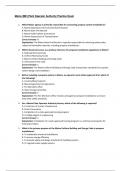
Maine (ME) Plant Operator Authority Practice Exam
1. Which Maine agency is primarily responsible for overseeing propane system installations?
A. Maine Department of Environmental Protection
B. Maine State Fire Marshal
C. Maine Public Utilities Commission
D. Maine Department of Transportation
Correct Answer: B
Explanation: The Maine State Fire Marshal is typically responsible for enforcing safety codes
related to flammable materials, including propane installations.
2. Which document serves as a primary reference for propane installation regulations in Maine?
A. National Electrical Code
B. Uniform Mechanical Code
C. Maine Uniform Building and Energy Code
D. International Fire Code
Correct Answer: C
Explanation: The Maine Uniform Building and Energy Code incorporates standards for propane
system design and installation.
3. Before installing a propane system in Maine, an operator must obtain approval from which of
the following?
A. Local building inspector
B. Maine Department of Agriculture
C. Fire Marshal’s office
D. State Energy Committee
Correct Answer: C
Explanation: The Fire Marshal’s office reviews and approves propane installations to ensure
they meet safety standards.
4. For a Maine Plant Operator Authority license, which of the following is required?
A. A minimum of 2 years of experience
B. Proof of insurance
C. Completion of a state-approved training program
D. A college degree in engineering
Correct Answer: C
Explanation: Completion of a state-approved training program is a common prerequisite for
licensing in Maine.
5. What is the primary purpose of the Maine Uniform Building and Energy Code in propane
installations?
A. To standardize electrical installations
B. To ensure energy efficiency
C. To provide safety and design standards for building systems
D. To regulate water supply systems
, Correct Answer: C
Explanation: The code establishes safety and design standards for installations including those
using propane.
6. Which of the following best describes “professional conduct” for licensed plant operators in
Maine?
A. Adhering to personal work schedules
B. Following ethical standards and regulatory guidelines
C. Maximizing profit margins
D. Promoting company products
Correct Answer: B
Explanation: Professional conduct requires adherence to ethical standards and compliance with
applicable regulations.
7. A licensed plant operator in Maine is expected to keep detailed records of all propane
installations. This is important because:
A. It helps in marketing services
B. It provides evidence of compliance during inspections
C. It is required for tax deductions
D. It enables easier equipment repair
Correct Answer: B
Explanation: Detailed records demonstrate compliance with safety codes and regulations during
inspections.
8. When planning a propane system installation, which code is most likely referenced for
equipment clearance requirements?
A. International Residential Code
B. Maine Uniform Building and Energy Code
C. National Plumbing Code
D. Occupational Safety and Health Administration (OSHA) standards
Correct Answer: B
Explanation: The Maine Uniform Building and Energy Code provides specific clearance and
safety requirements for installations.
9. Which of the following actions would be considered unprofessional conduct for a Maine Plant
Operator?
A. Keeping accurate maintenance records
B. Falsifying safety inspection reports
C. Attending regular training sessions
D. Reporting potential hazards immediately
Correct Answer: B
Explanation: Falsifying safety reports is unethical and jeopardizes public safety, violating
professional standards.
10. The licensing exam for a Maine Plant Operator Authority typically covers which of the
following topics?
A. Local tourism guidelines
, B. Propane system design and installation
C. Marine biology
D. Road construction
Correct Answer: B
Explanation: The exam covers topics related to the design, installation, and safety of propane
systems.
11. Which regulatory document in Maine outlines the licensing requirements for plant operators?
A. Maine Revised Statutes
B. Maine Plant Operator Licensing Manual
C. Maine Occupational Health Guidelines
D. Maine Municipal Codes
Correct Answer: A
Explanation: Licensing requirements are typically defined in the state’s revised statutes and
related regulations.
12. The term “propane utilization equipment” refers to:
A. Equipment that generates propane
B. Devices that consume propane as fuel
C. Propane storage tanks only
D. Natural gas pipelines
Correct Answer: B
Explanation: Propane utilization equipment includes any device designed to burn or use
propane for energy.
13. In Maine, which of the following is essential for ensuring that a propane system installation
meets state requirements?
A. Use of only imported propane
B. Inspection and certification by an approved inspector
C. Installation in a rural area
D. Use of custom-made parts
Correct Answer: B
Explanation: Inspections and certifications are required to verify that installations comply with
state codes and safety standards.
14. If a plant operator in Maine fails to adhere to state installation standards, what is a potential
consequence?
A. Increased profitability
B. Revocation of their license
C. Automatic renewal of their license
D. Free equipment upgrades
Correct Answer: B
Explanation: Non-compliance can result in disciplinary actions, including license revocation.
15. What role does continuing education play for Maine licensed plant operators?
A. It is optional and has no impact on licensure
B. It is mandatory to keep up-to-date with changes in codes and standards
, C. It is only required for new operators
D. It is provided only for operators working with natural gas
Correct Answer: B
Explanation: Continuing education ensures that operators remain current with evolving safety
and regulatory standards.
16. Which of the following best describes the relationship between local building codes and the
Maine Uniform Building and Energy Code?
A. Local codes always override the state code
B. The state code sets a minimum standard that local codes must meet or exceed
C. They are completely unrelated
D. The local code is optional if the state code is met
Correct Answer: B
Explanation: Local codes must meet or exceed the standards set forth by the state code.
17. In Maine, what is the significance of having a state-approved training program for plant
operators?
A. It guarantees higher wages
B. It ensures that operators are knowledgeable in state-specific regulations and practices
C. It shortens the licensure renewal process
D. It allows operators to bypass safety inspections
Correct Answer: B
Explanation: State-approved training programs provide the necessary education to ensure
safety and compliance with local regulations.
18. Which of the following is most likely to be included in a Maine plant operator’s certification
exam?
A. Advanced calculus
B. Propane system leak detection methods
C. Marine navigation principles
D. Residential landscaping
Correct Answer: B
Explanation: Knowledge of leak detection is critical for safely managing propane systems.
19. How often must a licensed plant operator in Maine renew their license?
A. Every 10 years
B. Annually or biennially, as specified by state regulations
C. Once for life
D. Every 6 months
Correct Answer: B
Explanation: Licensing renewal frequencies are typically defined by state regulations and may
be annual or biennial.
20. What is a key reason for strict licensing requirements for plant operators in Maine?
A. To increase state revenue
B. To ensure public safety through professional and knowledgeable installations
C. To limit the number of operators in the state
1. Which Maine agency is primarily responsible for overseeing propane system installations?
A. Maine Department of Environmental Protection
B. Maine State Fire Marshal
C. Maine Public Utilities Commission
D. Maine Department of Transportation
Correct Answer: B
Explanation: The Maine State Fire Marshal is typically responsible for enforcing safety codes
related to flammable materials, including propane installations.
2. Which document serves as a primary reference for propane installation regulations in Maine?
A. National Electrical Code
B. Uniform Mechanical Code
C. Maine Uniform Building and Energy Code
D. International Fire Code
Correct Answer: C
Explanation: The Maine Uniform Building and Energy Code incorporates standards for propane
system design and installation.
3. Before installing a propane system in Maine, an operator must obtain approval from which of
the following?
A. Local building inspector
B. Maine Department of Agriculture
C. Fire Marshal’s office
D. State Energy Committee
Correct Answer: C
Explanation: The Fire Marshal’s office reviews and approves propane installations to ensure
they meet safety standards.
4. For a Maine Plant Operator Authority license, which of the following is required?
A. A minimum of 2 years of experience
B. Proof of insurance
C. Completion of a state-approved training program
D. A college degree in engineering
Correct Answer: C
Explanation: Completion of a state-approved training program is a common prerequisite for
licensing in Maine.
5. What is the primary purpose of the Maine Uniform Building and Energy Code in propane
installations?
A. To standardize electrical installations
B. To ensure energy efficiency
C. To provide safety and design standards for building systems
D. To regulate water supply systems
, Correct Answer: C
Explanation: The code establishes safety and design standards for installations including those
using propane.
6. Which of the following best describes “professional conduct” for licensed plant operators in
Maine?
A. Adhering to personal work schedules
B. Following ethical standards and regulatory guidelines
C. Maximizing profit margins
D. Promoting company products
Correct Answer: B
Explanation: Professional conduct requires adherence to ethical standards and compliance with
applicable regulations.
7. A licensed plant operator in Maine is expected to keep detailed records of all propane
installations. This is important because:
A. It helps in marketing services
B. It provides evidence of compliance during inspections
C. It is required for tax deductions
D. It enables easier equipment repair
Correct Answer: B
Explanation: Detailed records demonstrate compliance with safety codes and regulations during
inspections.
8. When planning a propane system installation, which code is most likely referenced for
equipment clearance requirements?
A. International Residential Code
B. Maine Uniform Building and Energy Code
C. National Plumbing Code
D. Occupational Safety and Health Administration (OSHA) standards
Correct Answer: B
Explanation: The Maine Uniform Building and Energy Code provides specific clearance and
safety requirements for installations.
9. Which of the following actions would be considered unprofessional conduct for a Maine Plant
Operator?
A. Keeping accurate maintenance records
B. Falsifying safety inspection reports
C. Attending regular training sessions
D. Reporting potential hazards immediately
Correct Answer: B
Explanation: Falsifying safety reports is unethical and jeopardizes public safety, violating
professional standards.
10. The licensing exam for a Maine Plant Operator Authority typically covers which of the
following topics?
A. Local tourism guidelines
, B. Propane system design and installation
C. Marine biology
D. Road construction
Correct Answer: B
Explanation: The exam covers topics related to the design, installation, and safety of propane
systems.
11. Which regulatory document in Maine outlines the licensing requirements for plant operators?
A. Maine Revised Statutes
B. Maine Plant Operator Licensing Manual
C. Maine Occupational Health Guidelines
D. Maine Municipal Codes
Correct Answer: A
Explanation: Licensing requirements are typically defined in the state’s revised statutes and
related regulations.
12. The term “propane utilization equipment” refers to:
A. Equipment that generates propane
B. Devices that consume propane as fuel
C. Propane storage tanks only
D. Natural gas pipelines
Correct Answer: B
Explanation: Propane utilization equipment includes any device designed to burn or use
propane for energy.
13. In Maine, which of the following is essential for ensuring that a propane system installation
meets state requirements?
A. Use of only imported propane
B. Inspection and certification by an approved inspector
C. Installation in a rural area
D. Use of custom-made parts
Correct Answer: B
Explanation: Inspections and certifications are required to verify that installations comply with
state codes and safety standards.
14. If a plant operator in Maine fails to adhere to state installation standards, what is a potential
consequence?
A. Increased profitability
B. Revocation of their license
C. Automatic renewal of their license
D. Free equipment upgrades
Correct Answer: B
Explanation: Non-compliance can result in disciplinary actions, including license revocation.
15. What role does continuing education play for Maine licensed plant operators?
A. It is optional and has no impact on licensure
B. It is mandatory to keep up-to-date with changes in codes and standards
, C. It is only required for new operators
D. It is provided only for operators working with natural gas
Correct Answer: B
Explanation: Continuing education ensures that operators remain current with evolving safety
and regulatory standards.
16. Which of the following best describes the relationship between local building codes and the
Maine Uniform Building and Energy Code?
A. Local codes always override the state code
B. The state code sets a minimum standard that local codes must meet or exceed
C. They are completely unrelated
D. The local code is optional if the state code is met
Correct Answer: B
Explanation: Local codes must meet or exceed the standards set forth by the state code.
17. In Maine, what is the significance of having a state-approved training program for plant
operators?
A. It guarantees higher wages
B. It ensures that operators are knowledgeable in state-specific regulations and practices
C. It shortens the licensure renewal process
D. It allows operators to bypass safety inspections
Correct Answer: B
Explanation: State-approved training programs provide the necessary education to ensure
safety and compliance with local regulations.
18. Which of the following is most likely to be included in a Maine plant operator’s certification
exam?
A. Advanced calculus
B. Propane system leak detection methods
C. Marine navigation principles
D. Residential landscaping
Correct Answer: B
Explanation: Knowledge of leak detection is critical for safely managing propane systems.
19. How often must a licensed plant operator in Maine renew their license?
A. Every 10 years
B. Annually or biennially, as specified by state regulations
C. Once for life
D. Every 6 months
Correct Answer: B
Explanation: Licensing renewal frequencies are typically defined by state regulations and may
be annual or biennial.
20. What is a key reason for strict licensing requirements for plant operators in Maine?
A. To increase state revenue
B. To ensure public safety through professional and knowledgeable installations
C. To limit the number of operators in the state

