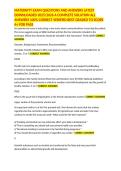
AQA PSYCHOLOGY A-LEVEL PAPER 1 MONITORED
ASSESSMENT GRADED A+ WITH 100+ QUESTIONS AND
VERIFIED ANSWERS UPDATED 2025
Hypothesis VERIFIED ANSWER A prediction about the results
Alternate hypothesis VERIFIED ANSWER Suggests a testable link
between variables
One tailed (directional) hypothesis VERIFIED ANSWER Predicts the
difference between the groups in your experiment and predicts which
group will do better
Two tailed (non directional) hypothesis VERIFIED ANSWER This
predicts a difference but does not say which group will do better
Independent Variable VERIFIED ANSWER variable that is manipulated
dependent variable VERIFIED ANSWER What is measured (the result
of the change)
Operationalised hypothesis VERIFIED ANSWER Defining precisely
how you intend to measure the DV and alter the conditions of the IV
,Extreneous Variables VERIFIED ANSWER All other aspects of the
experimental setting that may have an influence on the dependent
variable.
environmental / situational factors VERIFIED ANSWER this is
anything about the environment (external to participants) which might
affect their performance
Lack of standardisation within a procedure VERIFIED ANSWER A way
an extraneous variable can occur, if different groups experience different
instructions, are given different stimuli, or if any part of their experience
is different to that of other participants in other groups this can lead to
invalid results.
Participant variables VERIFIED ANSWER these are anything specific
to the individual which may affect the results
Demand characteristics VERIFIED ANSWER this is when participant
form an idea about the purpose of the study, if they think they know
what kind of response the researcher is expecting from them, they might
show a response to please the researcher (or do complete opposite and
ruin results)
Researcher bias VERIFIED ANSWER The researcher's expectations can
influence how they design their study and behave towards participants.
This may produce demand characteristics or influence how they analyse
their results
, Validity VERIFIED ANSWER refers to whether something tests or
measures what it set out to do
Internal validity VERIFIED ANSWER Refers to whether a study has
measured to what it has intended to measure
Face validity VERIFIED ANSWER if something looks right or makes
sense it would be that way
Concurrent validity VERIFIED ANSWER the degree to which the
measures gathered from one tool agree with the measures gathered from
other assessment techniques. (Do other relevant measures get same
results as yours?)
External validity VERIFIED ANSWER The extent to how we can
generalise the findings beyond research situation
Ecological validity VERIFIED ANSWER how far the results and
conclusions of the study can be applied to real life
Population validity VERIFIED ANSWER Concerns the research
population and whether we can generalise from them to other people
Temporal validity VERIFIED ANSWER concerns how relevant the time
period is in affecting the findings
ASSESSMENT GRADED A+ WITH 100+ QUESTIONS AND
VERIFIED ANSWERS UPDATED 2025
Hypothesis VERIFIED ANSWER A prediction about the results
Alternate hypothesis VERIFIED ANSWER Suggests a testable link
between variables
One tailed (directional) hypothesis VERIFIED ANSWER Predicts the
difference between the groups in your experiment and predicts which
group will do better
Two tailed (non directional) hypothesis VERIFIED ANSWER This
predicts a difference but does not say which group will do better
Independent Variable VERIFIED ANSWER variable that is manipulated
dependent variable VERIFIED ANSWER What is measured (the result
of the change)
Operationalised hypothesis VERIFIED ANSWER Defining precisely
how you intend to measure the DV and alter the conditions of the IV
,Extreneous Variables VERIFIED ANSWER All other aspects of the
experimental setting that may have an influence on the dependent
variable.
environmental / situational factors VERIFIED ANSWER this is
anything about the environment (external to participants) which might
affect their performance
Lack of standardisation within a procedure VERIFIED ANSWER A way
an extraneous variable can occur, if different groups experience different
instructions, are given different stimuli, or if any part of their experience
is different to that of other participants in other groups this can lead to
invalid results.
Participant variables VERIFIED ANSWER these are anything specific
to the individual which may affect the results
Demand characteristics VERIFIED ANSWER this is when participant
form an idea about the purpose of the study, if they think they know
what kind of response the researcher is expecting from them, they might
show a response to please the researcher (or do complete opposite and
ruin results)
Researcher bias VERIFIED ANSWER The researcher's expectations can
influence how they design their study and behave towards participants.
This may produce demand characteristics or influence how they analyse
their results
, Validity VERIFIED ANSWER refers to whether something tests or
measures what it set out to do
Internal validity VERIFIED ANSWER Refers to whether a study has
measured to what it has intended to measure
Face validity VERIFIED ANSWER if something looks right or makes
sense it would be that way
Concurrent validity VERIFIED ANSWER the degree to which the
measures gathered from one tool agree with the measures gathered from
other assessment techniques. (Do other relevant measures get same
results as yours?)
External validity VERIFIED ANSWER The extent to how we can
generalise the findings beyond research situation
Ecological validity VERIFIED ANSWER how far the results and
conclusions of the study can be applied to real life
Population validity VERIFIED ANSWER Concerns the research
population and whether we can generalise from them to other people
Temporal validity VERIFIED ANSWER concerns how relevant the time
period is in affecting the findings