1
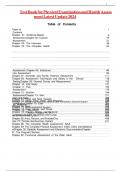
Test Bank for Physical Examination and Health Assess
n n n n n n n
ment Latest Update 2024
n n n
Table of Contents
Tablen of 1
Contents
Chaptern 01:n Evidence-Based 2
AssessmentnChaptern 02:n Cultural 15
Assessment 31
Chaptern 03:n Then Interview 49
Chaptern 04:n Then Completen Health 64
HistoryChaptern 05:n Mentaln Status 80
Assessmentn Chaptern 06:n Substance 86
Usen Assessment 92
Chaptern 07:n Domesticn andn Familyn Violencen Assessment 111
Chaptern 08:n Assessmentn Techniquesn andn Safetyn inn the Clinical 118
SettingChaptern 09:n Generaln Surveyn andn Measurement 133
Chaptern 10:n Vitaln Signs 141
Chaptern 11:n Pain 155
Assessment 176
Chaptern 12:n Nutrition 194
AssessmentChaptern 13:n Skin, 211
Hair,
Chapter nandn Nails
n 20:n Heartn andn Neckn Vessels
228
358
Chapternn 14:
Chapter Head,n Face,
21:nn Peripheral n Neck,n andn Regional
n Vascularn System n andn Lymphaticn Systemn
Chapter 246
382
LymphaticsChapter
n 22:n Abdomen
n 15: n Eyes 266
400
Chapternn 16:
Chapter Ears
23:nn Musculoskeletal n Systemn
284
414
Chapter
Chapternn17:24:n Nose, n Mouth,n andn Throat
Neurologic 303
436
Chaptern 18:n Breasts,
System n Axillae,n andn Regional
nChaptern25: nM
320
449
LymphaticsChapter
alenGenitourinarynSystem n 19: n Thoraxn andn Lungs 337
452
Chaptern26:nAnus,nRectum,nandnProstatenCha 458
ptern 27:n Femalen Genitourinaryn System 471
Chaptern 28:n Then Completen Healthn Assessment:n Adult
Chaptern 29:n Then Completen Physicaln Assessment:n Infant,n Child,n andnAdolesce
ntChaptern 30:n Bedsiden Assessmentn andn Electronicn DocumentationnChaptern
31:n Then Pregnantn Woman
Chaptern32:n Functionaln Assessmentn ofn then Oldern Adult
, 2
Chapter 01: Evidence-Based Assessment
MULTIPLEn CHOICE
1. Aftern completingn ann initialn assessmentn ofn an patient,n then nursen hasn chartedn thatn hisn respirationsn aren
eupneicn andhisn pulsen isn 58n beatsn pern minute.n Thesen typesn ofn datan wouldn be:
a. Objective.
b. Reflective.
c. Subjective.
d. Introspective.
ANS:n A
Objectiven datan aren whatn then healthn professionaln observesn byn inspecting,n percussing,n palpating,n andnauscul
tatingduringn then physicaln examination.n Subjectiven datan isn whatn then personn saysn aboutn himn ornherselfn duri
ngn historytaking.n Then termsn reflectiven andn introspectiven aren notn usedn ton describen data.
DIF:n Cognitiven Level:n Understandingn (Comprehension)
MSC:n Clientn Needs:n Safen andn Effectiven Caren Environment:n Managementn ofn Care
2. An patientn tellsn then nursen thatn hen isn veryn nervous,n isn nauseated,n andn feelsn hot.n Thesen typesn ofn datan
wouldn be:
a. Objective.
b. Reflective.
c. Subjective.
d. Introspective.
ANS:n C
Subjectiven datan aren whatn then personn saysn aboutn himn orn herselfn duringn historyn taking.n Objectiven datan aren
whatnthehealthnprofessionalnobservesnbyninspecting,npercussing,npalpating,nandnauscultatingnduringnthenphysic
aln examination.n Then termsn reflectiven andn introspectiven aren notn usedn ton describen data.
DIF:n Cognitiven Level:n Understandingn (Comprehension)
MSC:n Clientn Needs:n Safen andn Effectiven Caren Environment:n Managementn ofn Care
3. Then patientsn record,n laboratoryn studies,n objectiven data,n andn subjectiven datan combinen ton formn the:
a. Datan base.
b. Admittingn data.
, 3
c. Financialn statement.
d. Dischargen summary.
ANS:n A
Togethern withn then patientsn recordn andn laboratoryn studies,n then objectiven andn subjectiven datan formn thendata
n base.Then othern itemsn aren notn partn ofn then patientsn record,n laboratoryn studies,n orn data.
DIF:n Cognitiven Level:n Rememberingn (Knowledge)
MSC:n Clientn Needs:n Safen andn Effectiven Caren Environment:n Managementn ofn Care
4. Whenn listeningn ton an patientsn breathn sounds,n then nursen isn unsuren ofn an soundn thatn isn heard.n Then
nursesn nextactionn shouldn ben to:
a. Immediatelyn notifyn then patientsn physician.
b. Documentn then soundn exactlyn asn itn wasn heard.
c. Validaten then datan byn askingn an coworkern ton listenn ton then breathn sounds.
d. Assessn againn inn 20n minutesn ton noten whethern then soundn isn stilln present.
ANS:n C
Whennunsurenofnansoundnnheardnnwhilenlisteningnntonnanpatientsnnbreathnnsounds,nthennursennvalidatesnnthendatant
onensureaccuracy.nIfnthennursenhasnnlessnnexperiencenninnnannnarea,nnthennnhennornnshennasksnnannnexpertnntonlisten.
DIF:n Cognitiven Level:n Analyzingn (Analysis)
MSC:n Clientn Needs:n Safen andn Effectiven Caren Environment:n Managementn ofn Care
5. Thennursenisnconductingnanclassnfornnewngraduatennnurses.nnDuringnnthennteachingnnsession,nnthennnursenshoul
dn keepn inn mindn thatn novicen nurses,n withoutn an backgroundn ofn skillsn andn experiencen fromn whichn tondraw,
n aren moren likelyton maken theirn decisionsn using:
a. Intuition.
b. An setn ofn rules.
c. Articlesn inn journals.
d. Advicen fromn supervisors.
ANS:n B
Novicen nursesn operaten fromn an setn ofn defined,n structuredn rules.n Then expertn practitionern usesn intuitivenlin
ks.DIF:n Cognitiven Level:n Understandingn (Comprehension)
, 4
MSC:n Clientn Needs:n General
6. Expertn nursesn learnn ton attendn ton an patternn ofn assessmentn datan andn actn withoutn consciouslyn labelingni
t.n Theseresponsesn aren referredn ton as:
a. Intuition.
b. Then nursingn process.
c. Clinicaln knowledge.
d. Diagnosticn reasoning.
ANS:n A
Intuitionn isn characterizedn byn patternn recognitionexpertn nursesn learnn ton attendn ton an patternn ofn assessmentndat
an andactn withoutn consciouslyn labelingn it.n Then othern optionsn aren notn correct.
DIF:nCognitivenLevel:nUnderstandingn(Compreh
ension)MSC:n Clientn Needs:n General
7. Then nursen isn reviewingn informationn aboutn evidence-
basedn practicen (EBP).n Whichn statementn bestnreflectsEBP?
a. EBPn reliesn onn traditionn forn supportn ofn bestn practices.
b. EBPn isn simplyn then usen ofn bestn practicen techniquesn forn then treatmentn ofn patients.
c. EBPn emphasizesn then usen ofn bestn evidencen withn then cliniciansn experience.
d. Then patientsn ownn preferencesn aren notn importantn withn
EBP.ANS:n C
EBPn isn an systematicn approachn ton practicen thatn emphasizesn then usen ofn bestn evidencen inn combinationn withnt
hecliniciansn experience,n asn welln asnn patientnn preferencesnn andnn values,nn whennn makingnn decisionsnn aboutncare
n andn treatment.n EBPn isnn morenn thannn simplynn usingnn thenn bestnn practicenn techniquesnn tonn treatnn patients,n andn qu
estioningn traditionn isn importantn whenn non compellingn andn supportiven researchn evidencen exists.
DIF:n Cognitiven Level:n Applyingn (Application)
MSC:n Clientn Needs:n Safen andn Effectiven Caren Environment:n Managementn ofn Care
8. Then nursen isn conductingn an classn onn priorityn settingn forn an groupn ofn newn graduaten nurses.n Whichn isn
ann exampleofn an first-leveln priorityn problem?
a. Patientn withn postoperativen pain
b. Newlyn diagnosedn patientn withn diabetesn whon needsn diabeticn teaching
Test Bank for Physical Examination and Health Assess
n n n n n n n
ment Latest Update 2024
n n n
Table of Contents
Tablen of 1
Contents
Chaptern 01:n Evidence-Based 2
AssessmentnChaptern 02:n Cultural 15
Assessment 31
Chaptern 03:n Then Interview 49
Chaptern 04:n Then Completen Health 64
HistoryChaptern 05:n Mentaln Status 80
Assessmentn Chaptern 06:n Substance 86
Usen Assessment 92
Chaptern 07:n Domesticn andn Familyn Violencen Assessment 111
Chaptern 08:n Assessmentn Techniquesn andn Safetyn inn the Clinical 118
SettingChaptern 09:n Generaln Surveyn andn Measurement 133
Chaptern 10:n Vitaln Signs 141
Chaptern 11:n Pain 155
Assessment 176
Chaptern 12:n Nutrition 194
AssessmentChaptern 13:n Skin, 211
Hair,
Chapter nandn Nails
n 20:n Heartn andn Neckn Vessels
228
358
Chapternn 14:
Chapter Head,n Face,
21:nn Peripheral n Neck,n andn Regional
n Vascularn System n andn Lymphaticn Systemn
Chapter 246
382
LymphaticsChapter
n 22:n Abdomen
n 15: n Eyes 266
400
Chapternn 16:
Chapter Ears
23:nn Musculoskeletal n Systemn
284
414
Chapter
Chapternn17:24:n Nose, n Mouth,n andn Throat
Neurologic 303
436
Chaptern 18:n Breasts,
System n Axillae,n andn Regional
nChaptern25: nM
320
449
LymphaticsChapter
alenGenitourinarynSystem n 19: n Thoraxn andn Lungs 337
452
Chaptern26:nAnus,nRectum,nandnProstatenCha 458
ptern 27:n Femalen Genitourinaryn System 471
Chaptern 28:n Then Completen Healthn Assessment:n Adult
Chaptern 29:n Then Completen Physicaln Assessment:n Infant,n Child,n andnAdolesce
ntChaptern 30:n Bedsiden Assessmentn andn Electronicn DocumentationnChaptern
31:n Then Pregnantn Woman
Chaptern32:n Functionaln Assessmentn ofn then Oldern Adult
, 2
Chapter 01: Evidence-Based Assessment
MULTIPLEn CHOICE
1. Aftern completingn ann initialn assessmentn ofn an patient,n then nursen hasn chartedn thatn hisn respirationsn aren
eupneicn andhisn pulsen isn 58n beatsn pern minute.n Thesen typesn ofn datan wouldn be:
a. Objective.
b. Reflective.
c. Subjective.
d. Introspective.
ANS:n A
Objectiven datan aren whatn then healthn professionaln observesn byn inspecting,n percussing,n palpating,n andnauscul
tatingduringn then physicaln examination.n Subjectiven datan isn whatn then personn saysn aboutn himn ornherselfn duri
ngn historytaking.n Then termsn reflectiven andn introspectiven aren notn usedn ton describen data.
DIF:n Cognitiven Level:n Understandingn (Comprehension)
MSC:n Clientn Needs:n Safen andn Effectiven Caren Environment:n Managementn ofn Care
2. An patientn tellsn then nursen thatn hen isn veryn nervous,n isn nauseated,n andn feelsn hot.n Thesen typesn ofn datan
wouldn be:
a. Objective.
b. Reflective.
c. Subjective.
d. Introspective.
ANS:n C
Subjectiven datan aren whatn then personn saysn aboutn himn orn herselfn duringn historyn taking.n Objectiven datan aren
whatnthehealthnprofessionalnobservesnbyninspecting,npercussing,npalpating,nandnauscultatingnduringnthenphysic
aln examination.n Then termsn reflectiven andn introspectiven aren notn usedn ton describen data.
DIF:n Cognitiven Level:n Understandingn (Comprehension)
MSC:n Clientn Needs:n Safen andn Effectiven Caren Environment:n Managementn ofn Care
3. Then patientsn record,n laboratoryn studies,n objectiven data,n andn subjectiven datan combinen ton formn the:
a. Datan base.
b. Admittingn data.
, 3
c. Financialn statement.
d. Dischargen summary.
ANS:n A
Togethern withn then patientsn recordn andn laboratoryn studies,n then objectiven andn subjectiven datan formn thendata
n base.Then othern itemsn aren notn partn ofn then patientsn record,n laboratoryn studies,n orn data.
DIF:n Cognitiven Level:n Rememberingn (Knowledge)
MSC:n Clientn Needs:n Safen andn Effectiven Caren Environment:n Managementn ofn Care
4. Whenn listeningn ton an patientsn breathn sounds,n then nursen isn unsuren ofn an soundn thatn isn heard.n Then
nursesn nextactionn shouldn ben to:
a. Immediatelyn notifyn then patientsn physician.
b. Documentn then soundn exactlyn asn itn wasn heard.
c. Validaten then datan byn askingn an coworkern ton listenn ton then breathn sounds.
d. Assessn againn inn 20n minutesn ton noten whethern then soundn isn stilln present.
ANS:n C
Whennunsurenofnansoundnnheardnnwhilenlisteningnntonnanpatientsnnbreathnnsounds,nthennursennvalidatesnnthendatant
onensureaccuracy.nIfnthennursenhasnnlessnnexperiencenninnnannnarea,nnthennnhennornnshennasksnnannnexpertnntonlisten.
DIF:n Cognitiven Level:n Analyzingn (Analysis)
MSC:n Clientn Needs:n Safen andn Effectiven Caren Environment:n Managementn ofn Care
5. Thennursenisnconductingnanclassnfornnewngraduatennnurses.nnDuringnnthennteachingnnsession,nnthennnursenshoul
dn keepn inn mindn thatn novicen nurses,n withoutn an backgroundn ofn skillsn andn experiencen fromn whichn tondraw,
n aren moren likelyton maken theirn decisionsn using:
a. Intuition.
b. An setn ofn rules.
c. Articlesn inn journals.
d. Advicen fromn supervisors.
ANS:n B
Novicen nursesn operaten fromn an setn ofn defined,n structuredn rules.n Then expertn practitionern usesn intuitivenlin
ks.DIF:n Cognitiven Level:n Understandingn (Comprehension)
, 4
MSC:n Clientn Needs:n General
6. Expertn nursesn learnn ton attendn ton an patternn ofn assessmentn datan andn actn withoutn consciouslyn labelingni
t.n Theseresponsesn aren referredn ton as:
a. Intuition.
b. Then nursingn process.
c. Clinicaln knowledge.
d. Diagnosticn reasoning.
ANS:n A
Intuitionn isn characterizedn byn patternn recognitionexpertn nursesn learnn ton attendn ton an patternn ofn assessmentndat
an andactn withoutn consciouslyn labelingn it.n Then othern optionsn aren notn correct.
DIF:nCognitivenLevel:nUnderstandingn(Compreh
ension)MSC:n Clientn Needs:n General
7. Then nursen isn reviewingn informationn aboutn evidence-
basedn practicen (EBP).n Whichn statementn bestnreflectsEBP?
a. EBPn reliesn onn traditionn forn supportn ofn bestn practices.
b. EBPn isn simplyn then usen ofn bestn practicen techniquesn forn then treatmentn ofn patients.
c. EBPn emphasizesn then usen ofn bestn evidencen withn then cliniciansn experience.
d. Then patientsn ownn preferencesn aren notn importantn withn
EBP.ANS:n C
EBPn isn an systematicn approachn ton practicen thatn emphasizesn then usen ofn bestn evidencen inn combinationn withnt
hecliniciansn experience,n asn welln asnn patientnn preferencesnn andnn values,nn whennn makingnn decisionsnn aboutncare
n andn treatment.n EBPn isnn morenn thannn simplynn usingnn thenn bestnn practicenn techniquesnn tonn treatnn patients,n andn qu
estioningn traditionn isn importantn whenn non compellingn andn supportiven researchn evidencen exists.
DIF:n Cognitiven Level:n Applyingn (Application)
MSC:n Clientn Needs:n Safen andn Effectiven Caren Environment:n Managementn ofn Care
8. Then nursen isn conductingn an classn onn priorityn settingn forn an groupn ofn newn graduaten nurses.n Whichn isn
ann exampleofn an first-leveln priorityn problem?
a. Patientn withn postoperativen pain
b. Newlyn diagnosedn patientn withn diabetesn whon needsn diabeticn teaching