
URBAN CLIMATES
Cities are generally warmer than rural areas because:
1. City structures are built of artificial substances which generally absorb and
reflect more insolation than natural vegetation
2. Human activities in cities generate additional energy
a. Use of motor cars
b. Heat is given off in air conditioning units
3. Increased population levels and the occurrence of temperature inversions
increases the temperature of cities
a. Pollutants absorb more insolation
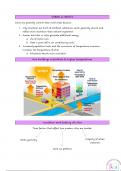
How buildings contribute to higher temperatures
Insolation and heating of cities
Three factors that affect how modern cities are heated:
I
Urban geometry Property of urban
materials
Land use patterns
, 1. Urban geometry
Urban geometry reflects the dimensions and spacing of buildings within a city
where it influences on the energy balance.
Energy absorption along with the ability to emit long wave radiation back to
space couples with influencing wind flow as urban areas
2. Land use patterns
Open vegetation is replaced by buildings and other structures leading to less
vegetation cover.
Natural features can retain thermal energy by evapotranspiration which can
reduce the amount of thermal energy reaching to surface and emitted into the
atmosphere
3. Property of urban materials
Property of urban materials effect on the determination of albedo. Albedo is the
ratio between incident solar energy and reflected solar energy it is good to have
a high albedo. albedo is depending on the arrangements of surfaces material
pavements and colour.
Albedo effect
- Is correlated with the colour of materials
Urban
Light materials – high albedo:
- Less energy absorption capacity
x
- Contribution to UHI is less
Dark materials – low albedo
- High absorption capacity during the day
- High reflectance at night
Thermal emittance: the ability of surfaces to emit infrared radiation identified as
thermal emittance
- High emittance value: release more head and remain cool
- Construction materials except metal have a high thermal emittance value
Cities are generally warmer than rural areas because:
1. City structures are built of artificial substances which generally absorb and
reflect more insolation than natural vegetation
2. Human activities in cities generate additional energy
a. Use of motor cars
b. Heat is given off in air conditioning units
3. Increased population levels and the occurrence of temperature inversions
increases the temperature of cities
a. Pollutants absorb more insolation
How buildings contribute to higher temperatures
Insolation and heating of cities
Three factors that affect how modern cities are heated:
I
Urban geometry Property of urban
materials
Land use patterns
, 1. Urban geometry
Urban geometry reflects the dimensions and spacing of buildings within a city
where it influences on the energy balance.
Energy absorption along with the ability to emit long wave radiation back to
space couples with influencing wind flow as urban areas
2. Land use patterns
Open vegetation is replaced by buildings and other structures leading to less
vegetation cover.
Natural features can retain thermal energy by evapotranspiration which can
reduce the amount of thermal energy reaching to surface and emitted into the
atmosphere
3. Property of urban materials
Property of urban materials effect on the determination of albedo. Albedo is the
ratio between incident solar energy and reflected solar energy it is good to have
a high albedo. albedo is depending on the arrangements of surfaces material
pavements and colour.
Albedo effect
- Is correlated with the colour of materials
Urban
Light materials – high albedo:
- Less energy absorption capacity
x
- Contribution to UHI is less
Dark materials – low albedo
- High absorption capacity during the day
- High reflectance at night
Thermal emittance: the ability of surfaces to emit infrared radiation identified as
thermal emittance
- High emittance value: release more head and remain cool
- Construction materials except metal have a high thermal emittance value


