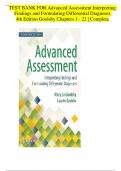
TEST BANK FOR Advanced Assessment Interpreting
Findings and Formulating Differential Diagnoses
4th Edition Goolsby Chapters 1 - 22 | Complete
, TABLE OF CONTENTS
Chapter 1. Assessment and Clinical Decision Making: An Overview
Chapter 2. Genomic Assessment: Interpreting Findings and Formulating Differential Diagnoses
Chapter 3. Skin
Chapter 4. Head, Face, and Neck
Chapter 5. The Eye
Chapter 6. Ear, Nose, Mouth, and Throat
Chapter 7. Cardiac and Peripheral Vascular Systems
Chapter 8. Respiratory System
Chapter 9. Breasts
Chapter 10. Abdomen
Chapter 11. Genitourinary System
Chapter 12. Male Reproductive System
Chapter 13. Female Reproductive System
Chapter 14. Musculoskeletal System
Chapter 15. Neurological System
Chapter 16. Nonspecific Complaints
Chapter 17. Psychiatric Mental Health
Chapter 18. Pediatric Patients
Chapter 19. Pregnant Patients
Chapter 20. Assessment of the Transgender or Gender Diverse Adult
Chapter 21. Older Patients
Chapter 22. Persons With Disabilities
, Chapter 1. Assessment and Clinical Decision Making: An Overview
Multiple Choice
Identify the choice that best completes the statement or answers the question.
1. Which type of clinical decision-making is most reliable?
A. Intuitive
B. Analytical
C. Experiential
D. Augenblick
2. Which of the following is false? To obtain adequate history, health-care providers must be:
A. Methodical and systematic
B. Attentive to the patient’s verbal and nonverbal language
C. Able to accurately interpret the patient’s responses
D. Adept at reading into the patient’s statements
3. Essential parts of a health history include all of the following except:
A. Chief complaint
B. History of the present illness
C. Current vital signs
D. All of the above are essential history components
4. Which of the following is false? While performing the physical examination, the examiner must be able to:
A. Differentiate between normal and abnormal findings
B. Recall knowledge of a range of conditions and their associated signs and symptoms
C. Recognize how certain conditions affect the response to other conditions
D. Foresee unpredictable findings
5. The following is the least reliable source of information for diagnostic statistics:
A. Evidence-based investigations
B. Primary reports of research
C. Estimation based on a provider’s experience
D. Published meta-analyses
6. The following can be used to assist in sound clinical decision-making:
A. Algorithm published in a peer-reviewed journal article
B. Clinical practice guidelines
C. Evidence-based research
D. All of the above
7. If a diagnostic study has high sensitivity, this indicates a:
A. High percentage of persons with the given condition will have an abnormal result
B. Low percentage of persons with the given condition will have an abnormal result
C. Low likelihood of normal result in persons without a given condition
D. None of the above
8. If a diagnostic study has high specificity, this indicates a:
A. Low percentage of healthy individuals will show a normal result
B. High percentage of healthy individuals will show a normal result
C. High percentage of individuals with a disorder will show a normal result
D. Low percentage of individuals with a disorder will show an abnormal result
9. A likelihood ratio above 1 indicates that a diagnostic test showing a:
A. Positive result is strongly associated with the disease
B. Negative result is strongly associated with absence of the disease
C. Positive result is weakly associated with the disease
D. Negative result is weakly associated with absence of the disease
, 10. Which of the following clinical reasoning tools is defined as evidence-based resource based on mathematical modeling
to express the likelihood of a condition in select situations, settings, and/or patients?
A. Clinical practice guideline
B. Clinical decision rule
C. Clinical algorithm
Chapter 1: Clinical reasoning, differential diagnosis, evidence-based practice, and symptom ana
Answer iSection
MULTIPLE iCHOICE
1. ANS: B
Croskerry i(2009) idescribes itwo imajor itypes iof iclinical idiagnostic idecision-making: iintuitive iand ianalytical. iIntuitive
idecision- imaking i(similar ito iAugenblink idecision-making) iis ibased ion ithe iexperience iand iintuition iof ithe iclinician iand
iis iless ireliable iandipaired iwith ifairly icommon ierrors. iIn icontrast, ianalytical idecision-making iis ibased ion icareful
iconsideration iand ihas igreater ireliability iwith irare ierrors.
PTS: 1
2. ANS: D
To iobtain iadequate ihistory, iproviders imust ibe iwell iorganized, iattentive ito ithe ipatient’s iverbal iand inonverbal ilanguage,
iand iableito iaccurately iinterpret ithe ipatient’s iresponses ito iquestions. iRather ithan ireading iinto ithe ipatient’s istatements,
ithey iclarify iany iareas iof iuncertainty.
PTS: 1
3. ANS: C
Vital isigns iare ipart iof ithe iphysical iexamination iportion iof ipatient iassessment, inot ipart iof ithe ihealth ihistory.
PTS: 1
4. ANS: D
While iperforming ithe iphysical iexamination, ithe iexaminer imust ibe iable ito idifferentiate ibetween inormal iand iabnormal
ifindings, irecall iknowledge iof ia irange iof iconditions, iincluding itheir iassociated isigns iand isymptoms, irecognize ihow
icertain iconditions iaffectithe iresponse ito iother iconditions, iand idistinguish ithe irelevance iof ivaried iabnormal i findings.
PTS: 1
5. ANS: C
Sources ifor idiagnostic istatistics iinclude itextbooks, iprimary ireports iof iresearch, iand ipublished imeta-analyses. iAnother
isource iofistatistics, ithe ione ithat ihas ibeen imost iwidely iused iand iavailable ifor iapplication ito ithe ireasoning iprocess, iis ithe
iestimation ibased ionia iprovider’s iexperience, ialthough ithese iare irarely iaccurate. iOver ithe ipast idecade, ithe iavailability
iof ievidence ion iwhich ito ibase iclinical ireasoning iis iimproving, i and ithere iis ian iincreasing iexpectation ithat iclinical
ireasoning ibe ibased ion iscientific ievidence.
Evidence-based istatistics iare ialso iincreasingly ibeing iused ito idevelop iresources ito ifacilitate iclinical idecision-making.
PTS: 1
6. ANS: D
To iassist iin iclinical idecision-making, ia inumber iof ievidence-based iresources ihave ibeen ideveloped ito iassist ithe
iclinician.iResources, isuch ias ialgorithms iand iclinical ipractice iguidelines, iassist iin iclinical ireasoning iwhen iproperly
iapplied.
PTS: 1
7. ANS: A
The isensitivity iof ia idiagnostic istudy iis ithe ipercentage iof iindividuals iwith ithe itarget icondition iwho ishow ian iabnormal, ior
ipositive,iresult. iA ihigh isensitivity iindicates ithat ia igreater ipercentage iof ipersons iwith ithe igiven icondition iwill ihave ian
iabnormal iresult.
PTS: 1
8. ANS: B
The ispecificity iof ia idiagnostic istudy iis ithe ipercentage iof inormal, ihealthy iindividuals iwho ihave ia inormal iresult. iThe
igreater itheispecificity, ithe igreater ithe ipercentage iof iindividuals iwho iwill ihave inegative, ior inormal, iresults iif ithey ido
inot ihave ithe itarget icondition.
PTS: 1
9. ANS: A
The ilikelihood iratio iis ithe iprobability ithat ia ipositive itest iresult iwill ibe iassociated iwith ia iperson iwho ihas ithe itarget
icondition iand iainegative iresult iwill ibe iassociated iwith ia ihealthy iperson. iA ilikelihood iratio iabove i1 iindicates ithat ia
ipositive iresult iis iassociated iwith ithe idisease; ia ilikelihood iratio iless ithan i1 iindicates ithat ia inegative iresult iis iassociated
iwith ian iabsence iof ithe idisease.
Findings and Formulating Differential Diagnoses
4th Edition Goolsby Chapters 1 - 22 | Complete
, TABLE OF CONTENTS
Chapter 1. Assessment and Clinical Decision Making: An Overview
Chapter 2. Genomic Assessment: Interpreting Findings and Formulating Differential Diagnoses
Chapter 3. Skin
Chapter 4. Head, Face, and Neck
Chapter 5. The Eye
Chapter 6. Ear, Nose, Mouth, and Throat
Chapter 7. Cardiac and Peripheral Vascular Systems
Chapter 8. Respiratory System
Chapter 9. Breasts
Chapter 10. Abdomen
Chapter 11. Genitourinary System
Chapter 12. Male Reproductive System
Chapter 13. Female Reproductive System
Chapter 14. Musculoskeletal System
Chapter 15. Neurological System
Chapter 16. Nonspecific Complaints
Chapter 17. Psychiatric Mental Health
Chapter 18. Pediatric Patients
Chapter 19. Pregnant Patients
Chapter 20. Assessment of the Transgender or Gender Diverse Adult
Chapter 21. Older Patients
Chapter 22. Persons With Disabilities
, Chapter 1. Assessment and Clinical Decision Making: An Overview
Multiple Choice
Identify the choice that best completes the statement or answers the question.
1. Which type of clinical decision-making is most reliable?
A. Intuitive
B. Analytical
C. Experiential
D. Augenblick
2. Which of the following is false? To obtain adequate history, health-care providers must be:
A. Methodical and systematic
B. Attentive to the patient’s verbal and nonverbal language
C. Able to accurately interpret the patient’s responses
D. Adept at reading into the patient’s statements
3. Essential parts of a health history include all of the following except:
A. Chief complaint
B. History of the present illness
C. Current vital signs
D. All of the above are essential history components
4. Which of the following is false? While performing the physical examination, the examiner must be able to:
A. Differentiate between normal and abnormal findings
B. Recall knowledge of a range of conditions and their associated signs and symptoms
C. Recognize how certain conditions affect the response to other conditions
D. Foresee unpredictable findings
5. The following is the least reliable source of information for diagnostic statistics:
A. Evidence-based investigations
B. Primary reports of research
C. Estimation based on a provider’s experience
D. Published meta-analyses
6. The following can be used to assist in sound clinical decision-making:
A. Algorithm published in a peer-reviewed journal article
B. Clinical practice guidelines
C. Evidence-based research
D. All of the above
7. If a diagnostic study has high sensitivity, this indicates a:
A. High percentage of persons with the given condition will have an abnormal result
B. Low percentage of persons with the given condition will have an abnormal result
C. Low likelihood of normal result in persons without a given condition
D. None of the above
8. If a diagnostic study has high specificity, this indicates a:
A. Low percentage of healthy individuals will show a normal result
B. High percentage of healthy individuals will show a normal result
C. High percentage of individuals with a disorder will show a normal result
D. Low percentage of individuals with a disorder will show an abnormal result
9. A likelihood ratio above 1 indicates that a diagnostic test showing a:
A. Positive result is strongly associated with the disease
B. Negative result is strongly associated with absence of the disease
C. Positive result is weakly associated with the disease
D. Negative result is weakly associated with absence of the disease
, 10. Which of the following clinical reasoning tools is defined as evidence-based resource based on mathematical modeling
to express the likelihood of a condition in select situations, settings, and/or patients?
A. Clinical practice guideline
B. Clinical decision rule
C. Clinical algorithm
Chapter 1: Clinical reasoning, differential diagnosis, evidence-based practice, and symptom ana
Answer iSection
MULTIPLE iCHOICE
1. ANS: B
Croskerry i(2009) idescribes itwo imajor itypes iof iclinical idiagnostic idecision-making: iintuitive iand ianalytical. iIntuitive
idecision- imaking i(similar ito iAugenblink idecision-making) iis ibased ion ithe iexperience iand iintuition iof ithe iclinician iand
iis iless ireliable iandipaired iwith ifairly icommon ierrors. iIn icontrast, ianalytical idecision-making iis ibased ion icareful
iconsideration iand ihas igreater ireliability iwith irare ierrors.
PTS: 1
2. ANS: D
To iobtain iadequate ihistory, iproviders imust ibe iwell iorganized, iattentive ito ithe ipatient’s iverbal iand inonverbal ilanguage,
iand iableito iaccurately iinterpret ithe ipatient’s iresponses ito iquestions. iRather ithan ireading iinto ithe ipatient’s istatements,
ithey iclarify iany iareas iof iuncertainty.
PTS: 1
3. ANS: C
Vital isigns iare ipart iof ithe iphysical iexamination iportion iof ipatient iassessment, inot ipart iof ithe ihealth ihistory.
PTS: 1
4. ANS: D
While iperforming ithe iphysical iexamination, ithe iexaminer imust ibe iable ito idifferentiate ibetween inormal iand iabnormal
ifindings, irecall iknowledge iof ia irange iof iconditions, iincluding itheir iassociated isigns iand isymptoms, irecognize ihow
icertain iconditions iaffectithe iresponse ito iother iconditions, iand idistinguish ithe irelevance iof ivaried iabnormal i findings.
PTS: 1
5. ANS: C
Sources ifor idiagnostic istatistics iinclude itextbooks, iprimary ireports iof iresearch, iand ipublished imeta-analyses. iAnother
isource iofistatistics, ithe ione ithat ihas ibeen imost iwidely iused iand iavailable ifor iapplication ito ithe ireasoning iprocess, iis ithe
iestimation ibased ionia iprovider’s iexperience, ialthough ithese iare irarely iaccurate. iOver ithe ipast idecade, ithe iavailability
iof ievidence ion iwhich ito ibase iclinical ireasoning iis iimproving, i and ithere iis ian iincreasing iexpectation ithat iclinical
ireasoning ibe ibased ion iscientific ievidence.
Evidence-based istatistics iare ialso iincreasingly ibeing iused ito idevelop iresources ito ifacilitate iclinical idecision-making.
PTS: 1
6. ANS: D
To iassist iin iclinical idecision-making, ia inumber iof ievidence-based iresources ihave ibeen ideveloped ito iassist ithe
iclinician.iResources, isuch ias ialgorithms iand iclinical ipractice iguidelines, iassist iin iclinical ireasoning iwhen iproperly
iapplied.
PTS: 1
7. ANS: A
The isensitivity iof ia idiagnostic istudy iis ithe ipercentage iof iindividuals iwith ithe itarget icondition iwho ishow ian iabnormal, ior
ipositive,iresult. iA ihigh isensitivity iindicates ithat ia igreater ipercentage iof ipersons iwith ithe igiven icondition iwill ihave ian
iabnormal iresult.
PTS: 1
8. ANS: B
The ispecificity iof ia idiagnostic istudy iis ithe ipercentage iof inormal, ihealthy iindividuals iwho ihave ia inormal iresult. iThe
igreater itheispecificity, ithe igreater ithe ipercentage iof iindividuals iwho iwill ihave inegative, ior inormal, iresults iif ithey ido
inot ihave ithe itarget icondition.
PTS: 1
9. ANS: A
The ilikelihood iratio iis ithe iprobability ithat ia ipositive itest iresult iwill ibe iassociated iwith ia iperson iwho ihas ithe itarget
icondition iand iainegative iresult iwill ibe iassociated iwith ia ihealthy iperson. iA ilikelihood iratio iabove i1 iindicates ithat ia
ipositive iresult iis iassociated iwith ithe idisease; ia ilikelihood iratio iless ithan i1 iindicates ithat ia inegative iresult iis iassociated
iwith ian iabsence iof ithe idisease.