
NR 283 Final Exam
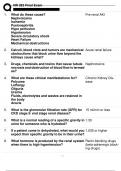
1. What do these cause? Pre renal AKI
Nephrotoxins
Ischemia
Pyelonephritis
Hypo perfusion
Hypotension
Severe circulatory shock
Heart Failure
Mechanical obstructions
2. Calculi, blood clots and tumors are mechanical Acute renal failure
obstructions that block urine flow beyond the
kidneys cause what?
3. Drugs, chemicals and toxins that cause tubule Nephrotoxins
necrosis and obstruction of blood flow is termed
as?
4. What are these clinical manifestations for? Chronic Kidney Dis-
Polyurea ease
Lethargy
Oliguria
Uremia
Fluids, electrolytes and wastes are retained in
the body
Anuria
5. What is the glomerular filtration rate (GFR) for 15 ml/min or less
CKD stage 5/ end stage renal disease?
6. What is a normal reading of a specific gravity in 1.30
urine for someone who is hydrated?
7. If a patient came in dehydrated, what would you 1.035 or higher
expect their specific gravity to be in their urine?
8. What hormone is produced by the renal system Renin-blocking drugs
when there is high hypertension? (beta-adrenergic block-
ing drugs)
, NR 283 Final Exam
9. When a patient has a bladder tumor, they are Post renal, this can be
most likely to have what kind of acute renal caused by a mechanical
injury? obstruction
10. Patients with obstruction of the renal artery Increased renin release
causing renal ischemia exhibit hypertension.
What is one factor that may contribute to hyper-
tension?
11. People who have to have dialysis have a lack of Erythropoiten
_______.
12. Why do patients receive erythropoietin during Increase hemoglobin
dialysis? levels in patients with
ESRD and anemia
13. During an assessment with a patient with renal Hypertension
insufficiency, the nurse asks specifically about
a history of what?
14. These are causes of what? Peptic ulcer disease
H. pylori
An inadequate blood supply
Vasoconstriction caused by stress, smoking, or
shock
Excessive glucocorticoid secretion or medica-
tion
Ulcerogenic substances that break down the
mucus layer (aspirin, NSAIDs, alcohol)
Increased acid-pepsin secretions
Atrophy of the gastric mucosa
15. What kind of ulcerogenic substances break Asprin, NSAIDs, alco-
down the mucus layer that can cause peptic hol
ulcer disease?
16. What are the four types of abdominal ulcers? Gastric, duodenal,
stress, esophageal
17. Gastric ulcer
, NR 283 Final Exam
A patient is in the hospital for experiencing pain
about an hour after eating a meal and is throwing
up; they have also been experiencing weight
loss and their HCL lab value was low. What kind
of ulcer is this patient experiencing?
18. A patient arrived at the emergency room in the Duodenal ulcer
late evening for uncontrolled pain. They told
their nurse that they ate earlier in the afternoon
but snacking has helped soothe the pain. What
kind of ulcer is this patient experiencing?
19. What is the most lethal complication of a perfo- Bleeding that can cause
rated ulcer? a massive hemorrhage
20. Surgeries such as partial gastrectomy or py- Perforated/bleeding ul-
loroplasty may be required in patients that are cers
suffering from?
21. Where do perforated ulcers mostly occur? In the duodenum
22. A patient has experienced trauma by burns (curl- Stress ulcer
ing) and head (cushing) injuries, the patient had
a sudden hemorrhage and was given prophylac-
tic medications. What kind of ulcer is this patient
experiencing?
23. Sea scopes detect what type of 4 diseases? Chrohns
Duodenal/ Colorectal
cancer
Ulcerative colitis
Rectal cancer
24. Diarrhea with cramping abdominal pain, soft Crohn's disease
stool, black tar stool if it erupts blood vessels,
pain/tenderness in RLQ, anorexia, weight loss,
anemia, and fatigue are clinical manifestations
of?
25.
1. What do these cause? Pre renal AKI
Nephrotoxins
Ischemia
Pyelonephritis
Hypo perfusion
Hypotension
Severe circulatory shock
Heart Failure
Mechanical obstructions
2. Calculi, blood clots and tumors are mechanical Acute renal failure
obstructions that block urine flow beyond the
kidneys cause what?
3. Drugs, chemicals and toxins that cause tubule Nephrotoxins
necrosis and obstruction of blood flow is termed
as?
4. What are these clinical manifestations for? Chronic Kidney Dis-
Polyurea ease
Lethargy
Oliguria
Uremia
Fluids, electrolytes and wastes are retained in
the body
Anuria
5. What is the glomerular filtration rate (GFR) for 15 ml/min or less
CKD stage 5/ end stage renal disease?
6. What is a normal reading of a specific gravity in 1.30
urine for someone who is hydrated?
7. If a patient came in dehydrated, what would you 1.035 or higher
expect their specific gravity to be in their urine?
8. What hormone is produced by the renal system Renin-blocking drugs
when there is high hypertension? (beta-adrenergic block-
ing drugs)
, NR 283 Final Exam
9. When a patient has a bladder tumor, they are Post renal, this can be
most likely to have what kind of acute renal caused by a mechanical
injury? obstruction
10. Patients with obstruction of the renal artery Increased renin release
causing renal ischemia exhibit hypertension.
What is one factor that may contribute to hyper-
tension?
11. People who have to have dialysis have a lack of Erythropoiten
_______.
12. Why do patients receive erythropoietin during Increase hemoglobin
dialysis? levels in patients with
ESRD and anemia
13. During an assessment with a patient with renal Hypertension
insufficiency, the nurse asks specifically about
a history of what?
14. These are causes of what? Peptic ulcer disease
H. pylori
An inadequate blood supply
Vasoconstriction caused by stress, smoking, or
shock
Excessive glucocorticoid secretion or medica-
tion
Ulcerogenic substances that break down the
mucus layer (aspirin, NSAIDs, alcohol)
Increased acid-pepsin secretions
Atrophy of the gastric mucosa
15. What kind of ulcerogenic substances break Asprin, NSAIDs, alco-
down the mucus layer that can cause peptic hol
ulcer disease?
16. What are the four types of abdominal ulcers? Gastric, duodenal,
stress, esophageal
17. Gastric ulcer
, NR 283 Final Exam
A patient is in the hospital for experiencing pain
about an hour after eating a meal and is throwing
up; they have also been experiencing weight
loss and their HCL lab value was low. What kind
of ulcer is this patient experiencing?
18. A patient arrived at the emergency room in the Duodenal ulcer
late evening for uncontrolled pain. They told
their nurse that they ate earlier in the afternoon
but snacking has helped soothe the pain. What
kind of ulcer is this patient experiencing?
19. What is the most lethal complication of a perfo- Bleeding that can cause
rated ulcer? a massive hemorrhage
20. Surgeries such as partial gastrectomy or py- Perforated/bleeding ul-
loroplasty may be required in patients that are cers
suffering from?
21. Where do perforated ulcers mostly occur? In the duodenum
22. A patient has experienced trauma by burns (curl- Stress ulcer
ing) and head (cushing) injuries, the patient had
a sudden hemorrhage and was given prophylac-
tic medications. What kind of ulcer is this patient
experiencing?
23. Sea scopes detect what type of 4 diseases? Chrohns
Duodenal/ Colorectal
cancer
Ulcerative colitis
Rectal cancer
24. Diarrhea with cramping abdominal pain, soft Crohn's disease
stool, black tar stool if it erupts blood vessels,
pain/tenderness in RLQ, anorexia, weight loss,
anemia, and fatigue are clinical manifestations
of?
25.

