

Unit 2a: Practical Scientific Procedures and Techniques
Issue date: 31/01/2022
Deadline: 21/02/2022
Introduction:
We have been tasked with evaluating the accuracy and safety of the following quantitative
procedures and techniques in relation to their outcomes.
These procedures include titration and colorimetry.
Titration:
Equipment:
Graduated Pipette (25cm^3)
Pipette Filler
Distilled Water
Clamp Stand
Burette (50cm^3)
Indicator
3 Beakers (250cm^3)
Conical Flask (250cm^3)
Funnel
Stopcock
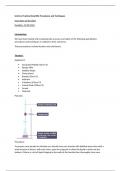
Pictured:
Procedure:
To prepare your burette for titration you should rinse your burette with distilled water then with a
small amount of titrant, with each rinse, open the stopcock to allow the liquid to drain out the
bottom. If there is a lot of liquid clinging to the walls of the burette then thoroughly clean your
, burette and repeat the rinse process. The accuracy of this technique is dependent on the titrant
flowing into the flask and not sticking to the walls of the burette.
Mount the burette into the clamp, making sure it’s positioned vertically and there is enough room to
position the flask underneath the tip. Check to see if the stopcock is in the closed position
Insert the funnel into the top of the burette and fill with titrant almost to the top. Filling exactly to
the zero mark is not necessary, but you do need sufficient titrant to complete the reaction
Check the column for air bubbles and gently tap to free them from the side walls and then remove
the funnel
Place the flask under the tip and open the stopcock, allowing a few millilitres of titrant to flow
through, releasing any trapped air.
Rinse the tip of the burette with water and empty the liquid from the flask and thoroughly rinse the
flask.
Record your starting volume in the burette, note that the liquid forms a concave meniscus because
the water pulls itself up the side walls of the glass, you should read the volume from the bottom of
the meniscus at eye level. It is important to read your volume to the correct number of significant
figures. Record the volume to one additional decimal place beyond the smallest graduation.
Use the graduated pipette to transfer the analyte to the flask and add a few drops of indicator to the
flask and swirl. Place the flask under the tip of the burette, record this volume.
Operating the burette takes two hands, one hand turns the stopcock while the other hand swirls the
flask. You can practice turning the stopcock a few times to familiarise yourself with how quickly the
flow starts and stops.
It is common laboratory practice that the first titration is an estimate, open the stopcock and allow
the titrant to enter the flask quickly. Continuously swirl the flask. As the volume of titrant in the flask
increases, the colour of the indicator appears and disappears as you swirl.
When the analyte becomes a coloured solution, close the stopcock. Record the final volume of the
burette and subtract the initial volume from this final volume to get the estimated volume of titrant
needed for this titration.
Knowing the volume that is a little past the endpoint, subtract 5 millilitres from that number to get
the amount of titrant that can be safely added before a slower addition is required
As the estimate titration shows, a dark coloured solution indicates an excess of titrant has been
added. The desired endpoint is a pale faintly coloured analyte.
To reduce the risk of passing the endpoint, slow down the addition of titrant when flashes of colour
begin to appear in the analyte. Adjust the stopcock to slow the flow of titrant to a drop-wise rate.
Continue to swirl the flask with one hand and keep the other hand ready to close the stopcock.
When you notice the indicator taking longer to fade, close the stopcock.
Rinse the tip of the burette with distilled water and swirl the flask. Record the final volume on the
burette.
If the analyte remains faintly coloured, then you have reached the end point. If the analyte is still
colourless, then repeat these steps, add a drop, rinse, swirl, and record until a faint colour persists.
Issue date: 31/01/2022
Deadline: 21/02/2022
Introduction:
We have been tasked with evaluating the accuracy and safety of the following quantitative
procedures and techniques in relation to their outcomes.
These procedures include titration and colorimetry.
Titration:
Equipment:
Graduated Pipette (25cm^3)
Pipette Filler
Distilled Water
Clamp Stand
Burette (50cm^3)
Indicator
3 Beakers (250cm^3)
Conical Flask (250cm^3)
Funnel
Stopcock
Pictured:
Procedure:
To prepare your burette for titration you should rinse your burette with distilled water then with a
small amount of titrant, with each rinse, open the stopcock to allow the liquid to drain out the
bottom. If there is a lot of liquid clinging to the walls of the burette then thoroughly clean your
, burette and repeat the rinse process. The accuracy of this technique is dependent on the titrant
flowing into the flask and not sticking to the walls of the burette.
Mount the burette into the clamp, making sure it’s positioned vertically and there is enough room to
position the flask underneath the tip. Check to see if the stopcock is in the closed position
Insert the funnel into the top of the burette and fill with titrant almost to the top. Filling exactly to
the zero mark is not necessary, but you do need sufficient titrant to complete the reaction
Check the column for air bubbles and gently tap to free them from the side walls and then remove
the funnel
Place the flask under the tip and open the stopcock, allowing a few millilitres of titrant to flow
through, releasing any trapped air.
Rinse the tip of the burette with water and empty the liquid from the flask and thoroughly rinse the
flask.
Record your starting volume in the burette, note that the liquid forms a concave meniscus because
the water pulls itself up the side walls of the glass, you should read the volume from the bottom of
the meniscus at eye level. It is important to read your volume to the correct number of significant
figures. Record the volume to one additional decimal place beyond the smallest graduation.
Use the graduated pipette to transfer the analyte to the flask and add a few drops of indicator to the
flask and swirl. Place the flask under the tip of the burette, record this volume.
Operating the burette takes two hands, one hand turns the stopcock while the other hand swirls the
flask. You can practice turning the stopcock a few times to familiarise yourself with how quickly the
flow starts and stops.
It is common laboratory practice that the first titration is an estimate, open the stopcock and allow
the titrant to enter the flask quickly. Continuously swirl the flask. As the volume of titrant in the flask
increases, the colour of the indicator appears and disappears as you swirl.
When the analyte becomes a coloured solution, close the stopcock. Record the final volume of the
burette and subtract the initial volume from this final volume to get the estimated volume of titrant
needed for this titration.
Knowing the volume that is a little past the endpoint, subtract 5 millilitres from that number to get
the amount of titrant that can be safely added before a slower addition is required
As the estimate titration shows, a dark coloured solution indicates an excess of titrant has been
added. The desired endpoint is a pale faintly coloured analyte.
To reduce the risk of passing the endpoint, slow down the addition of titrant when flashes of colour
begin to appear in the analyte. Adjust the stopcock to slow the flow of titrant to a drop-wise rate.
Continue to swirl the flask with one hand and keep the other hand ready to close the stopcock.
When you notice the indicator taking longer to fade, close the stopcock.
Rinse the tip of the burette with distilled water and swirl the flask. Record the final volume on the
burette.
If the analyte remains faintly coloured, then you have reached the end point. If the analyte is still
colourless, then repeat these steps, add a drop, rinse, swirl, and record until a faint colour persists.


