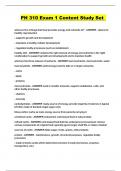
PH 310 Exam 1 Content Study Set
what are the 4 things that food provides energy and nutrients to? - ANSWER - allows for
healthy reproduction
- supports growth and development
- maintains a healthy cellular development
- regulates bodily processes (such as metabolism)
healthy diet - ANSWER contains the right amount of energy and nutrients in the right
combination to support growth and development and to maintain health
what are the three classes of nutrients - ANSWER macronutrients, micronutrients, water
macronutients - ANSWER yield energy (need to take in in larger amounts)
- carbs
- lipids
- proteins
micronutrients - ANSWER need in smaller amounts; support metabolism, cells, and
other bodily processes
- vitamins
- minerals
carbohydrates - ANSWER ready source of energy; provide majority of calories in typical
US diet; made of bonded single sugar units
fetus prefers carbs as main energy source from parents carrying it
unrefined carbs - ANSWER untouched; carb-based food in natural state
refined carbs - ANSWER carb-based food that has undergone processing to remove
various components of original food; typically gives longer shelf life or makes it tastier
sources of carbs - ANSWER table sugar, fruits, grains, milk products
protein - ANSWER - maintenance, growth, structural purposes, regulates bodily
processes
- made of amino acids which determines function in body (hormones, enzymes,
transporters, etc)
, sources of protein - ANSWER animal products, legumes, vegetables, some dairy
products
lipids - ANSWER - concentrated source of energy
- saturated fatty acids, unsaturated, trans fatty acids, cholesterol, etc
triaclyglycerides - ANSWER - most common lipid in foods and stored in body
- adipose tissue is main storage site
- contains fatty acids - energy storage
sources of lipids - ANSWER animal foods, oils, nuts, avocados, some dairy
vitamins - ANSWER help with bodily processes
- ex: carb metabolism: b vitamins are important as co-enzymes for enzyme function
minerals - ANSWER regulatory and structural roles
- bone strength (calcium, phosphorus) --> bone mass accumulation which is important in
every life stage
- transport of oxygen (iron)
- transmission of nerve pulses
muscle contractions
water - ANSWER constantly turned over in the body
5 functions of water - ANSWER - lubricant - cushion for joints
- transporter - majority of blood
- regulates body temperature and holds heat
- structural component of cells
- helps rid wastes
what are the 3 components of a public health issue - ANSWER 1. is it prevalent
2. is it serious
3. is it preventable and/or treatable
is it prevalent (frequency) - ANSWER - is it wide-spread
- is it increasing
is it serious - ANSWER - do people die
what are the 4 things that food provides energy and nutrients to? - ANSWER - allows for
healthy reproduction
- supports growth and development
- maintains a healthy cellular development
- regulates bodily processes (such as metabolism)
healthy diet - ANSWER contains the right amount of energy and nutrients in the right
combination to support growth and development and to maintain health
what are the three classes of nutrients - ANSWER macronutrients, micronutrients, water
macronutients - ANSWER yield energy (need to take in in larger amounts)
- carbs
- lipids
- proteins
micronutrients - ANSWER need in smaller amounts; support metabolism, cells, and
other bodily processes
- vitamins
- minerals
carbohydrates - ANSWER ready source of energy; provide majority of calories in typical
US diet; made of bonded single sugar units
fetus prefers carbs as main energy source from parents carrying it
unrefined carbs - ANSWER untouched; carb-based food in natural state
refined carbs - ANSWER carb-based food that has undergone processing to remove
various components of original food; typically gives longer shelf life or makes it tastier
sources of carbs - ANSWER table sugar, fruits, grains, milk products
protein - ANSWER - maintenance, growth, structural purposes, regulates bodily
processes
- made of amino acids which determines function in body (hormones, enzymes,
transporters, etc)
, sources of protein - ANSWER animal products, legumes, vegetables, some dairy
products
lipids - ANSWER - concentrated source of energy
- saturated fatty acids, unsaturated, trans fatty acids, cholesterol, etc
triaclyglycerides - ANSWER - most common lipid in foods and stored in body
- adipose tissue is main storage site
- contains fatty acids - energy storage
sources of lipids - ANSWER animal foods, oils, nuts, avocados, some dairy
vitamins - ANSWER help with bodily processes
- ex: carb metabolism: b vitamins are important as co-enzymes for enzyme function
minerals - ANSWER regulatory and structural roles
- bone strength (calcium, phosphorus) --> bone mass accumulation which is important in
every life stage
- transport of oxygen (iron)
- transmission of nerve pulses
muscle contractions
water - ANSWER constantly turned over in the body
5 functions of water - ANSWER - lubricant - cushion for joints
- transporter - majority of blood
- regulates body temperature and holds heat
- structural component of cells
- helps rid wastes
what are the 3 components of a public health issue - ANSWER 1. is it prevalent
2. is it serious
3. is it preventable and/or treatable
is it prevalent (frequency) - ANSWER - is it wide-spread
- is it increasing
is it serious - ANSWER - do people die