ECOLOGY
1989 – Félix Guattari: environment, society, psyche
You are the landscape
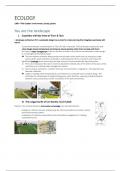
1. Ecopolitics with Bas Smets at Thurn & Taxis
= landscape architecture firm: sustainable design has a vision for urban planning that integrates seamlessly with
nature.
- A prominent example: transformation of Thurn & Taxis in Brussels. Their philosophy emphasizes that
urban design should complement and enhance natural systems rather than compete with them.
- Key aspect: water management: How can the flow of water in Brussels be reconnected to urban design
in a meaningful and functional way?
➔ The firm explores solutions that promote natural water cycles within the city, aiming to create
spaces where water retention, purification, and biodiversity thrive in harmony with urban life.
- Significant challenge arose concerning the large volumes of soil excavated during construction.
1) Plan was to repurpose this soil to create an absorbent wetland area at the center of the park, which
would serve as a natural water management system.
2) Due to various constraints—whether technical, environmental, or regulatory—this approach was
deemed unfeasible.
➔ Adapt its strategy while maintaining its commitment to sustainable and innovative design. This
illustrates the complexities of implementing green urban solutions, requiring a delicate balance
between vision, practicality, and the constraints of the built environment.
3) The Longue Durée of Civil Society: TouT Publiek
Explores: the interplay between civil society and ecology over extended periods.
- Ecology as a holistic concept, emphasizing the interconnectedness of social, cultural,
and environmental systems.
- Importance of collective responsibility and participatory engagement in shaping
sustainable futures.
, 4) Curating the landscape: ParckFarm (ParckDesign, three variations 2012-2014-2016)
Between 2 bridges of Thurn & Taxis: ParckFarm = a project initially for the Biennale of Landscape Parckdesign,
2014. Temporary installation → permanent fixture of the park, designed by Taktyk and 1010.
- Embodies the idea that nature has a rightful place in the city, creating opportunities not only to connect
with the natural environment but also to foster connections among people.
- As a laboratory of antagonisms, where the focus extends beyond nature alone → Explores how we
coexist, emphasizing that our ways of living together are also a form of ecology—how we function as an
interconnected system. Love, too, is an ecology.
5) Different supports of the commons (Agrocité, Commons Josaphat, ParckFarm)
Explores how these projects create platforms for shared resources and community-driven initiatives. Each project
exemplifies a unique approach to the commons:
- Agrocité: urban agriculture, promoting local food production, education, and social interaction in shared
green spaces.
- Commons Josaphat: emphasizes participatory governance and shared decision-making in urban
development, balancing ecological preservation with collective use.
- ParckFarm: integrates urban farming, cultural activities, and social engagement, creating a space where
nature and community coexist harmoniously.
Together, these projects demonstrate how the commons can support sustainable, inclusive, and resilient urban
ecosystems.
Felix Guattari’s molecular revolution of ecology
‘The three ecologies’ – Guattari, 1989
- Working together with Gilles Deleuze
- A holistic framework for understanding and addressing the interconnected crises of modern society.
A nascent subjectivity = jij en ik als persoon, iemand met een persoonlijkheid en gevoelens
A constantly mutating socius = sociale aspect
An environment in the process of being reinvented = natuurlijk milieu, in crisis
1989 – Félix Guattari: environment, society, psyche
You are the landscape
1. Ecopolitics with Bas Smets at Thurn & Taxis
= landscape architecture firm: sustainable design has a vision for urban planning that integrates seamlessly with
nature.
- A prominent example: transformation of Thurn & Taxis in Brussels. Their philosophy emphasizes that
urban design should complement and enhance natural systems rather than compete with them.
- Key aspect: water management: How can the flow of water in Brussels be reconnected to urban design
in a meaningful and functional way?
➔ The firm explores solutions that promote natural water cycles within the city, aiming to create
spaces where water retention, purification, and biodiversity thrive in harmony with urban life.
- Significant challenge arose concerning the large volumes of soil excavated during construction.
1) Plan was to repurpose this soil to create an absorbent wetland area at the center of the park, which
would serve as a natural water management system.
2) Due to various constraints—whether technical, environmental, or regulatory—this approach was
deemed unfeasible.
➔ Adapt its strategy while maintaining its commitment to sustainable and innovative design. This
illustrates the complexities of implementing green urban solutions, requiring a delicate balance
between vision, practicality, and the constraints of the built environment.
3) The Longue Durée of Civil Society: TouT Publiek
Explores: the interplay between civil society and ecology over extended periods.
- Ecology as a holistic concept, emphasizing the interconnectedness of social, cultural,
and environmental systems.
- Importance of collective responsibility and participatory engagement in shaping
sustainable futures.
, 4) Curating the landscape: ParckFarm (ParckDesign, three variations 2012-2014-2016)
Between 2 bridges of Thurn & Taxis: ParckFarm = a project initially for the Biennale of Landscape Parckdesign,
2014. Temporary installation → permanent fixture of the park, designed by Taktyk and 1010.
- Embodies the idea that nature has a rightful place in the city, creating opportunities not only to connect
with the natural environment but also to foster connections among people.
- As a laboratory of antagonisms, where the focus extends beyond nature alone → Explores how we
coexist, emphasizing that our ways of living together are also a form of ecology—how we function as an
interconnected system. Love, too, is an ecology.
5) Different supports of the commons (Agrocité, Commons Josaphat, ParckFarm)
Explores how these projects create platforms for shared resources and community-driven initiatives. Each project
exemplifies a unique approach to the commons:
- Agrocité: urban agriculture, promoting local food production, education, and social interaction in shared
green spaces.
- Commons Josaphat: emphasizes participatory governance and shared decision-making in urban
development, balancing ecological preservation with collective use.
- ParckFarm: integrates urban farming, cultural activities, and social engagement, creating a space where
nature and community coexist harmoniously.
Together, these projects demonstrate how the commons can support sustainable, inclusive, and resilient urban
ecosystems.
Felix Guattari’s molecular revolution of ecology
‘The three ecologies’ – Guattari, 1989
- Working together with Gilles Deleuze
- A holistic framework for understanding and addressing the interconnected crises of modern society.
A nascent subjectivity = jij en ik als persoon, iemand met een persoonlijkheid en gevoelens
A constantly mutating socius = sociale aspect
An environment in the process of being reinvented = natuurlijk milieu, in crisis