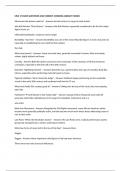
Pharmacology '
Why is pharmacology important? -
meds have an impact on healthcare, the nurse is the last person to catch an error before
administration, you're responsible for understanding drugs, must understand drugs to know
what the outcomes you should expect and what adverse reactions there could be
Where do drugs come from? -
Were historically derived from plants, animals, and minerals. Now, most are synthetic
compounds that are manufactured in labs
Why are drugs now derived in a lab? -
you have more control over them but they aren't as effective but are more consistent in
their effectiveness, there is also semi-synthetic like antibiotics
Why do people take drugs? -
to improve quality of life, stop progression of disease, prevent diseases
Drug -
a substance that is taken to prevent, cure, or reduce symptoms of medical conditions
and some taken for pleasure
Placebo -
inert ingredients
Pharmacology -
study if drugs (chemicals)that alter functions of living organisms. Study of biological
active compounds, how they react in the body and how the body reacts to them
Pharmacotherapy -
application of drugs for the purposes of disease preventions and treatment of suffering
Pharmacoeconomics -
involves the costs of drug therapy. Includes cost of dispensing, storing, administering,
monitoring, and losses due to expirations
Is there a perfect drug? -
no, but strive to be the best: safe, lowest effective dose, fewest side effects, fewer
doses a day, least amount of cost, fewer interactions with foods or other meds
Why do clients take medications? -
-taken for acute and chronic health conditions
-acute: pain and infection are treated with drugs that provide immediate relief
-chronic: problems such as HTN, DM, HIV require meds over an extended period of time
(long term therapy) to move signs and symptoms and help slow the progression of the disease
Meds are usually given for their: -
Local and systematic effects
1|Page
,Local effects -
these act mainly at the site of application: impaled (inhaler, local in lungs), ointments,
burn creams, etc
Systematic effects -
with this, medications are taken into the body and circulated through the bloodstream
to their site of action and then eliminated from the body (PO- mouth, IV, etc.)
Nurses are ___________ for safe and accurate administration -
legally resonsible
Nurses should __________ clients about meds they are taking. -
educate
FDA -
enforces drug laws
Public health services -
regulates vaccines and other biologic products
Federal trade commission -
can suppress misleading advertisements of nonprescription drugs
DEA -
charged with enforcing controlled substance act. Persons that handle controlled
substances have to be registered with them, keep accurate records of transactions, and have
secured storage
Why are nurse Practice Acts important? -
Every state has its own laws regarding drug administration by nurses. Nurses are held
accountable to these standards
What are the nurse practice acts? -
Misfeasance, nonfeasance, malfeasance
Misfeasance -
negligence- giving wrong dose or drug that results in death
Nonfeasance -
omission- omitting a drug dose that results in death
Malfeasance -
giving the correct drug but by wrong route that results in death
Schedule I drugs -
NOT approved for medical use (LSD, Heroine, Marijuana)
Schedule II drugs -
High potential for abuse and dependence
2|Page
, -MUST have WRITTEN Rx signed by HCP
-NO refills or telephone orders
(codeine, morphine, demerol, methadone, oxycodone)
Schedule III drugs -
lesser abuse potential than schedule II
(anabolic steroids, ketamine, codeine preparations)
Schedule IV drugs -
even less potential for abuse
(benzos -lorazepam &diazepam, phenobarbitol, stadol, ambien
Schedule V drugs -
very low potential for abuse/dependence. Contain a moderate amount of controlled
substance with another type of med.
(lomotil, codeine cough syrup)
What are the nursing responsibilities regarding controlled substance? -
-Must have Rx
-Keep in a locked/ secured area
-must be "signed out"
-make sure "narcotic count" is correct
-ensure patient actually takes med
-"waste" needs to be verified and signed off by another RN
Drugs are classified according to: -
-effects on particular body system
-their therapeutic uses
-chemical characteristics
Prototype drug -
individual drugs that represent groups of drugs, one in which others in that class are
compared to. Ex: "lols", "cillins", "statins"
Drugs have several names including: -
chemical, generic, and trade name
Chemical name -
a drug only has 1 of these names ex: calcium gluconate, sodium chloride
Generic name -
related to the chemical name and is not related to the manufacturer. Often is indicative
of its drug group (those ending in "cillin" are penicillins. Generic name typically in lower
case letters. Only have 1 generic name
Trade name -
designated and patented by the manufacturer. "Brand name".
What are the 2 basic classifications of drugs? -
therapeutic and pharmacologic
3|Page
Why is pharmacology important? -
meds have an impact on healthcare, the nurse is the last person to catch an error before
administration, you're responsible for understanding drugs, must understand drugs to know
what the outcomes you should expect and what adverse reactions there could be
Where do drugs come from? -
Were historically derived from plants, animals, and minerals. Now, most are synthetic
compounds that are manufactured in labs
Why are drugs now derived in a lab? -
you have more control over them but they aren't as effective but are more consistent in
their effectiveness, there is also semi-synthetic like antibiotics
Why do people take drugs? -
to improve quality of life, stop progression of disease, prevent diseases
Drug -
a substance that is taken to prevent, cure, or reduce symptoms of medical conditions
and some taken for pleasure
Placebo -
inert ingredients
Pharmacology -
study if drugs (chemicals)that alter functions of living organisms. Study of biological
active compounds, how they react in the body and how the body reacts to them
Pharmacotherapy -
application of drugs for the purposes of disease preventions and treatment of suffering
Pharmacoeconomics -
involves the costs of drug therapy. Includes cost of dispensing, storing, administering,
monitoring, and losses due to expirations
Is there a perfect drug? -
no, but strive to be the best: safe, lowest effective dose, fewest side effects, fewer
doses a day, least amount of cost, fewer interactions with foods or other meds
Why do clients take medications? -
-taken for acute and chronic health conditions
-acute: pain and infection are treated with drugs that provide immediate relief
-chronic: problems such as HTN, DM, HIV require meds over an extended period of time
(long term therapy) to move signs and symptoms and help slow the progression of the disease
Meds are usually given for their: -
Local and systematic effects
1|Page
,Local effects -
these act mainly at the site of application: impaled (inhaler, local in lungs), ointments,
burn creams, etc
Systematic effects -
with this, medications are taken into the body and circulated through the bloodstream
to their site of action and then eliminated from the body (PO- mouth, IV, etc.)
Nurses are ___________ for safe and accurate administration -
legally resonsible
Nurses should __________ clients about meds they are taking. -
educate
FDA -
enforces drug laws
Public health services -
regulates vaccines and other biologic products
Federal trade commission -
can suppress misleading advertisements of nonprescription drugs
DEA -
charged with enforcing controlled substance act. Persons that handle controlled
substances have to be registered with them, keep accurate records of transactions, and have
secured storage
Why are nurse Practice Acts important? -
Every state has its own laws regarding drug administration by nurses. Nurses are held
accountable to these standards
What are the nurse practice acts? -
Misfeasance, nonfeasance, malfeasance
Misfeasance -
negligence- giving wrong dose or drug that results in death
Nonfeasance -
omission- omitting a drug dose that results in death
Malfeasance -
giving the correct drug but by wrong route that results in death
Schedule I drugs -
NOT approved for medical use (LSD, Heroine, Marijuana)
Schedule II drugs -
High potential for abuse and dependence
2|Page
, -MUST have WRITTEN Rx signed by HCP
-NO refills or telephone orders
(codeine, morphine, demerol, methadone, oxycodone)
Schedule III drugs -
lesser abuse potential than schedule II
(anabolic steroids, ketamine, codeine preparations)
Schedule IV drugs -
even less potential for abuse
(benzos -lorazepam &diazepam, phenobarbitol, stadol, ambien
Schedule V drugs -
very low potential for abuse/dependence. Contain a moderate amount of controlled
substance with another type of med.
(lomotil, codeine cough syrup)
What are the nursing responsibilities regarding controlled substance? -
-Must have Rx
-Keep in a locked/ secured area
-must be "signed out"
-make sure "narcotic count" is correct
-ensure patient actually takes med
-"waste" needs to be verified and signed off by another RN
Drugs are classified according to: -
-effects on particular body system
-their therapeutic uses
-chemical characteristics
Prototype drug -
individual drugs that represent groups of drugs, one in which others in that class are
compared to. Ex: "lols", "cillins", "statins"
Drugs have several names including: -
chemical, generic, and trade name
Chemical name -
a drug only has 1 of these names ex: calcium gluconate, sodium chloride
Generic name -
related to the chemical name and is not related to the manufacturer. Often is indicative
of its drug group (those ending in "cillin" are penicillins. Generic name typically in lower
case letters. Only have 1 generic name
Trade name -
designated and patented by the manufacturer. "Brand name".
What are the 2 basic classifications of drugs? -
therapeutic and pharmacologic
3|Page