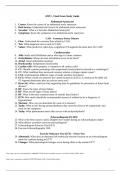
ANP I - Final Exam Study Guide
Abdominal Aneurysm
1. Causes: Know the causes of an abdominal aortic aneurysm.
2. Risk factors: Understand risk factors for abdominal aortic aneurysm.
3. Saccular: What is a Saccular Abdominal Aneurysm?
4. Symptoms: Know the symptoms of an abdominal aortic aneurysm.
CAD - Coronary Artery Disease
5. Flow: Understand the coronary flow related to CAD.
6. Test: What diagnostic test is used for CAD?
7. Values: What predictive value does a significant ST-segment elevation have for CAD?
Cardiovascular
8. Afib: Study atrial fibrillation and at what age is it more common.
9. Arrhythmias: Where do most arrhythmias occur in the heart?
10. Atrial: Atrial arrhythmia treatment
11. Bradycardia: Symptomatic bradycardia
12. Cardiac cells: What property is common to all cardiac cells?
13. CV: Should a patient presenting with symptomatic bradycardia be referred to a cardiologist?
14. CV: What condition does narrowed coronary arteries or plague rupture cause?
15. CVA: Understand the different types of stroke and their prevalence.
16. ECG: Where would you measure the J point located on an ECG in relation to the QRS and
ST segment depression after an exercise stress test?
17. Heart dx: Where could you find supporting data for guidelines for prevention of future heart
disease?
18. HF: Know the types of heart failure.
19. HF: What are the signs of heart failure?
20. HF: What is the most common cause of systolic heart failure?
21. HTN: How much should the recommended amount of sodium be for a diagnosis of
hypertension?
22. Murmur: How can you determine the cause of a murmur?
23. Tachy: What occurs during tachyarrhythmias that cause the client to be symptomatic and
what are the symptoms
24. Tachy: What phenomenon most often occurs with tachyarrhythmia?
Echocardiogram (ECHO)
25. What is the best reason to add a Doppler flow studies during an echocardiogram study?
26. What defines a positive exercise echocardiogram?
27. Echocardiogram Exercise Test (EET)
28. Exercise Echocardiography 2DE
Exercise Tolerance Test (ETT) – Stress Test
29. Abnormal: What does an abnormal left ventricular ejection fraction on an echocardiogram
mean for a patient during an ETT?
30. Changes: What physiological changes occur during effort in the routine ETT?
1
This study source was downloaded by 100000865772907 from CourseHero.com on 11-07-2023 07:00:01 GMT -06:00
https://www.coursehero.com/file/22520970/NSG6001-ANP-1-Final-Study-Guide/
Abdominal Aneurysm
1. Causes: Know the causes of an abdominal aortic aneurysm.
2. Risk factors: Understand risk factors for abdominal aortic aneurysm.
3. Saccular: What is a Saccular Abdominal Aneurysm?
4. Symptoms: Know the symptoms of an abdominal aortic aneurysm.
CAD - Coronary Artery Disease
5. Flow: Understand the coronary flow related to CAD.
6. Test: What diagnostic test is used for CAD?
7. Values: What predictive value does a significant ST-segment elevation have for CAD?
Cardiovascular
8. Afib: Study atrial fibrillation and at what age is it more common.
9. Arrhythmias: Where do most arrhythmias occur in the heart?
10. Atrial: Atrial arrhythmia treatment
11. Bradycardia: Symptomatic bradycardia
12. Cardiac cells: What property is common to all cardiac cells?
13. CV: Should a patient presenting with symptomatic bradycardia be referred to a cardiologist?
14. CV: What condition does narrowed coronary arteries or plague rupture cause?
15. CVA: Understand the different types of stroke and their prevalence.
16. ECG: Where would you measure the J point located on an ECG in relation to the QRS and
ST segment depression after an exercise stress test?
17. Heart dx: Where could you find supporting data for guidelines for prevention of future heart
disease?
18. HF: Know the types of heart failure.
19. HF: What are the signs of heart failure?
20. HF: What is the most common cause of systolic heart failure?
21. HTN: How much should the recommended amount of sodium be for a diagnosis of
hypertension?
22. Murmur: How can you determine the cause of a murmur?
23. Tachy: What occurs during tachyarrhythmias that cause the client to be symptomatic and
what are the symptoms
24. Tachy: What phenomenon most often occurs with tachyarrhythmia?
Echocardiogram (ECHO)
25. What is the best reason to add a Doppler flow studies during an echocardiogram study?
26. What defines a positive exercise echocardiogram?
27. Echocardiogram Exercise Test (EET)
28. Exercise Echocardiography 2DE
Exercise Tolerance Test (ETT) – Stress Test
29. Abnormal: What does an abnormal left ventricular ejection fraction on an echocardiogram
mean for a patient during an ETT?
30. Changes: What physiological changes occur during effort in the routine ETT?
1
This study source was downloaded by 100000865772907 from CourseHero.com on 11-07-2023 07:00:01 GMT -06:00
https://www.coursehero.com/file/22520970/NSG6001-ANP-1-Final-Study-Guide/