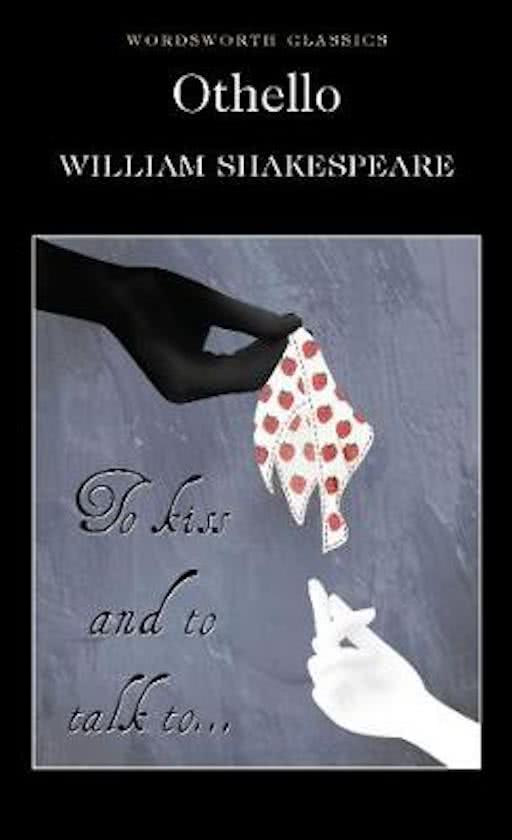
Explore Shakespeare’s presentation of Desdemona in ‘Othello’
In his 1604 tragedy, ‘Othello’, Shakespeare’s presentation of Desdemona
is complex. Initially she is presented as the idolized image of a Jacobean
woman who’s worth is determined by her beauty, virtue and passivity
whose love for Othello is absolute. Contrastingly, Shakespeare also
presents her as brave and forthright woman ahead of her time in her free-
thinking nature and pride. Significantly, Shakespeare also presents
Desdemona as a victim of misogyny perhaps to criticise the inescapable
male hegemony of Jacobean society.
Shakespeare also presents Desdemona as an outspoken, confident and
powerful through the nature of her relationship with Othello. As argued by
Ryan “Othello and Desdemona act as if a black man from Africa and an
upper-class white woman (…) have every right to fall in love”. However, in
Jacobean society racism was normalised and a mixed-race marriage would
be seen as transgressing nature. Brabantio argues that Desdemona was
forced or tricked into her marriage as she would never “run from her
gurdage to the sooty bosom of such a thing as thou”. The adjective
“sooty” has connotations of dirt illuminating the lack of status people of
colour had. The use of the noun “thing” dehumanises Othello reducing
him to an object. It is significate that she protests against these extreme
views and shows her bravery. This is certainly innkeeping with
Honigman’s interpretation of Desdemona as “the strongest, the most
heroic person in the play”. Furthermore, this is seen when Othello greets
Desdemona in Cyprus and cries “o fair warrior”. The noun “warrior” shows
how Othello regards her as his equal rather than his inferior. This is
extremely uncommon in Jacobean society – women typically had no power
in their marriage. It was partly due to the Aristotelian belief that women
are ‘deformed’ men and therefore could not be independent and would
have to be submissive to their husband. Some characters suggest that
there is a power imbalance in their relationship: that Desdemona is more
powerful than Othello himself. Cassio refers to Desdemona as “our great
captain’s captain”. This would be extremely rare in Jacobean society
creating admiration for Desdemona in a modern audience. However, a
Jacobean audience may not have such a positive response as this power
dynamic was seen as ‘unnatural’. Many would hold the misogynistic view
of Rhymer - that she is a “silly woman” - rather than the progressive
feminist modern audiences see.
Despite her progressive nature, Shakespeare still presents Desdemona as
a victim of misogyny and the limiting roles of women. As the play
progresses, the presentation of first two acts of the play she is respected
on account of her chastity and noble background, her image is distorted
by her suspected infidelity. Valerie Traub suggests woman were defined
by their sexual relations to men and were labelled as either “wives,
widows, virgins or whores”. This is certainly true as after Othello believes
his wife is making a “cuckold” of him, Desdemona is called a “whore”,
“lewd minx” and a “sweating devil”, thus suggesting in Jacobean society it
In his 1604 tragedy, ‘Othello’, Shakespeare’s presentation of Desdemona
is complex. Initially she is presented as the idolized image of a Jacobean
woman who’s worth is determined by her beauty, virtue and passivity
whose love for Othello is absolute. Contrastingly, Shakespeare also
presents her as brave and forthright woman ahead of her time in her free-
thinking nature and pride. Significantly, Shakespeare also presents
Desdemona as a victim of misogyny perhaps to criticise the inescapable
male hegemony of Jacobean society.
Shakespeare also presents Desdemona as an outspoken, confident and
powerful through the nature of her relationship with Othello. As argued by
Ryan “Othello and Desdemona act as if a black man from Africa and an
upper-class white woman (…) have every right to fall in love”. However, in
Jacobean society racism was normalised and a mixed-race marriage would
be seen as transgressing nature. Brabantio argues that Desdemona was
forced or tricked into her marriage as she would never “run from her
gurdage to the sooty bosom of such a thing as thou”. The adjective
“sooty” has connotations of dirt illuminating the lack of status people of
colour had. The use of the noun “thing” dehumanises Othello reducing
him to an object. It is significate that she protests against these extreme
views and shows her bravery. This is certainly innkeeping with
Honigman’s interpretation of Desdemona as “the strongest, the most
heroic person in the play”. Furthermore, this is seen when Othello greets
Desdemona in Cyprus and cries “o fair warrior”. The noun “warrior” shows
how Othello regards her as his equal rather than his inferior. This is
extremely uncommon in Jacobean society – women typically had no power
in their marriage. It was partly due to the Aristotelian belief that women
are ‘deformed’ men and therefore could not be independent and would
have to be submissive to their husband. Some characters suggest that
there is a power imbalance in their relationship: that Desdemona is more
powerful than Othello himself. Cassio refers to Desdemona as “our great
captain’s captain”. This would be extremely rare in Jacobean society
creating admiration for Desdemona in a modern audience. However, a
Jacobean audience may not have such a positive response as this power
dynamic was seen as ‘unnatural’. Many would hold the misogynistic view
of Rhymer - that she is a “silly woman” - rather than the progressive
feminist modern audiences see.
Despite her progressive nature, Shakespeare still presents Desdemona as
a victim of misogyny and the limiting roles of women. As the play
progresses, the presentation of first two acts of the play she is respected
on account of her chastity and noble background, her image is distorted
by her suspected infidelity. Valerie Traub suggests woman were defined
by their sexual relations to men and were labelled as either “wives,
widows, virgins or whores”. This is certainly true as after Othello believes
his wife is making a “cuckold” of him, Desdemona is called a “whore”,
“lewd minx” and a “sweating devil”, thus suggesting in Jacobean society it