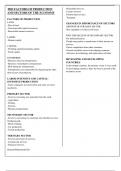
THE FACTORS OF PRODUCTION -Household services.
-Leisure services.
AND SECTORS OF THE ECONOMY
-Professional services.
-Transport.
FACTORS OF PRODUCTION
LAND:
CHANGES IN IMPORTANCE OF SECTORS
-Plot of land.
GROWTH OF TERTIARY SECTOR:
-Non-renewable natural resources.
-Has expanded over the last 60 years.
-Renewable natural resources.
WHY THE DECLINE OF SECONDARY SECTOR:
LABOR:
-De-industrialization.
-Human capital.
-People may prefer to spend more of their income on
services.
CAPITAL:
-Fierce competition from other countries.
-Working capital/circulating capital.
-Growth of public sector in developing countries.
-Fixed capital.
-Advances in technology and replacement of labor.
ENTERPRISE
DEVELOPED AND DEVELOPING
-Business ideas by entrepreneurs.
-Business ownership by entrepreneurs.
COUNTRIES
-Risk-taking by entrepreneurs. -In developed countries, the primary sector is very small.
-Entrepreneurs are responsible for organizing the other -In developing countries, there has been a growth of the
three factors of production. secondary sector.
LABOR-INTENSIVE AND CAPITAL-
INTENSIVE PRODUCTION
-Some companies use more labor and some use more
machinery.
PRIMARY SECTOR
-Involves extracting raw materials from the earth.
-Agriculture.
-Fishing.
-Forestry.
-Mining and quarrying.
SECONDARY SECTOR
-Involves converting raw materials into finished or semi-
finished goods.
-Metal working.
-Car production.
-Textile production.
TERTIARY SECTOR
-Involves provision of services.
-Commercial services.
-Financial services.
Hamad Mohammed|11D
, PRODUCTIVITY AND DIVISION OF -Health implications for workers.
-Being skilled in only one task may lead to less chance
LABOR
of finding employment.
PRODUCTIVITY
DIVISION OF LABOR AND BUSINESSES
-Rate at which goods are produced.
ADVANTAGES:
-Amount of goods produced in relation to work, time,
-Efficiency is improved.
money and number of resources needed to produce them.
-A greater use of specialist tools.
-Production time is reduced.
FACTORS AFFECTING PRODUCTIVITY -Organization of production becomes easier.
LAND:
-Fertilizers and pesticides. DISADVANTAGES:
-Drainage. -Workers may become dissatisfied and unmotivated,
-Irrigation. affecting production.
-Reclamation. -Problems may occur if one stage of production depends
-Genetically modified crops. on another stage.
-Loss of flexibility in the workplace.
LABOR:
-Training.
-Improved motivation using piece rates and job rotation
etc.
-Improved working practices and production methods.
-Migration of skilled workers from overseas.
CAPITAL:
-Use of new technological capital in the primary sector,
secondary sector and tertiary sector.
THE DIVISION OF LABOR
-Production process is broken down into small parts and
each worker is allocated a specific task.
-Specialization may raise efficiency and productivity in
firms.
THE DIVISION OF LABOR AND THE
INDIVIDUAL
ADVANTAGES:
-Specialization.
-Workers with well practices skills in will find
employment easier.
-Learning new skills or improve existing ones.
-Job satisfaction if workers are highly skilled in a
specialist task.
DISADVANTAGES:
-Repetitiveness and boredom.
-Dissatisfaction.
Hamad Mohammed|11D
-Leisure services.
AND SECTORS OF THE ECONOMY
-Professional services.
-Transport.
FACTORS OF PRODUCTION
LAND:
CHANGES IN IMPORTANCE OF SECTORS
-Plot of land.
GROWTH OF TERTIARY SECTOR:
-Non-renewable natural resources.
-Has expanded over the last 60 years.
-Renewable natural resources.
WHY THE DECLINE OF SECONDARY SECTOR:
LABOR:
-De-industrialization.
-Human capital.
-People may prefer to spend more of their income on
services.
CAPITAL:
-Fierce competition from other countries.
-Working capital/circulating capital.
-Growth of public sector in developing countries.
-Fixed capital.
-Advances in technology and replacement of labor.
ENTERPRISE
DEVELOPED AND DEVELOPING
-Business ideas by entrepreneurs.
-Business ownership by entrepreneurs.
COUNTRIES
-Risk-taking by entrepreneurs. -In developed countries, the primary sector is very small.
-Entrepreneurs are responsible for organizing the other -In developing countries, there has been a growth of the
three factors of production. secondary sector.
LABOR-INTENSIVE AND CAPITAL-
INTENSIVE PRODUCTION
-Some companies use more labor and some use more
machinery.
PRIMARY SECTOR
-Involves extracting raw materials from the earth.
-Agriculture.
-Fishing.
-Forestry.
-Mining and quarrying.
SECONDARY SECTOR
-Involves converting raw materials into finished or semi-
finished goods.
-Metal working.
-Car production.
-Textile production.
TERTIARY SECTOR
-Involves provision of services.
-Commercial services.
-Financial services.
Hamad Mohammed|11D
, PRODUCTIVITY AND DIVISION OF -Health implications for workers.
-Being skilled in only one task may lead to less chance
LABOR
of finding employment.
PRODUCTIVITY
DIVISION OF LABOR AND BUSINESSES
-Rate at which goods are produced.
ADVANTAGES:
-Amount of goods produced in relation to work, time,
-Efficiency is improved.
money and number of resources needed to produce them.
-A greater use of specialist tools.
-Production time is reduced.
FACTORS AFFECTING PRODUCTIVITY -Organization of production becomes easier.
LAND:
-Fertilizers and pesticides. DISADVANTAGES:
-Drainage. -Workers may become dissatisfied and unmotivated,
-Irrigation. affecting production.
-Reclamation. -Problems may occur if one stage of production depends
-Genetically modified crops. on another stage.
-Loss of flexibility in the workplace.
LABOR:
-Training.
-Improved motivation using piece rates and job rotation
etc.
-Improved working practices and production methods.
-Migration of skilled workers from overseas.
CAPITAL:
-Use of new technological capital in the primary sector,
secondary sector and tertiary sector.
THE DIVISION OF LABOR
-Production process is broken down into small parts and
each worker is allocated a specific task.
-Specialization may raise efficiency and productivity in
firms.
THE DIVISION OF LABOR AND THE
INDIVIDUAL
ADVANTAGES:
-Specialization.
-Workers with well practices skills in will find
employment easier.
-Learning new skills or improve existing ones.
-Job satisfaction if workers are highly skilled in a
specialist task.
DISADVANTAGES:
-Repetitiveness and boredom.
-Dissatisfaction.
Hamad Mohammed|11D