Comprehensive exam BIOS 252 bv bv bv
1. proximal: part of the body that is closer to the center of the body than another part.
bv bv bv bv bv bv bv bv bv bv bv bv bv bv bv bv
ex:the knee is proximal to the toes
bv bv bv bv bv bv bv
2. Chemical reaction that uses water and involves breaking molecules down
bv bv bv bv bv bv bv bv bv
into smaller pieces: hydrolysis
bv bv bv bv
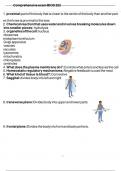
3. organelles of the cell:nucleus bv bv bv v
b
ribosomes
bv
endoplasmicreticulum b
v
Golgi apparatus
bv bv
vesicles
bv
vacuoles
lysosomes
bv
mitochondria
bv
chloroplasts
bv
centrioles
bv
4. What does the plasma membrane do?: Controls what enters and leaves the cell
bv bv bv bv bv bv bv bv bv bv bv bv
5. Homeostatic regulatory mechanisms: Negative feedback is used the most
bv bv bv bv bv bv bv bv
6. What kind of tissue is blood?: Connective
bv bv bv bv bv bv
7. Saggital: divides body into left and right
bv bv bv bv bv bv
8. transverse plane: Divides body into upper and lower partsbv bv bv bv bv bv bv bv
9. frontal plane: Divides the body into front and back portions.
bv bv bv bv bv bv bv bv bv
1/5 bv bv
, Comprehensive exam BIOS 252 bv bv bv
10. what muscle provides a major force: prime mover (agonist)
bv bv bv bv bv bv bv bv
11. isotoniccontractions: musclelengthchangesandmovestheload,thetension
v
b bv b
v b
v b
v b
v b
v b
v b
v b
v
remains relatively constant through the rest of the contractile period.
bv bv bv bv bv bv bv bv bv bv
come in two flavors concentric and eccentric
bv bv bv bv bv bv
12. attachment to the stationary bone: organ bv bv bv bv bv
13. Striations can be seen on what types of muscle?: cardiac and skeletal bv bv bv bv bv bv bv bv bv bv bv
14. What is the membrane of skeletal muscles: sarcolemma - contains sar-
bv bv bv bv bv bv bv bv bv bv
coplasm, the cytoplasm of muscle cells
bv bv bv bv bv bv
15. Molecule that blocks myosin and actin: Tropomyosin bv bv bv bv bv bv
16. What is released at the neuromuscular junction that results in muscular
bv bv bv bv bv bv bv bv bv bv
contraction: acetylcholine
bv bv
17. What are some factors that increase conduction of action potential: Axon
bv bv bv bv bv bv bv bv bv bv
diameter, internode distance, and myelin sheath thickness
bv bv bv bv bv bv bv
18. Functional contractile unit of a muscle fiber: sarcomere bv bv bv bv bv bv bv
19. IPSP: inhibitory post-synaptic potential;small, transitory change in the negative
bv bv bv b
v bv bv bv bv bv
direction; i.e., hyperpolarization
bv bv bv
20. What are the muscles that move the eye (know the location, and what
bv bv bv bv bv bv bv bv bv bv bv bv
direction): superior rectus: attaches to top of eye, moves eye upward
bv bv bv bv bv bv bv bv bv bv bv
inferior rectus:attaches to bottom of eye, moves eye downward
bv b
v bv bv bv bv bv bv bv
medial rectus:attaches to side of eye near nose, moves eye inward towards nose
bv bv bv bv bv bv bv bv bv bv bv bv bv
lateral rectus:attaches to side of eye near temple, moves eye outward
bv bv bv bv bv bv bv bv bv bv bv
21. major agonist of flexion of the arm: biceps brachii
bv bv bv bv bv bv bv bv
22. What is myelin sheath and what type of cells is it made up of: an insulating
bv bv bv bv bv bv bv bv bv bv bv bv bv bv bv
layer, or sheath that forms around nerves, including those in the brain and spinal
bv bv bv bv bv bv bv bv bv bv bv bv bv bv
cord. It is made up of protein and fatty substances.
bv bv bv bv bv bv bv bv bv bv
Schwann Cells - Peripheral Nervous System bv bv bv bv bv
Oligodendroglial cells - Central Nervous System
bv bv bv bv bv bv
2/5 bv bv
1. proximal: part of the body that is closer to the center of the body than another part.
bv bv bv bv bv bv bv bv bv bv bv bv bv bv bv bv
ex:the knee is proximal to the toes
bv bv bv bv bv bv bv
2. Chemical reaction that uses water and involves breaking molecules down
bv bv bv bv bv bv bv bv bv
into smaller pieces: hydrolysis
bv bv bv bv
3. organelles of the cell:nucleus bv bv bv v
b
ribosomes
bv
endoplasmicreticulum b
v
Golgi apparatus
bv bv
vesicles
bv
vacuoles
lysosomes
bv
mitochondria
bv
chloroplasts
bv
centrioles
bv
4. What does the plasma membrane do?: Controls what enters and leaves the cell
bv bv bv bv bv bv bv bv bv bv bv bv
5. Homeostatic regulatory mechanisms: Negative feedback is used the most
bv bv bv bv bv bv bv bv
6. What kind of tissue is blood?: Connective
bv bv bv bv bv bv
7. Saggital: divides body into left and right
bv bv bv bv bv bv
8. transverse plane: Divides body into upper and lower partsbv bv bv bv bv bv bv bv
9. frontal plane: Divides the body into front and back portions.
bv bv bv bv bv bv bv bv bv
1/5 bv bv
, Comprehensive exam BIOS 252 bv bv bv
10. what muscle provides a major force: prime mover (agonist)
bv bv bv bv bv bv bv bv
11. isotoniccontractions: musclelengthchangesandmovestheload,thetension
v
b bv b
v b
v b
v b
v b
v b
v b
v b
v
remains relatively constant through the rest of the contractile period.
bv bv bv bv bv bv bv bv bv bv
come in two flavors concentric and eccentric
bv bv bv bv bv bv
12. attachment to the stationary bone: organ bv bv bv bv bv
13. Striations can be seen on what types of muscle?: cardiac and skeletal bv bv bv bv bv bv bv bv bv bv bv
14. What is the membrane of skeletal muscles: sarcolemma - contains sar-
bv bv bv bv bv bv bv bv bv bv
coplasm, the cytoplasm of muscle cells
bv bv bv bv bv bv
15. Molecule that blocks myosin and actin: Tropomyosin bv bv bv bv bv bv
16. What is released at the neuromuscular junction that results in muscular
bv bv bv bv bv bv bv bv bv bv
contraction: acetylcholine
bv bv
17. What are some factors that increase conduction of action potential: Axon
bv bv bv bv bv bv bv bv bv bv
diameter, internode distance, and myelin sheath thickness
bv bv bv bv bv bv bv
18. Functional contractile unit of a muscle fiber: sarcomere bv bv bv bv bv bv bv
19. IPSP: inhibitory post-synaptic potential;small, transitory change in the negative
bv bv bv b
v bv bv bv bv bv
direction; i.e., hyperpolarization
bv bv bv
20. What are the muscles that move the eye (know the location, and what
bv bv bv bv bv bv bv bv bv bv bv bv
direction): superior rectus: attaches to top of eye, moves eye upward
bv bv bv bv bv bv bv bv bv bv bv
inferior rectus:attaches to bottom of eye, moves eye downward
bv b
v bv bv bv bv bv bv bv
medial rectus:attaches to side of eye near nose, moves eye inward towards nose
bv bv bv bv bv bv bv bv bv bv bv bv bv
lateral rectus:attaches to side of eye near temple, moves eye outward
bv bv bv bv bv bv bv bv bv bv bv
21. major agonist of flexion of the arm: biceps brachii
bv bv bv bv bv bv bv bv
22. What is myelin sheath and what type of cells is it made up of: an insulating
bv bv bv bv bv bv bv bv bv bv bv bv bv bv bv
layer, or sheath that forms around nerves, including those in the brain and spinal
bv bv bv bv bv bv bv bv bv bv bv bv bv bv
cord. It is made up of protein and fatty substances.
bv bv bv bv bv bv bv bv bv bv
Schwann Cells - Peripheral Nervous System bv bv bv bv bv
Oligodendroglial cells - Central Nervous System
bv bv bv bv bv bv
2/5 bv bv