NBST 520-001 Exam 2
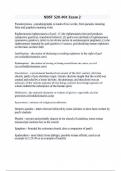
Pseudonymous - pseudepigrapha is made of two words, from pseudos meaning false and graphein meaning write Righteousness/righteousness of god - (1) the righteousness that god produces (subjective genitive), transforms believer; (2) god's own attribute of righteousness (possessive genitive), refers to his divine justice in eschatological judgment; (3) the righteousness imputed by god (genitive of source), god declaring sinners righteous on the basis on their faith Justification - the action of declaring or making righteous in the sight of god () Redemption - the action of saving or being saved from sin, error, or evil () Gnosticism - a prominenet heretical movement of the 2nd- century christian church, partly of pre-christian origin. Gnostic doctrine taught that the world was created and ruled by a lesser divinity, the demiurge, and that christ was an emissary of the remote supreme divine being, esoteric knowledge (gnosis) of whom enabled the redemption of the human spirit. Hellenism - the national character or culture of greece, especially ancient greece() Syncretism - mixture of religions/worldviews Deutero-pauline - letters that are believed by some scholars to have been written by paul's students Phoebe - servant and probably deacon in the church of cenchrea, some roman manuscripts mention her as the courier Epaphras - founded the colossian church, also a companion of paul's Epahroditus - most likely from philippi, possible roman official, used as an example in 2:25-30 as an example of humilty Euodia - mentioned as having disunity with syntche in philippians Syntche - mentioned as having disunity with euodia in philippians Onesimus - the runaway slave in philemon, was charged with carrying the letter of colossians back Philemon - slave master in the book of philemon, hosted the church of colossae, had guest room for paul, probably wealthy Essenes - strict interpretation of law, strict discipline, strict purity, messianic expectations, similar to pharisees in certain views Purpose statement for 1 & 2 corinthians - 1 corinthians purpose was to address practical issues such as schisms in the church, lawsuits in local courts, the exercise of church discipline, questions related to idolatry, christian marriage, the ordinances, spiritual gifts, and theological issues such as the nature of salvation and the doctrine of resurrection. 2 corinthians purpose was to defend paul's apostolic authority, to explain the nature of the covenant, to encourage sacrificial giving to the relief offering and to challenge the claims of false apostles. Purpose state for romans - to promote jewish-gentile unity in the church by setting forth paul's gospel Purpose for prison epistles - philippians purpose: to promote gospel-centered unity for the sake of advancing the gospel Ephesians purpose: to declare and promote cosmic reconciliation and unity in christ Colossians purpose: to combat false teaching with the supremacy and sufficiency of christ. Philemon purpose: to encourage philemon to accept onesimus as a brother and to send him back to paul and possible grant him his freedom. Purpose statement for pastoral epistles - to instruct and equip them in their role as apostolic delegates. Various understandings of righteousness of god in romans - (1) the righteousness that god produces (subjective genitive), transforms believer; (2) god's own attribute of righteousness (possessive genitive), refers to his divine justice in eschatological judgment; (3) the righteousness imputed by god (genitive of source), god declaring sinners righteous on the basis on their faith Suffering in philippians - paul invited the philippians to see their current suffering as a sign of their citizenship of heaven. Debates on the circumcision of christ - (1) objective, the circumcision that christ received; (2) subjective, the circumcision that christ performs; (3) possessive, the circumcision that belongs to christ: the first one is the most likely answer, since it parallels "putting off body of flesh," the circumcision is a metaphor for death. Trustworthy sayings in pastoral epistles - focuses on christ's work of salvation and its implications for god's workers Three main points paul makes in colossians - (1)all the fullness dwells in the preeminent christ; (2) believers are complete in christ; (3) they should seek to know more of christ in his fullness by seeking the things above where he dwells, not the things on earth. List of colossian heresies - essene judaism and gnosticism, hellenism, paganism, and judaism Discuss the occasion and purpose for the writing of romans. How did the church in rome come into existence? What role, if any, did paul play in founding this church? What was the composition of the church in rome and what evidence do you find in the letter to support your view? - paul wrote romans shortly before his final recorded journey to jerusalem to give a relief offering, served as a formal introduction of paul and his gospel to the church in rome in preparation for his eventual visit that he wanted to do after he dropped the relief offering off, plan was to stop in rome on the way to spain. The purpose was to promote jewish-gentle unity in the church by setting forth paul's gospel. The occasion was preparation for paul's journey through rome to spain. It is possible the church in rome started with jews that traveled to jerusalem for one of the major feast and heard the gospel, maybe as early as pentecost. The other possibility is that the church started with christians that migrated there. There is evidence that christians lived there as early as late ad 40s.
Información del documento
- Subido en
- 25 de octubre de 2024
- Número de páginas
- 6
- Escrito en
- 2024/2025
- Tipo
- Examen
- Contiene
- Preguntas y respuestas