Case Management Powers and Striking Out
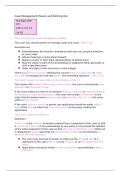
The Main CPR
are :
CPR 3.1 to 3.5
3A PD
The court's general case management powers
The court has several powers to manage cases and costs - CPR 3.1(2)
Examples are:
Extend/shorten the time for compliance with any rule, practice direction,
or court order
Adjourn hearings or bring them forward
Require a party or their legal representative to attend court
Stay the whole or part of the proceedings or judgment either generally or
until a specified event
Order any party to file and serve a costs budget.
There is a general provision allowing the court to take any other step or make
any order to manage the case and further the overriding objective – CPR 3.1(2)
The court’s power to make orders of its initiative - CPR 3.3.
This means that without either party taking a step, the court could provide new
directions or terminate a case.
If the court makes an order of its initiative without a hearing or without allowing
the parties to make representations, the court will include a statement in the
order that the parties have a right to apply to set aside, stay, or vary the order
within a given period.
If the court does not specify a period, any application should be made within 7
days of the date on which the order was served on the party making the
application.
The court’s power to strike out
Definition –
Strike out is the deletion of written material from a statement of the case so that
it cannot be relied on in the proceedings by any party. It can include the deletion
of the entire statement of the case so that the case is effectively over. Strike out
is designed to target cases that are inadequately drafted or are otherwise an
abuse of the court process.
The court may exercise its power to strike out the whole or part of a
statement of the case (CPR 3.4) of its initiative or on the application of a
party.
Applications should be made as soon as possible and preferably before
allocation.
The Main CPR
are :
CPR 3.1 to 3.5
3A PD
The court's general case management powers
The court has several powers to manage cases and costs - CPR 3.1(2)
Examples are:
Extend/shorten the time for compliance with any rule, practice direction,
or court order
Adjourn hearings or bring them forward
Require a party or their legal representative to attend court
Stay the whole or part of the proceedings or judgment either generally or
until a specified event
Order any party to file and serve a costs budget.
There is a general provision allowing the court to take any other step or make
any order to manage the case and further the overriding objective – CPR 3.1(2)
The court’s power to make orders of its initiative - CPR 3.3.
This means that without either party taking a step, the court could provide new
directions or terminate a case.
If the court makes an order of its initiative without a hearing or without allowing
the parties to make representations, the court will include a statement in the
order that the parties have a right to apply to set aside, stay, or vary the order
within a given period.
If the court does not specify a period, any application should be made within 7
days of the date on which the order was served on the party making the
application.
The court’s power to strike out
Definition –
Strike out is the deletion of written material from a statement of the case so that
it cannot be relied on in the proceedings by any party. It can include the deletion
of the entire statement of the case so that the case is effectively over. Strike out
is designed to target cases that are inadequately drafted or are otherwise an
abuse of the court process.
The court may exercise its power to strike out the whole or part of a
statement of the case (CPR 3.4) of its initiative or on the application of a
party.
Applications should be made as soon as possible and preferably before
allocation.