Chapter 28: Infants with Gestational Age–Related Problems
MULTIPLE CHOICE
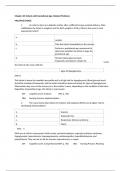
1. An infant is born to a diabetic mother after a difficult forceps-assisted delivery. After
stabilization the infant is weighed, and the birth weight is 4550 g. What is the nurse’s most
appropriate action?
a.
mother.
b. Take the infant immediately to the nursery.
c. Perform a gestational-age assessment to
determine whether the infant is large for
gestational age.
d. Monitor blood glucose levels
frequently and observe closely for Leave
the infant in the room with the
signs of hypoglycemia.
ANS: D
This infant is above the ninetieth percentile and is at high risk for hypoglycemia. Blood glucose levels
should be monitored frequently, and the infant should be observed closely for signs of hypoglycemia.
Observation may occur in the nursery or in the mother’s room, depending on the condition of the fetus.
Regardless of gestational age, this infant is macrosomic.
DIF: Cognitive Level: Analysis REF: p. 782
OBJ: Nursing Process: Implementation
2. The nurse knows that infants of mothers with diabetes (IDMs) are at higher risk for
developing which problem?
a. Anemia
b. Hyponatremia
c. Respiratory distress syndrome
d. Sepsis
ANS: C
IDMs are at risk for macrosomia, birth trauma, perinatal asphyxia, respiratory distress syndrome,
hypoglycemia, hypocalcemia, hypomagnesemia, cardiomyopathy, hyperbilirubinemia, and
polycythemia. They are not at risk for anemia, hyponatremia, or sepsis.
DIF: Cognitive Level: ComprehensionREF: p. 782 OBJ: Nursing Process: Planning
, 3. An infant was born 2 hours ago at 37 weeks of gestation. Which blood glucose level
would indicate to the nurse that the infant is experiencing hyperglycemia?
a. 2.3 mmol/L
b. 3.2 mmol/L
c. 6.8 mmol/L
d. 8.6 mmol/L
ANS: D
Hyperglycemia is defined as a blood glucose level greater than 6.9 mmol/L (whole blood) or plasma
glucose of 8.0 to 8.3 mmol/L.
DIF: Cognitive Level: Analysis REF: p. 781
OBJ: Nursing Process: Assessment
4. On day 3 of life, a newborn continues to require 100% oxygen by nasal cannula. The
parents ask if they can hold their infant during his next gavage feeding. Given that this newborn is
physiologically stable, what is the basis for the nurse’s response?
a. Parents are not allowed to hold infants
who depend on oxygen.
b. Parents may only hold their baby’s hand
during the feeding.
c. Feedings cause more physiological stress,
so the baby must be closely monitored and
should not be held by parents.
d. Parents are encouraged to hold their
baby during the feeding.
ANS: D
Parents are encouraged to hold their baby during the feeding; this is an accurate basis for the nurse’s
response to the parents’ question. Parental interaction via holding should be encouraged during gavage
feedings so that the infant will associate the feeding with positive interactions. Nasal cannula oxygen
therapy allows for easier feedings and psychosocial interactions. The parents can swaddle the infant
during gavage feedings to help the infant associate the feeding with positive interactions. Some parents
like to do kangaroo care while gavage feeding their infant. Swaddling or kangaroo care during feedings
provides positive interactions for the infant.
DIF: Cognitive Level: Application REF: p. 766 OBJ: Nursing Process: Planning
5. A premature infant with respiratory distress syndrome (RDS) receives artificial
surfactant. Which is true with regard to surfactant therapy?
MULTIPLE CHOICE
1. An infant is born to a diabetic mother after a difficult forceps-assisted delivery. After
stabilization the infant is weighed, and the birth weight is 4550 g. What is the nurse’s most
appropriate action?
a.
mother.
b. Take the infant immediately to the nursery.
c. Perform a gestational-age assessment to
determine whether the infant is large for
gestational age.
d. Monitor blood glucose levels
frequently and observe closely for Leave
the infant in the room with the
signs of hypoglycemia.
ANS: D
This infant is above the ninetieth percentile and is at high risk for hypoglycemia. Blood glucose levels
should be monitored frequently, and the infant should be observed closely for signs of hypoglycemia.
Observation may occur in the nursery or in the mother’s room, depending on the condition of the fetus.
Regardless of gestational age, this infant is macrosomic.
DIF: Cognitive Level: Analysis REF: p. 782
OBJ: Nursing Process: Implementation
2. The nurse knows that infants of mothers with diabetes (IDMs) are at higher risk for
developing which problem?
a. Anemia
b. Hyponatremia
c. Respiratory distress syndrome
d. Sepsis
ANS: C
IDMs are at risk for macrosomia, birth trauma, perinatal asphyxia, respiratory distress syndrome,
hypoglycemia, hypocalcemia, hypomagnesemia, cardiomyopathy, hyperbilirubinemia, and
polycythemia. They are not at risk for anemia, hyponatremia, or sepsis.
DIF: Cognitive Level: ComprehensionREF: p. 782 OBJ: Nursing Process: Planning
, 3. An infant was born 2 hours ago at 37 weeks of gestation. Which blood glucose level
would indicate to the nurse that the infant is experiencing hyperglycemia?
a. 2.3 mmol/L
b. 3.2 mmol/L
c. 6.8 mmol/L
d. 8.6 mmol/L
ANS: D
Hyperglycemia is defined as a blood glucose level greater than 6.9 mmol/L (whole blood) or plasma
glucose of 8.0 to 8.3 mmol/L.
DIF: Cognitive Level: Analysis REF: p. 781
OBJ: Nursing Process: Assessment
4. On day 3 of life, a newborn continues to require 100% oxygen by nasal cannula. The
parents ask if they can hold their infant during his next gavage feeding. Given that this newborn is
physiologically stable, what is the basis for the nurse’s response?
a. Parents are not allowed to hold infants
who depend on oxygen.
b. Parents may only hold their baby’s hand
during the feeding.
c. Feedings cause more physiological stress,
so the baby must be closely monitored and
should not be held by parents.
d. Parents are encouraged to hold their
baby during the feeding.
ANS: D
Parents are encouraged to hold their baby during the feeding; this is an accurate basis for the nurse’s
response to the parents’ question. Parental interaction via holding should be encouraged during gavage
feedings so that the infant will associate the feeding with positive interactions. Nasal cannula oxygen
therapy allows for easier feedings and psychosocial interactions. The parents can swaddle the infant
during gavage feedings to help the infant associate the feeding with positive interactions. Some parents
like to do kangaroo care while gavage feeding their infant. Swaddling or kangaroo care during feedings
provides positive interactions for the infant.
DIF: Cognitive Level: Application REF: p. 766 OBJ: Nursing Process: Planning
5. A premature infant with respiratory distress syndrome (RDS) receives artificial
surfactant. Which is true with regard to surfactant therapy?