Name: Score:
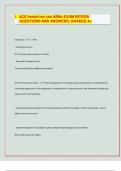
174 Multiple choice questions
Definition 1 of 174
Influencing group activities towards the achievement of goals
Group problem solving is important because
73% of a supervisors time is doing what
Leadership is defined as
6 stages of group development process
Term 2 of 174
50 percent rule
Supervisors should focus solely on their individual tasks and ignore team needs
Supervisors should spend half their time managing others rather than being another
employee
Supervisors should delegate all tasks without overseeing them
Supervisors should work remotely and not interact with their team
Term 3 of 174
Constructive feedback can be two types
interaction and influence
consultative, directive, participative
optimistic or corrective
true
,Term 4 of 174
It is essential for LE to communicate with victims and witnesses effectively because
They have legal training and expertise
They are always truthful and reliable
They are trained investigators themselves
They are a major source of common crime information known to LE
Term 5 of 174
Sanctions for crimes
Felony- 99 or more years or by death, misdemeanor - up to 1 year or $500, violation- only
by fine $250 max
Felony- 5 or more years or by death, misdemeanor - up to 1 year or $500, violation- only by
fine $250 max
Felony- 1 or more years or by death, misdemeanor - up to 1 year or $501, violation- only by
fine $250 max
Felony- 1 or more years or by death, misdemeanor - up to 1 year or $500, violation- only by
fine $250 max
Definition 6 of 174
1. Directing others 2. Interpersonal skills 3. Perception 4. Decision making 5. Decisiveness 6.
Adaptability 7. Oral communication 8. Written communication
Non verbal communication is culturally specific true or false
hue and cry
Eight traits or characteristics needed to become a successful law enforcement officer
(stinchcomb)
Supervisors must be given the training and skills needed to create a working milieu that
,Definition 7 of 174
Readiness to learn, Orientation to learning, Self-concept, Experience
ROSE acronym (adult learning)
Problem oriented policing
Gatekeeping
Factors that foster change
Definition 8 of 174
Alternatives, enhancement, knowledgeable, need is fulfilled, planned
"types" of problem employees
Reasons for accepting change
Styles of counseling
ROSE acronym (adult learning)
Definition 9 of 174
Nonfeasance, misfeasance, malfeasance
Significant law enforcement norms
Affirmative action mandates have changed hiring practices and diversity
Performance appraisal systems should stick to how many objectives
Occupational deviance can be broken down into three catagories
, Term 10 of 174
True or false: the majority of police actions have little to do with criminal law and instead involve
service to the community
Yes
Their communication
Noise
True
Definition 11 of 174
Graphic rating scale, critical incident method, behavioral anchored rating scales, paired
comparison, management by objectives
Flow
Types of loans:
Methods of appraisal
Appraisals
Definition 12 of 174
Orientation, conflict and challenge, cohesion, delusion, disillusion, acceptance
6 stages of group development process
styles of counseling
"types" of problem employees
six building blocks of ethics
174 Multiple choice questions
Definition 1 of 174
Influencing group activities towards the achievement of goals
Group problem solving is important because
73% of a supervisors time is doing what
Leadership is defined as
6 stages of group development process
Term 2 of 174
50 percent rule
Supervisors should focus solely on their individual tasks and ignore team needs
Supervisors should spend half their time managing others rather than being another
employee
Supervisors should delegate all tasks without overseeing them
Supervisors should work remotely and not interact with their team
Term 3 of 174
Constructive feedback can be two types
interaction and influence
consultative, directive, participative
optimistic or corrective
true
,Term 4 of 174
It is essential for LE to communicate with victims and witnesses effectively because
They have legal training and expertise
They are always truthful and reliable
They are trained investigators themselves
They are a major source of common crime information known to LE
Term 5 of 174
Sanctions for crimes
Felony- 99 or more years or by death, misdemeanor - up to 1 year or $500, violation- only
by fine $250 max
Felony- 5 or more years or by death, misdemeanor - up to 1 year or $500, violation- only by
fine $250 max
Felony- 1 or more years or by death, misdemeanor - up to 1 year or $501, violation- only by
fine $250 max
Felony- 1 or more years or by death, misdemeanor - up to 1 year or $500, violation- only by
fine $250 max
Definition 6 of 174
1. Directing others 2. Interpersonal skills 3. Perception 4. Decision making 5. Decisiveness 6.
Adaptability 7. Oral communication 8. Written communication
Non verbal communication is culturally specific true or false
hue and cry
Eight traits or characteristics needed to become a successful law enforcement officer
(stinchcomb)
Supervisors must be given the training and skills needed to create a working milieu that
,Definition 7 of 174
Readiness to learn, Orientation to learning, Self-concept, Experience
ROSE acronym (adult learning)
Problem oriented policing
Gatekeeping
Factors that foster change
Definition 8 of 174
Alternatives, enhancement, knowledgeable, need is fulfilled, planned
"types" of problem employees
Reasons for accepting change
Styles of counseling
ROSE acronym (adult learning)
Definition 9 of 174
Nonfeasance, misfeasance, malfeasance
Significant law enforcement norms
Affirmative action mandates have changed hiring practices and diversity
Performance appraisal systems should stick to how many objectives
Occupational deviance can be broken down into three catagories
, Term 10 of 174
True or false: the majority of police actions have little to do with criminal law and instead involve
service to the community
Yes
Their communication
Noise
True
Definition 11 of 174
Graphic rating scale, critical incident method, behavioral anchored rating scales, paired
comparison, management by objectives
Flow
Types of loans:
Methods of appraisal
Appraisals
Definition 12 of 174
Orientation, conflict and challenge, cohesion, delusion, disillusion, acceptance
6 stages of group development process
styles of counseling
"types" of problem employees
six building blocks of ethics