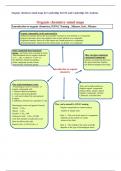
Organic chemistry mind maps for Cambridge IGCSE and Cambridge O/L students
Organic chemistry mind maps
Introduction to organic chemistry, IUPAC Naming , Alkanes, fuel , Alkenes
Organic compounds can be represented in
Molecular formula: shows the exact number of atoms in each element in a compound
Empirical formula: shows the simplest ratio of each element in a compound
Displayed formula: shows all of the atoms and bonds present in a compound
Structural formula: shows how the carbon atoms are joined in a compound
Some compounds have functional
groups : any bond, atom or group of atoms
that substituted into an organic molecule They can show isomerism
-C=C- , OH, -COOH, R - COO - R’ ( structural isomerism)
The different chemical properties Isomers are molecules that have
of the compound are due to their the same molecular formula,
characteristic functional groups. but different displayed formulae.
Introduction to organic
chemistry
They make homologous series’
A homologous series is a family of They can be hydrocarbons or
organic compounds with Regular organic compounds
1. similar chemical properties Hydrocarbons- alkane, alkene
2. trend in physical properties Organic compounds- alcohol,
3. each series shares the same general Carboxylic acid and esters
Formula
4. difference between two members is CH2
They can be named by IUPAC naming
Homologous series and general formula
Alkane - CnH2n+2 Organic compounds are named using a
Alkene - CnH2n number of simple rules.
Alcohol - CnH2n+1OH
Carboxylic acid - CnH2n+1COOH Rule 1: - The root of the name of a compound
depends on the number of carbon
( The first member of carboxylic acid
atoms in the chain.
Does not follow this rule)
Esters (CnH2n+1) COO (CnH2n+1)’ Rule 2: - The ending of the name normally
depends on the type of homologous series
, Organic chemistry mind maps for Cambridge IGCSE and Cambridge O/L students
Mind map for IUPAC naming
Naming alkanes
1 . Identify the longest unbranched chain
2.Indicate the position of the branch to the end carbon atom with a Lowest number
3. ,Each branch needs to be numbered. the number of branches are identified as 'di', 'tri', etc, prefixes.
4. The name is written inserting “,” between numbers, and a “-” between numbers and alphabets .
Name ends with “ ane”
H H CH3 H
| | | |
Example :H-C – C – C – C- H
| | | |
H H H H
2-methylbutane
H H CH3 CH3 H
| | | | |
H – C– C– C– C– C– H
| | | | |
H H H H H 2,3-dimethylpentane
Naming alkenes
1. Identify the longest carbon
Naming alcohols
Chain
1. Identify the longest carbon
2. Identify the functional group
Chain
3. Count the position of the
2. Identify the functional group
Functional group from the nearest
3. Count the position of the
Carbon atom. Name ends with “ ene” .
Functional group from the nearest
Example:
Carbon atom. Name ends with “ ol” .
Examples : IUPAC naming of H H H H H
| | | | |
H H OH H Organic H – C = C -C -C -C H pent -1– ene
| | | | Homologous series’ | | |
H-C – C – C – C- H H H H
| | | |
H H H H H H H H H
butan-2-ol | | | | |
H – C-C=C-C-C – H
H H OH H H | | |
| | | | | H H H
H – C– C– C– C– C– H Pent-2-ene
| | | | |
H H H H H pentan-3-ol
Naming carboxylic acids Naming ester
According to the number of carbon The name of an ester is made up of two parts, an alkyl
Atoms identify the prefix(root) and group( from alcohol) and the anion of a carboxylic Acid .
Add the “ oic acid” to the name When compounds are named give the priority for the group
HH H O it comes from alcohol. Esters end the suffix “ oate”
| | | || Methyl ethanoate – formed by ethanoic acid and methanol
H-C – C – C – C- OH
| | |
H H H
Butanoic acid
H H H H O Propyl ethanoate- formed by ethanoic acid and propanol
| | | | ||
H – C– C– C– C– C– OH
| | | |
H H H H pentanoic acid
Organic chemistry mind maps
Introduction to organic chemistry, IUPAC Naming , Alkanes, fuel , Alkenes
Organic compounds can be represented in
Molecular formula: shows the exact number of atoms in each element in a compound
Empirical formula: shows the simplest ratio of each element in a compound
Displayed formula: shows all of the atoms and bonds present in a compound
Structural formula: shows how the carbon atoms are joined in a compound
Some compounds have functional
groups : any bond, atom or group of atoms
that substituted into an organic molecule They can show isomerism
-C=C- , OH, -COOH, R - COO - R’ ( structural isomerism)
The different chemical properties Isomers are molecules that have
of the compound are due to their the same molecular formula,
characteristic functional groups. but different displayed formulae.
Introduction to organic
chemistry
They make homologous series’
A homologous series is a family of They can be hydrocarbons or
organic compounds with Regular organic compounds
1. similar chemical properties Hydrocarbons- alkane, alkene
2. trend in physical properties Organic compounds- alcohol,
3. each series shares the same general Carboxylic acid and esters
Formula
4. difference between two members is CH2
They can be named by IUPAC naming
Homologous series and general formula
Alkane - CnH2n+2 Organic compounds are named using a
Alkene - CnH2n number of simple rules.
Alcohol - CnH2n+1OH
Carboxylic acid - CnH2n+1COOH Rule 1: - The root of the name of a compound
depends on the number of carbon
( The first member of carboxylic acid
atoms in the chain.
Does not follow this rule)
Esters (CnH2n+1) COO (CnH2n+1)’ Rule 2: - The ending of the name normally
depends on the type of homologous series
, Organic chemistry mind maps for Cambridge IGCSE and Cambridge O/L students
Mind map for IUPAC naming
Naming alkanes
1 . Identify the longest unbranched chain
2.Indicate the position of the branch to the end carbon atom with a Lowest number
3. ,Each branch needs to be numbered. the number of branches are identified as 'di', 'tri', etc, prefixes.
4. The name is written inserting “,” between numbers, and a “-” between numbers and alphabets .
Name ends with “ ane”
H H CH3 H
| | | |
Example :H-C – C – C – C- H
| | | |
H H H H
2-methylbutane
H H CH3 CH3 H
| | | | |
H – C– C– C– C– C– H
| | | | |
H H H H H 2,3-dimethylpentane
Naming alkenes
1. Identify the longest carbon
Naming alcohols
Chain
1. Identify the longest carbon
2. Identify the functional group
Chain
3. Count the position of the
2. Identify the functional group
Functional group from the nearest
3. Count the position of the
Carbon atom. Name ends with “ ene” .
Functional group from the nearest
Example:
Carbon atom. Name ends with “ ol” .
Examples : IUPAC naming of H H H H H
| | | | |
H H OH H Organic H – C = C -C -C -C H pent -1– ene
| | | | Homologous series’ | | |
H-C – C – C – C- H H H H
| | | |
H H H H H H H H H
butan-2-ol | | | | |
H – C-C=C-C-C – H
H H OH H H | | |
| | | | | H H H
H – C– C– C– C– C– H Pent-2-ene
| | | | |
H H H H H pentan-3-ol
Naming carboxylic acids Naming ester
According to the number of carbon The name of an ester is made up of two parts, an alkyl
Atoms identify the prefix(root) and group( from alcohol) and the anion of a carboxylic Acid .
Add the “ oic acid” to the name When compounds are named give the priority for the group
HH H O it comes from alcohol. Esters end the suffix “ oate”
| | | || Methyl ethanoate – formed by ethanoic acid and methanol
H-C – C – C – C- OH
| | |
H H H
Butanoic acid
H H H H O Propyl ethanoate- formed by ethanoic acid and propanol
| | | | ||
H – C– C– C– C– C– OH
| | | |
H H H H pentanoic acid