
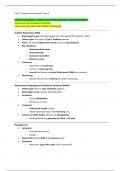
Ch. 51 Endocrine Study Notes- Exam 2
Endocrine Study Notes - Chapter 51: Diabetic Ketoacidosis (DKA)(CLASS NOTES)
Prepared for Nursing Research Methods
State University of New York Institute of Technology
Diabetic Ketoacidosis (DKA)
• Blood Sugar Levels: Typically greater than 350 mg/dL (250 mg/dL for HESI).
• Patient Type: Only seen in Type 1 Diabetes patients.
• Risks: Can lead to hypovolemic shock and cause hyperkalemia.
• Key Symptoms:
o Gastrointestinal upset
o Acetone breath
o Kussmaul respirations
o Ketones in urine
• Treatment:
o Administer an insulin drip.
o Transfer to med-surg unit.
o Low pH and abnormal arterial blood gases (ABGs) are common.
• Monitoring:
o Patients should be on telemetry for heart monitoring.
Hyperosmolar Hyperglycemic Nonketotic Syndrome (HHNS)
• Patient Type: Seen in Type 2 Diabetes patients.
• Blood Sugar Levels: Greater than 600 mg/dL.
• Symptoms:
o Causes dehydration.
o No ketones in urine.
• Treatment:
o Sliding scale insulin is used.
o Patients generally stay on the med-surg unit.
• Common in Older Adults: Monitor for hypokalemia.
o Avoid administering potassium in bolus or IV push.
Hypoglycemia
• Symptoms:
o Cold and clammy skin
o Hunger
• Blood Tests: Normal BUN and creatinine levels.
• Treatment:
o Administer sugar with carbs (milk is preferred).

