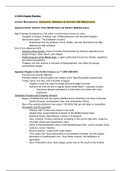
RN Bipolar and Related Disorders 2022
an alteration in mood that is expressed by feelings of elation, inflated self-esteem,
grandiosity, hyperactivity, agitation, and accelerated thinking and speaking -
ANSWER: Mania
characterized by mood swings from profound depression to extreme euphoria
(mania), with intervening periods of normalcy - ANSWER: Bipolar Disorder
Delusions or hallucinations may or may not be part of clinical picture - ANSWER:
Bipolar Disorder
A somewhat milder form of mania is called - ANSWER: hypomania
patient is experiencing, or has experienced, a full syndrome of manic episode. -
ANSWER: Bipolar I Disorder
May also have experienced episodes of depression - ANSWER: Bipolar I Disorder
Characterized by bouts of major depression with episodic occurrence of hypomania.
- ANSWER: Bipolar II Disorder
Has never met criteria for full manic episode. - ANSWER: Bipolar II Disorder
Chronic mood disturbance - ANSWER: Cyclothymic Disorder
At least 2-year duration - ANSWER: Cyclothymic Disorder
Numerous episodes of hypomania and depressed mood of insufficient severity to
meet the criteria for either Bipolar I or II disorder. - ANSWER: Cyclothymic Disorder
Lifetime prevalence of pediatric and adolescent bipolar disorders is estimated at
about - ANSWER: 1 percent
Diagnosis is difficult in? - ANSWER: Childhood and adolescence
FIND - ANSWER: Frequency, Intensity, Number, Duration
ADHD is most common comorbid condition. - ANSWER: Childhood and Adolescence
may exacerbate mania and should be administered only after bipolar symptoms
have been controlled. - ANSWER: ADHD agents
Traditional mood stabilizers or atypical antipsychotics. - ANSWER:
Psychopharmacology: Childhood and Adolescence
Family interventions - ANSWER: treatment strategy for Childhood and Adolescence
, symptoms not sufficiently severe to cause marked impairment in social or
occupational functioning or to require - ANSWER: Stage I—Hypomania
Cheerful mood - ANSWER: Stage I—Hypomania
Rapid flow of ideas; heightened perception - ANSWER: Stage I—Hypomania
Increased motor activity - ANSWER: Stage I—Hypomania
marked impairment in functioning; usually requires hospitalization - ANSWER: Stage
II—Acute mania
Elation and euphoria; a continuous "high" - ANSWER: Stage II—Acute mania
Flight of ideas; accelerated, pressured speech - ANSWER: Stage II—Acute mania
Hallucinations and delusions - ANSWER: Stage II—Acute mania
Excessive motor activity - ANSWER: Stage II—Acute mania
Social and sexual uninhibited - ANSWER: Stage II—Acute mania
Little need for sleep - ANSWER: Stage II—Acute mania
: a grave form of the disorder characterized by an intensification of the symptoms
associated with acute mania. The condition is rare since the advent of antipsychotic
medication. - ANSWER: Stage III—Delirious mania
Labile mood; panic anxiety - ANSWER: Stage III—Delirious mania
Clouding of consciousness; disorientation - ANSWER: Stage III—Delirious mania
Frenzied psychomotor activity - ANSWER: Stage III—Delirious mania
Exhaustion and possibly death without intervention - ANSWER: Stage III—Delirious
mania
Risk for injury - ANSWER: Nursing diagnoses for Bipolar disorders
Risk for violence: Self-directed or other directed - ANSWER: Nursing diagnoses for
Bipolar disorders
Imbalanced nutrition: Less than body requirement - ANSWER: Nursing diagnoses for
Bipolar disorders
Disturbed thought processes - ANSWER: Nursing diagnoses for Bipolar disorders
an alteration in mood that is expressed by feelings of elation, inflated self-esteem,
grandiosity, hyperactivity, agitation, and accelerated thinking and speaking -
ANSWER: Mania
characterized by mood swings from profound depression to extreme euphoria
(mania), with intervening periods of normalcy - ANSWER: Bipolar Disorder
Delusions or hallucinations may or may not be part of clinical picture - ANSWER:
Bipolar Disorder
A somewhat milder form of mania is called - ANSWER: hypomania
patient is experiencing, or has experienced, a full syndrome of manic episode. -
ANSWER: Bipolar I Disorder
May also have experienced episodes of depression - ANSWER: Bipolar I Disorder
Characterized by bouts of major depression with episodic occurrence of hypomania.
- ANSWER: Bipolar II Disorder
Has never met criteria for full manic episode. - ANSWER: Bipolar II Disorder
Chronic mood disturbance - ANSWER: Cyclothymic Disorder
At least 2-year duration - ANSWER: Cyclothymic Disorder
Numerous episodes of hypomania and depressed mood of insufficient severity to
meet the criteria for either Bipolar I or II disorder. - ANSWER: Cyclothymic Disorder
Lifetime prevalence of pediatric and adolescent bipolar disorders is estimated at
about - ANSWER: 1 percent
Diagnosis is difficult in? - ANSWER: Childhood and adolescence
FIND - ANSWER: Frequency, Intensity, Number, Duration
ADHD is most common comorbid condition. - ANSWER: Childhood and Adolescence
may exacerbate mania and should be administered only after bipolar symptoms
have been controlled. - ANSWER: ADHD agents
Traditional mood stabilizers or atypical antipsychotics. - ANSWER:
Psychopharmacology: Childhood and Adolescence
Family interventions - ANSWER: treatment strategy for Childhood and Adolescence
, symptoms not sufficiently severe to cause marked impairment in social or
occupational functioning or to require - ANSWER: Stage I—Hypomania
Cheerful mood - ANSWER: Stage I—Hypomania
Rapid flow of ideas; heightened perception - ANSWER: Stage I—Hypomania
Increased motor activity - ANSWER: Stage I—Hypomania
marked impairment in functioning; usually requires hospitalization - ANSWER: Stage
II—Acute mania
Elation and euphoria; a continuous "high" - ANSWER: Stage II—Acute mania
Flight of ideas; accelerated, pressured speech - ANSWER: Stage II—Acute mania
Hallucinations and delusions - ANSWER: Stage II—Acute mania
Excessive motor activity - ANSWER: Stage II—Acute mania
Social and sexual uninhibited - ANSWER: Stage II—Acute mania
Little need for sleep - ANSWER: Stage II—Acute mania
: a grave form of the disorder characterized by an intensification of the symptoms
associated with acute mania. The condition is rare since the advent of antipsychotic
medication. - ANSWER: Stage III—Delirious mania
Labile mood; panic anxiety - ANSWER: Stage III—Delirious mania
Clouding of consciousness; disorientation - ANSWER: Stage III—Delirious mania
Frenzied psychomotor activity - ANSWER: Stage III—Delirious mania
Exhaustion and possibly death without intervention - ANSWER: Stage III—Delirious
mania
Risk for injury - ANSWER: Nursing diagnoses for Bipolar disorders
Risk for violence: Self-directed or other directed - ANSWER: Nursing diagnoses for
Bipolar disorders
Imbalanced nutrition: Less than body requirement - ANSWER: Nursing diagnoses for
Bipolar disorders
Disturbed thought processes - ANSWER: Nursing diagnoses for Bipolar disorders