Dental Jurisprudence
Texas
READINESS ASSESSMENT GUIDE
Q&S
©2024/2025
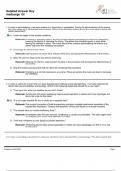
,1. Which of the following is NOT a principle of the ADA
Code of Professional Conduct?
A) Beneficence
B) Nonmaleficence
C) Justice
D) Profit Maximization
Correct Answer: D) Profit Maximization
2. In Texas, a dentist's failure to maintain adequate patient
records can result in:
A) A warning
B) Mandatory continuing education
C) Disciplinary action by the state dental board
D) No consequences
Correct Answer: C) Disciplinary action by the state dental
board
3. Under Texas law, informed consent for a dental
procedure must include all of the following EXCEPT:
A) The nature of the procedure
B) Possible alternatives
C) The name of the dentist's pet
D) The risks and benefits of the procedure
Correct Answer: C) The name of the dentist's pet
4. Which entity is responsible for licensing dentists in the
state of Texas?
A) American Dental Association
B) Texas State Board of Dental Examiners
C) Centers for Disease Control and Prevention
©2024/2025
, D) National Institute of Dental and Craniofacial Research
Correct Answer: B) Texas State Board of Dental
Examiners
5. The minimum requirement for sterilization of non-
disposable dental instruments is:
A) Washing with soap and water
B) Immersion in alcohol
C) Autoclaving
D) Air drying
Correct Answer: C) Autoclaving
6. A breach of patient confidentiality can legally occur when:
A) The patient is a celebrity
B) There is a court order
C) The dentist wants to discuss the case with a colleague
D) The patient's family requests information
Correct Answer: B) There is a court order
7. Which of the following is considered an ethical violation in
dental practice?
A) Referring a patient to a specialist
B) Advertising one's services truthfully
C) Guaranteeing the outcome of a treatment
D) Obtaining informed consent
Correct Answer: C) Guaranteeing the outcome of a
treatment
8. When is it permissible for a dentist to refuse treatment to
a patient?
A) If the patient has a history of non-payment
B) If the patient has a communicable disease
C) If the dentist is not competent to perform the required
©2024/2025
Texas
READINESS ASSESSMENT GUIDE
Q&S
©2024/2025
,1. Which of the following is NOT a principle of the ADA
Code of Professional Conduct?
A) Beneficence
B) Nonmaleficence
C) Justice
D) Profit Maximization
Correct Answer: D) Profit Maximization
2. In Texas, a dentist's failure to maintain adequate patient
records can result in:
A) A warning
B) Mandatory continuing education
C) Disciplinary action by the state dental board
D) No consequences
Correct Answer: C) Disciplinary action by the state dental
board
3. Under Texas law, informed consent for a dental
procedure must include all of the following EXCEPT:
A) The nature of the procedure
B) Possible alternatives
C) The name of the dentist's pet
D) The risks and benefits of the procedure
Correct Answer: C) The name of the dentist's pet
4. Which entity is responsible for licensing dentists in the
state of Texas?
A) American Dental Association
B) Texas State Board of Dental Examiners
C) Centers for Disease Control and Prevention
©2024/2025
, D) National Institute of Dental and Craniofacial Research
Correct Answer: B) Texas State Board of Dental
Examiners
5. The minimum requirement for sterilization of non-
disposable dental instruments is:
A) Washing with soap and water
B) Immersion in alcohol
C) Autoclaving
D) Air drying
Correct Answer: C) Autoclaving
6. A breach of patient confidentiality can legally occur when:
A) The patient is a celebrity
B) There is a court order
C) The dentist wants to discuss the case with a colleague
D) The patient's family requests information
Correct Answer: B) There is a court order
7. Which of the following is considered an ethical violation in
dental practice?
A) Referring a patient to a specialist
B) Advertising one's services truthfully
C) Guaranteeing the outcome of a treatment
D) Obtaining informed consent
Correct Answer: C) Guaranteeing the outcome of a
treatment
8. When is it permissible for a dentist to refuse treatment to
a patient?
A) If the patient has a history of non-payment
B) If the patient has a communicable disease
C) If the dentist is not competent to perform the required
©2024/2025