Kinetic theory class 11th Physics NCERT Neet
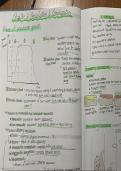
The kinetic theory of gases is a theoretical model that describes the molecular composition of a gas in terms of a large number of submicroscopic particles, which include atoms and molecules. It explains the behavior of gases based on the idea that gases consist of rapidly moving atoms or molecules. This theory was developed in the 19th century by Maxwell, Boltzmann, and others and has been remarkably successful in explaining the properties of gases. Key postulates of the kinetic theory of gases: * A gas consists of a large number of small particles called molecules. * The molecules of a gas are in constant, random motion. * The molecules of a gas exert no forces on each other except during collisions. * The collisions between molecules are perfectly elastic. * The average kinetic energy of the molecules of a gas is proportional to the absolute temperature of the gas. Derivation of pressure from the kinetic theory of gases: The pressure of a gas is defined as the force exerted per unit area on the walls of its container. The kinetic theory of gases can be used to derive an expression for the pressure of a gas. Consider a gas contained in a cubical container of side length L. Let the number of molecules in the container be N, and let the mass of each molecule be m. The average speed of the molecules is denoted by v. The molecules of the gas are moving randomly in all directions. However, only the molecules that are moving perpendicular to the walls of the container will contribute to the pressure. Let the number of molecules moving perpendicular to a particular wall be N/6. The force exerted on this wall by one molecule is given by: F = mv^2/L The total force exerted on the wall by all N/6 molecules is given by: F_total = (N/6) * (mv^2/L) The pressure of the gas is defined as the force per unit area. Therefore, the pressure of the gas is given by: P = F_total / L^2 = (N/6) * (mv^2/L^3) The volume of the container is given by V = L^3. Therefore, the pressure of the gas can be written as: P = (N/6) * (mv^2/V) The average kinetic energy of a molecule is given by: KE = (1/2) * mv^2 Therefore, the pressure of the gas can be written in terms of the average kinetic energy as: P = (N/3) * (KE/V) The number of molecules per unit volume is given by n = N/V. Therefore, the pressure of the gas can be written in terms of the number density and average kinetic energy as: P = (n/3) * KE Conclusion: The pressure of a gas is proportional to the number density of the gas and the average kinetic energy of its molecules. This relationship is a fundamental result of the kinetic theory of gases. It provides a molecular interpretation of pressure and temperature, and is consistent with gas laws and Avogadro's hypothesis.
Libro relacionado
- 2020
- 9798585368547
- Desconocido
Escuela, estudio y materia
- Institución
- AIIMS
- Grado
- Neet UG
Información del documento
- Subido en
- 12 de septiembre de 2024
- Número de páginas
- 7
- Escrito en
- 2024/2025
- Tipo
- Notas de lectura
- Profesor(es)
- Many
- Contiene
- Todas las clases
Temas
-
kinetic theory
-
theory of gas