
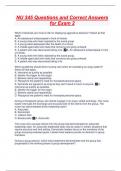
NU 345 Questions and Correct Answers
for Exam 2
Which individuals are most at risk for displaying aggressive behavior? Select all that
apply.
A. An adolescent embarrassed in front of friends.
B. A young male who feels rejected by the social group.
C. A young adult depressed after the death of a friend.
D. A middle-aged adult who feels that concerns are going unheard.
E. A patient who was discovered telling a lie. ✅A. An adolescent embarrassed in front
of friends.
B. A young male who feels rejected by the social group.
D. A middle-aged adult who feels that concerns are going unheard.
E. A patient who was discovered telling a lie.
Which guidelines should direct nursing care when de-escalating an angry patient?
Select all that apply.
A. Intervene as quickly as possible.
B. Identify the trigger for the anger.
C. Behave calmly and respectfully.
D. Recognize the patient's need for increased personal space.
E. Demands are agreed to as long as they won't result in harm to anyone. ✅A.
Intervene as quickly as possible.
B. Identify the trigger for the anger.
C. Behave calmly and respectfully.
D. Recognize the patient's need for increased personal space.
During a therapeutic group, two clients engage in an angry verbal exchange. The nurse
leader interrupts the exchange and excuses both of the clients from the group. The
nurse has demonstrated which leadership style?
A. Autocratic
B. Democratic
C. Laissez-faire
D. Bureaucratic ✅A. Autocratic
The nurse who excuses clients from the group has demonstrated an autocratic
leadership style. An autocratic leadership style may be useful in certain situations that
require structure and limit setting. Democratic leaders focus on the members of the
group and group-selected goals. Laissez-faire leaders provide no direction to group
members.
During a group session, which client statement demonstrates that the group has
progressed to the working phase of group development?
for Exam 2
Which individuals are most at risk for displaying aggressive behavior? Select all that
apply.
A. An adolescent embarrassed in front of friends.
B. A young male who feels rejected by the social group.
C. A young adult depressed after the death of a friend.
D. A middle-aged adult who feels that concerns are going unheard.
E. A patient who was discovered telling a lie. ✅A. An adolescent embarrassed in front
of friends.
B. A young male who feels rejected by the social group.
D. A middle-aged adult who feels that concerns are going unheard.
E. A patient who was discovered telling a lie.
Which guidelines should direct nursing care when de-escalating an angry patient?
Select all that apply.
A. Intervene as quickly as possible.
B. Identify the trigger for the anger.
C. Behave calmly and respectfully.
D. Recognize the patient's need for increased personal space.
E. Demands are agreed to as long as they won't result in harm to anyone. ✅A.
Intervene as quickly as possible.
B. Identify the trigger for the anger.
C. Behave calmly and respectfully.
D. Recognize the patient's need for increased personal space.
During a therapeutic group, two clients engage in an angry verbal exchange. The nurse
leader interrupts the exchange and excuses both of the clients from the group. The
nurse has demonstrated which leadership style?
A. Autocratic
B. Democratic
C. Laissez-faire
D. Bureaucratic ✅A. Autocratic
The nurse who excuses clients from the group has demonstrated an autocratic
leadership style. An autocratic leadership style may be useful in certain situations that
require structure and limit setting. Democratic leaders focus on the members of the
group and group-selected goals. Laissez-faire leaders provide no direction to group
members.
During a group session, which client statement demonstrates that the group has
progressed to the working phase of group development?


