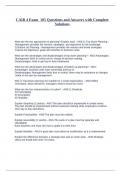
CAIB 4 Exam 105 Questions and Answers with Complete
Solutions
What are the two approaches to planning? Explain each - ANS-1) Top Down Planning -
n n n n n n n n n n n n n n
Management provides the mission, strategies, and objectives for the brokerage
n n n n n n n n n n
2) Bottom Up Planning - Management provides the mission and broad strategies.
n n n n n n n n n n n
Leaves the objectives, goals and activities to business units.
n n n n n n n n n
What are the advantages and disadvantages of top down planning? - ANS-Advantages:
n n n n n n n n n n n
Management feels in control and in charge of decision making.
n n n n n n n n n n
Disadvantages: hard to get buy-in from employees n n n n n n
What are the advantages and disadvantages of bottom up planning? - ANS-
n n n n n n n n n n n
Advantages: business units have ownership and buy in.
n n n n n n n
Disadvantages: Management feels less in control, there may be resistance to changes
n n n n n n n n n n n
made to the plan by management.
n n n n n n
Why is Top Down planning not suitable for a small organization. - ANS-Stifles
n n n n n n n n n n n n
innovation, slows decisions, managers need to know too much,
n n n n n n n n n
What are the four characteristics of a plan? - ANS-1) Simplicity
n n n n n n n n n n
2) Practicability
n
3) Severability
n
4) Flexibility
n
Explain Simplicity (2 points) - ANS-The plan should be explainable in simple terms.
n n n n n n n n n n n n
The plan should be implemented without extensive training while employees continue
n n n n n n n n n n
their day to day operations.
n n n n n
Explain Practicability - ANS-The plan must be realistic
n n n n n n n
Explain severability (2 points) - ANS-The parts of a plan must be separate and
n n n n n n n n n n n n n
identifiable.
n
Each business unit must see how to apply it to their area
n n n n n n n n n n n
Explain flexibility - ANS-A good plan must allow for modification as it is implemented.
n n n n n n n n n n n n n
Explain the difference between a strategic plan and an action plan - ANS-Strategic
n n n n n n n n n n n n
plans are broad and cover 3-5 years.
n n n n n n n
, Action plans give specific activities to support SP. They apply to a particular unit and
n n n n n n n n n n n n n n
cover 1-3 years, typically one year.
n n n n n n
How many components of a strategic plan are there? - ANS-Seven.
n n n n n n n n n n
What are the first three components of a strategic plan? - ANS-a) Scanning the external
n n n n n n n n n n n n n n
environment.
n
b) Scanning the Internal Environment
n n n n
c) Matching strengths and weaknesses to opportunities and threats.
n n n n n n n n
Explain "scanning the external environment" and its two sub categories. - ANS-
n n n n n n n n n n n
Scanning the external environment looks at the competitive environment and attempts
n n n n n n n n n n
to identify opportunities and threats.
n n n n n
They look at the distant environment and near environments.
n n n n n n n n
Explain the distant environment. - ANS-Factors that are critical to the survival of the
n n n n n n n n n n n n n
brokerage, but over which it has no control. Example: Hard and soft markets. Changes
n n n n n n n n n n n n n n
to laws. Technology.
n n n
Explain the near environment. - ANS-Factors over which a brokerage does have
n n n n n n n n n n n
control. Example: Clients and prospects, market segment targeted, direct competitors.
n n n n n n n n n n
What are the three types of profiling within Near environment scans? - ANS-Competitor,
n n n n n n n n n n n n
market, and client profiling.
n n n n
Competitor: Size, financial condition, and location of head office.
n n n n n n n n
Market: Total market, market segments where they compete, and the market portion
n n n n n n n n n n n
that they serve.
n n n
Client: Find a clear understanding of the nature and characteristics of a brokerage's
n n n n n n n n n n n n
clients.
n
Explain SWOT and the needed actions given the four scenarios - ANS-If there is a
n n n n n n n n n n n n n n
nweakness where there is a threat - Immediate Attention
n n n n n n n n
If there is a weakness where there is an opportunity - Resources should be allocated to
n n n n n n n n n n n n n n n
ncapitalize later. n
If there is a strength where they is a threat - No action needed
n n n n n n n n n n n n n
If there is a strength where there is an opportunity - it should be immediately capitalized
n n n n n n n n n n n n n n n
non
Recite the vision statement - ANS-Protection of assets by protecting what is near and
n n n n n n n n n n n n n
dear to our clients
n n n n
Recite the value statement - ANS-We seek and encourage innovative solutions to
n n n n n n n n n n n
problems that deliver results for our clients.
n n n n n n n
Solutions
What are the two approaches to planning? Explain each - ANS-1) Top Down Planning -
n n n n n n n n n n n n n n
Management provides the mission, strategies, and objectives for the brokerage
n n n n n n n n n n
2) Bottom Up Planning - Management provides the mission and broad strategies.
n n n n n n n n n n n
Leaves the objectives, goals and activities to business units.
n n n n n n n n n
What are the advantages and disadvantages of top down planning? - ANS-Advantages:
n n n n n n n n n n n
Management feels in control and in charge of decision making.
n n n n n n n n n n
Disadvantages: hard to get buy-in from employees n n n n n n
What are the advantages and disadvantages of bottom up planning? - ANS-
n n n n n n n n n n n
Advantages: business units have ownership and buy in.
n n n n n n n
Disadvantages: Management feels less in control, there may be resistance to changes
n n n n n n n n n n n
made to the plan by management.
n n n n n n
Why is Top Down planning not suitable for a small organization. - ANS-Stifles
n n n n n n n n n n n n
innovation, slows decisions, managers need to know too much,
n n n n n n n n n
What are the four characteristics of a plan? - ANS-1) Simplicity
n n n n n n n n n n
2) Practicability
n
3) Severability
n
4) Flexibility
n
Explain Simplicity (2 points) - ANS-The plan should be explainable in simple terms.
n n n n n n n n n n n n
The plan should be implemented without extensive training while employees continue
n n n n n n n n n n
their day to day operations.
n n n n n
Explain Practicability - ANS-The plan must be realistic
n n n n n n n
Explain severability (2 points) - ANS-The parts of a plan must be separate and
n n n n n n n n n n n n n
identifiable.
n
Each business unit must see how to apply it to their area
n n n n n n n n n n n
Explain flexibility - ANS-A good plan must allow for modification as it is implemented.
n n n n n n n n n n n n n
Explain the difference between a strategic plan and an action plan - ANS-Strategic
n n n n n n n n n n n n
plans are broad and cover 3-5 years.
n n n n n n n
, Action plans give specific activities to support SP. They apply to a particular unit and
n n n n n n n n n n n n n n
cover 1-3 years, typically one year.
n n n n n n
How many components of a strategic plan are there? - ANS-Seven.
n n n n n n n n n n
What are the first three components of a strategic plan? - ANS-a) Scanning the external
n n n n n n n n n n n n n n
environment.
n
b) Scanning the Internal Environment
n n n n
c) Matching strengths and weaknesses to opportunities and threats.
n n n n n n n n
Explain "scanning the external environment" and its two sub categories. - ANS-
n n n n n n n n n n n
Scanning the external environment looks at the competitive environment and attempts
n n n n n n n n n n
to identify opportunities and threats.
n n n n n
They look at the distant environment and near environments.
n n n n n n n n
Explain the distant environment. - ANS-Factors that are critical to the survival of the
n n n n n n n n n n n n n
brokerage, but over which it has no control. Example: Hard and soft markets. Changes
n n n n n n n n n n n n n n
to laws. Technology.
n n n
Explain the near environment. - ANS-Factors over which a brokerage does have
n n n n n n n n n n n
control. Example: Clients and prospects, market segment targeted, direct competitors.
n n n n n n n n n n
What are the three types of profiling within Near environment scans? - ANS-Competitor,
n n n n n n n n n n n n
market, and client profiling.
n n n n
Competitor: Size, financial condition, and location of head office.
n n n n n n n n
Market: Total market, market segments where they compete, and the market portion
n n n n n n n n n n n
that they serve.
n n n
Client: Find a clear understanding of the nature and characteristics of a brokerage's
n n n n n n n n n n n n
clients.
n
Explain SWOT and the needed actions given the four scenarios - ANS-If there is a
n n n n n n n n n n n n n n
nweakness where there is a threat - Immediate Attention
n n n n n n n n
If there is a weakness where there is an opportunity - Resources should be allocated to
n n n n n n n n n n n n n n n
ncapitalize later. n
If there is a strength where they is a threat - No action needed
n n n n n n n n n n n n n
If there is a strength where there is an opportunity - it should be immediately capitalized
n n n n n n n n n n n n n n n
non
Recite the vision statement - ANS-Protection of assets by protecting what is near and
n n n n n n n n n n n n n
dear to our clients
n n n n
Recite the value statement - ANS-We seek and encourage innovative solutions to
n n n n n n n n n n n
problems that deliver results for our clients.
n n n n n n n