IAB Digital Sales Certification Exam A+
Graded
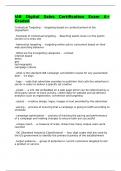
Contextual Targeting - -targeting based on content/context of the
sit/platform
-Example of contextual targeting - -Reaching sports lovers on the sports
section of a news site
-behavioral targeting - -targeting online ads to consumers based on their
web searching behavior
-What are the 6 targeting categories - -context
interest based
demo
geo
technographic
campaign criteria
-what is the standard IAB campaign cancellation clause for any guaranteed
deal - -14 days
-tags - -code that advertiser provides to publisher that calls the advertiser's
server in order to deliver a specific ad creative
-pixels - -a 1X1 dot embedded on a web page which can be referenced by a
third party server to track activity, collect data for website and ad delivery
analytics such as registration, conversion and targeting
-assets - -creative design, logos, images or text provided by the advertiser
-pacing - -process of ensuring that a campaign is going to fulfill according to
schedule
-campaign optimization - -process of tracking the pacing and performance
of a campaign and making changes to ensure both are successful
-unique reach - -a measure of scale. shows how many unique users were
reached
-SIC (Standard Industrial Classification) - -four digit codes that are used by
the US government to identify the primary business of the establishment
-target audience - -group of potential or current customers targeted to sell
a product or service
, -target audience profile - -description of customers; demo, geo, psycho
characteristics; buying patters and purchase history
-1st party data - -owner and controller of the website or services. Ie: credit
card company using data of customers
-2nd party data - -1st party who sells or shares data to a non affiliated site
or service. Ie: credit card company selling/sharing its data with an airline to
target affluent travelers
-3rd party data - -collects data but does not have a direct relationship with
the user
-DMP - -data management platform - 3rd party data provider that manages,
aggregates and analyzes data
-PII - -Personally Identifiable Information. Information about individuals that
can be used to trace a person's identity, such name, address DOB
-de-identified information - -device IDs, IP addresses, browsing history, geo
location, sales transactions etc
-beacons - -proximity based technology; allows mobile apps to understand
geo location of its user and thendeliver relevant content based on their
immediate environment
-what are the 3 marking communication channels - -owned media
paid media
earned media
-owned media - -channel a brand controls. ie: website, blog, app, social
profile
-paid media - -brand pays to leverage a channel. ie: display ads, paid
search, sponsorships
-earned media - -when customers become the channel. ie: WOM, buzz, viral
-shared media - -combination of of earned media with paid or owned.
-Benefits of owned media - -control, cost efficiency, longevity, versatility,
niche audiences
-challenges of owned media - -no guarantees, company communication not
trusted, takes time to scale
Graded
Contextual Targeting - -targeting based on content/context of the
sit/platform
-Example of contextual targeting - -Reaching sports lovers on the sports
section of a news site
-behavioral targeting - -targeting online ads to consumers based on their
web searching behavior
-What are the 6 targeting categories - -context
interest based
demo
geo
technographic
campaign criteria
-what is the standard IAB campaign cancellation clause for any guaranteed
deal - -14 days
-tags - -code that advertiser provides to publisher that calls the advertiser's
server in order to deliver a specific ad creative
-pixels - -a 1X1 dot embedded on a web page which can be referenced by a
third party server to track activity, collect data for website and ad delivery
analytics such as registration, conversion and targeting
-assets - -creative design, logos, images or text provided by the advertiser
-pacing - -process of ensuring that a campaign is going to fulfill according to
schedule
-campaign optimization - -process of tracking the pacing and performance
of a campaign and making changes to ensure both are successful
-unique reach - -a measure of scale. shows how many unique users were
reached
-SIC (Standard Industrial Classification) - -four digit codes that are used by
the US government to identify the primary business of the establishment
-target audience - -group of potential or current customers targeted to sell
a product or service
, -target audience profile - -description of customers; demo, geo, psycho
characteristics; buying patters and purchase history
-1st party data - -owner and controller of the website or services. Ie: credit
card company using data of customers
-2nd party data - -1st party who sells or shares data to a non affiliated site
or service. Ie: credit card company selling/sharing its data with an airline to
target affluent travelers
-3rd party data - -collects data but does not have a direct relationship with
the user
-DMP - -data management platform - 3rd party data provider that manages,
aggregates and analyzes data
-PII - -Personally Identifiable Information. Information about individuals that
can be used to trace a person's identity, such name, address DOB
-de-identified information - -device IDs, IP addresses, browsing history, geo
location, sales transactions etc
-beacons - -proximity based technology; allows mobile apps to understand
geo location of its user and thendeliver relevant content based on their
immediate environment
-what are the 3 marking communication channels - -owned media
paid media
earned media
-owned media - -channel a brand controls. ie: website, blog, app, social
profile
-paid media - -brand pays to leverage a channel. ie: display ads, paid
search, sponsorships
-earned media - -when customers become the channel. ie: WOM, buzz, viral
-shared media - -combination of of earned media with paid or owned.
-Benefits of owned media - -control, cost efficiency, longevity, versatility,
niche audiences
-challenges of owned media - -no guarantees, company communication not
trusted, takes time to scale