
• ¿Documento equivocado? Cámbialo gratis
  • Escrito por estudiantes que aprobaron
  • Inmediatamente disponible después del pago
  • Leer en línea o como PDF
Vender
¿Dónde estudias?
Tu idioma
Document preview thumbnail
Vista previa 2 fuera de 8 páginas
Examen

Pathophysiology SLCC Guaranteed Solutions

Document preview thumbnail
Vista previa 2 fuera de 8 páginas

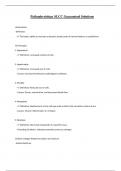
Pathophysiology SLCC Guaranteed Solutions Homeostasis - Definition: - The body's ability to maintain a dynamic steady state of internal balance or equilibrium. Cell Changes 1. Hyperplasia - Definition: Increased number of cells. 2. Hypertrophy - Definition: Increased size of cells. - Causes: Increased workload or pathological conditions. 3. Atrophy - Definition: Reduced size of cells. - Causes: Disuse, malnutrition, and decreased blood flow. 4. Metaplasia - Definition: Replacement of one cell type with another that can better endure stress. - Causes: Chronic inflammation or irritation. 5. Dysplasia - Definition: Abnormal cell growth of a specific tissue. - Preceding Condition: Indicates potential cancerous changes. Cellular Changes Related to Sodium and Calcium - Sodium Build-up: - Occurs due to the breakdown of the sodium-potassium pump. - Consequence: Sodium collects in the cell, attracting water and causing intracellular swelling. - Fatty Changes: - Lipid accumulation in cells leads to impaired cell functions, often resulting in conditions like "fatty liver." - Calcium Build-up: - Calcium accumulates due to the breakdown of the Ca²⁺/Mg²⁺ pump. - Consequence: Inappropriate activation of cellular enzymes. Cell Death Mechanisms 1. Apoptosis - Controlled cell death (implosion) where all components remain within the cell, eliciting no inflammatory response. 2. Necrosis - Uncontrolled cell death (explosion) where cell contents are released into the extracellular space, triggering an inflammatory response. Organs of the Immune System - Bone Marrow: Produces RBCs, WBCs, and platelets. - Thymus Gland: Site of T-cell production. - Lymph Nodes - Tonsils - Spleen Telomeres - Outermost tails of the chromosome arms. Cells of Inflammation 1. Endothelial Cells: - - Vasodilation/constriction - - Regulate blood thinning/prevent clotting - - Control entry/exit of blood vessels - - Control inflammatory mediators 2. Platelets: - Responsible for blood coagulation/clotting. - Release 300+ inflammatory mediators. 3. Leukocytes: - Major cellular component of the inflammatory response. - High neutrophil counts indicate inflammation and infection. - WBCs classified as granular or agranular. S.H.A.R.P. - Swelling - Heat - Altered function - Redness - Pain Granulocytes - GRANpa BEN 1. Neutrophils: First responders and most common. 2. Basophils: Respond to allergic reactions. 3. Eosinophils: Respond to allergic reactions and parasites. Agranulocytes - "A"nd GRANma Loves Money 1. Lymphocytes: Increase during viral and chronic infections; include B and T cells. 2. Monocytes: Become macrophages in tissues; perform phagocytosis to consume foreign particles. T-Cells - Function: Respond before B cells. - Produced in: Thymus Gland. 1. T Memory Cells: Remain in lymph nodes post-infection; enable rapid response to re-infection. 2. Helper T Cells: Activate/regulate T and B cells. 3. Killer T Cells: Attack viruses and tumor cells; ingest antigens via phagocytosis. 4. Natural Killer Cells: Attack abnormal cells, like cancer cells. 5. Suppressor T-Cells: Restore normal immune function post-infection; prevent autoimmunity. B Cells - Function: Respond after T cells by releasing antibodies and assisting T cell activation. - Produced in: Bone Marrow. Antigen - Antibody generator, essentially any substance that can provoke an immune response. - Location on Cells: They are present on the surface of cells, marking them for recognition by the immune system. --- It triggers the body to make antibodies (pollen, toxins, pathogens etc)

Vista previa del contenido

Pathophysiology SLCC Guaranteed Solutions


Homeostasis

- Definition:

- ✅ The body's ability to maintain a dynamic steady state of internal balance or equilibrium.


Cell Changes

1. Hyperplasia

- ✅ Definition: Increased number of cells.


2. Hypertrophy

- ✅ Definition: Increased size of cells.

- Causes: Increased workload or pathological conditions.


3. Atrophy

- ✅ Definition: Reduced size of cells.

- Causes: Disuse, malnutrition, and decreased blood flow.


4. Metaplasia

- ✅ Definition: Replacement of one cell type with another that can better endure stress.

- Causes: Chronic inflammation or irritation.


5. Dysplasia

- ✅ Definition: Abnormal cell growth of a specific tissue.

- Preceding Condition: Indicates potential cancerous changes.


Cellular Changes Related to Sodium and Calcium

- Sodium Build-up:

, - ✅ Occurs due to the breakdown of the sodium-potassium pump.

- Consequence: Sodium collects in the cell, attracting water and causing intracellular swelling.


- Fatty Changes:

- ✅ Lipid accumulation in cells leads to impaired cell functions, often resulting in conditions like "fatty
liver."


- Calcium Build-up:

- ✅ Calcium accumulates due to the breakdown of the Ca²⁺/Mg²⁺ pump.

- Consequence: Inappropriate activation of cellular enzymes.


Cell Death Mechanisms

1. Apoptosis

- ✅ Controlled cell death (implosion) where all components remain within the cell, eliciting no
inflammatory response.


2. Necrosis

- ✅ Uncontrolled cell death (explosion) where cell contents are released into the extracellular space,
triggering an inflammatory response.


Organs of the Immune System

- Bone Marrow: Produces RBCs, WBCs, and platelets.

- Thymus Gland: Site of T-cell production.

- Lymph Nodes

- Tonsils

- Spleen


Telomeres

- ✅ Outermost tails of the chromosome arms.

Información del documento

Subido en
16 de agosto de 2024
Número de páginas
8
Escrito en
2024/2025
Tipo
Examen
Contiene
Preguntas y respuestas
$10.39

¿Documento equivocado? Cámbialo gratis Dentro de los 14 días posteriores a la compra y antes de descargarlo, puedes elegir otro documento. Puedes gastar el importe de nuevo.
Escrito por estudiantes que aprobaron
Inmediatamente disponible después del pago
Leer en línea o como PDF

Seller avatar
Los indicadores de reputación están sujetos a la cantidad de artículos vendidos por una tarifa y las reseñas que ha recibido por esos documentos. Hay tres niveles: Bronce, Plata y Oro. Cuanto mayor reputación, más podrás confiar en la calidad del trabajo del vendedor.
CertifiedGrades
3.9
(38)
Vendido
149
Seguidores
61
Artículos
8729
Última venta
1 mes hace


Por qué los estudiantes eligen Stuvia

Creado por compañeros estudiantes, verificado por reseñas

Calidad en la que puedes confiar: escrito por estudiantes que aprobaron y evaluado por otros que han usado estos resúmenes.

¿No estás satisfecho? Elige otro documento

¡No te preocupes! Puedes elegir directamente otro documento que se ajuste mejor a lo que buscas.

Paga como quieras, empieza a estudiar al instante

Sin suscripción, sin compromisos. Paga como estés acostumbrado con tarjeta de crédito y descarga tu documento PDF inmediatamente.

Student with book image

“Comprado, descargado y aprobado. Así de fácil puede ser.”

Alisha Student

Preguntas frecuentes
