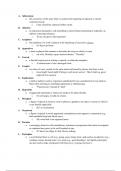
A. Alliteration:
a. the occurrence of the same letter or sound at the beginning of adjacent or closely
connected words.
i. Clary closed her cluttered clothes closet.
B. Allusion:
a. an expression designed to call something to mind without mentioning it explicitly; an
indirect or passing reference.
i. To me, his grin is like kryptonite
C. Anaphora
a. the repetition of a word or phrase at the beginning of successive clauses.
i. Go big or go home
D. Appositives
a. a noun or phrase that renames or describes the noun to which it is next
i. my wife, Dorothy, enjoys musical theater,” “Dorothy”
E. Conceit
a. a fanciful expression in writing or speech; an elaborate metaphor.
i. A broken heart is like a damaged clock
F. Couplet
a. two lines of verse, usually in the same meter and joined by rhyme, that form a unit.
i. Good night! Good night! Parting is such sweet sorrow / That I shall say good
night till it be morrow
G. Euphemism
a. a mild or indirect word or expression substituted for one considered to be too harsh or
blunt when referring to something unpleasant or embarrassing.
i. “Passed away” instead of “died”
H. Hyperbole
a. exaggerated statements or claims not meant to be taken literally.
i. I'm so hungry, I could eat a horse.
I. Metaphor
a. a figure of speech in which a word or phrase is applied to an object or action to which it
is not literally applicable.
i. He's a couch potato
J. Oxymoron
a. a figure of speech in which apparently contradictory terms appear in conjunction (e.g.
faith unfaithful kept him falsely true ).
i. My work desk is an organised mess.
K. Paradox
a. a seemingly absurd or self-contradictory statement or proposition that when investigated
or explained may prove to be well founded or true.
i. If I know one thing, it's that I know nothing
L. Participles
a. a word formed from a verb (e.g., going, gone, being, been ) and used as an adjective (e.g.,
working woman, burned toast ) or a noun (e.g., good breeding ). In English, participles
are also used to make compound verb forms (e.g., is going, has been ).
a. the occurrence of the same letter or sound at the beginning of adjacent or closely
connected words.
i. Clary closed her cluttered clothes closet.
B. Allusion:
a. an expression designed to call something to mind without mentioning it explicitly; an
indirect or passing reference.
i. To me, his grin is like kryptonite
C. Anaphora
a. the repetition of a word or phrase at the beginning of successive clauses.
i. Go big or go home
D. Appositives
a. a noun or phrase that renames or describes the noun to which it is next
i. my wife, Dorothy, enjoys musical theater,” “Dorothy”
E. Conceit
a. a fanciful expression in writing or speech; an elaborate metaphor.
i. A broken heart is like a damaged clock
F. Couplet
a. two lines of verse, usually in the same meter and joined by rhyme, that form a unit.
i. Good night! Good night! Parting is such sweet sorrow / That I shall say good
night till it be morrow
G. Euphemism
a. a mild or indirect word or expression substituted for one considered to be too harsh or
blunt when referring to something unpleasant or embarrassing.
i. “Passed away” instead of “died”
H. Hyperbole
a. exaggerated statements or claims not meant to be taken literally.
i. I'm so hungry, I could eat a horse.
I. Metaphor
a. a figure of speech in which a word or phrase is applied to an object or action to which it
is not literally applicable.
i. He's a couch potato
J. Oxymoron
a. a figure of speech in which apparently contradictory terms appear in conjunction (e.g.
faith unfaithful kept him falsely true ).
i. My work desk is an organised mess.
K. Paradox
a. a seemingly absurd or self-contradictory statement or proposition that when investigated
or explained may prove to be well founded or true.
i. If I know one thing, it's that I know nothing
L. Participles
a. a word formed from a verb (e.g., going, gone, being, been ) and used as an adjective (e.g.,
working woman, burned toast ) or a noun (e.g., good breeding ). In English, participles
are also used to make compound verb forms (e.g., is going, has been ).