Hello 😊 ! Take your studying to the next level! For more organized and
effective study materials, check out my profile and flashcard shop
Maggie's Flashcards - Payhip. From notes to flashcards, I've got you
covered!
Course : Geography
Theme : Development
Topic : Indicators
In Text
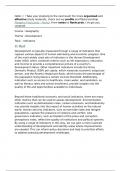
Development is typically measured through a range of indicators that
capture various aspects of human well-being and economic progress. One
of the most widely used sets of indicators is the Human Development
Index (HDI), which combines metrics such as life expectancy, education,
and income to provide a comprehensive picture of a country's
development status. Other important indicators include the Gross
Domestic Product (GDP) per capita, which measures economic output per
person, and the Poverty Headcount Ratio, which tracks the percentage of
the population living below a certain income threshold. Additionally,
indicators such as access to healthcare, clean water, and sanitation, as
well as literacy rates and school enrollment, provide insights into the
quality of life and opportunities available to individuals.
Beyond these traditional economic and social indicators, there are many
other metrics that can be used to assess development. Environmental
indicators such as deforestation rates, carbon emissions, and biodiversity
loss provide insights into the impact of human activities on the natural
world. Human security indicators, such as homicide rates and refugee
populations, capture the presence of violence and conflict. And
governance indicators, such as freedom of the press and corruption
perceptions index, reflect the quality of institutions and political systems.
By using a range of indicators in this way, we can gain a more nuanced
understanding of development and identify areas where improvements
are needed. This can inform policy decisions and help to prioritize efforts
to address pressing development challenges.
effective study materials, check out my profile and flashcard shop
Maggie's Flashcards - Payhip. From notes to flashcards, I've got you
covered!
Course : Geography
Theme : Development
Topic : Indicators
In Text
Development is typically measured through a range of indicators that
capture various aspects of human well-being and economic progress. One
of the most widely used sets of indicators is the Human Development
Index (HDI), which combines metrics such as life expectancy, education,
and income to provide a comprehensive picture of a country's
development status. Other important indicators include the Gross
Domestic Product (GDP) per capita, which measures economic output per
person, and the Poverty Headcount Ratio, which tracks the percentage of
the population living below a certain income threshold. Additionally,
indicators such as access to healthcare, clean water, and sanitation, as
well as literacy rates and school enrollment, provide insights into the
quality of life and opportunities available to individuals.
Beyond these traditional economic and social indicators, there are many
other metrics that can be used to assess development. Environmental
indicators such as deforestation rates, carbon emissions, and biodiversity
loss provide insights into the impact of human activities on the natural
world. Human security indicators, such as homicide rates and refugee
populations, capture the presence of violence and conflict. And
governance indicators, such as freedom of the press and corruption
perceptions index, reflect the quality of institutions and political systems.
By using a range of indicators in this way, we can gain a more nuanced
understanding of development and identify areas where improvements
are needed. This can inform policy decisions and help to prioritize efforts
to address pressing development challenges.