100% de satisfacción garantizada Inmediatamente disponible después del pago Tanto en línea como en PDF No estas atado a nada 4.2 TrustPilot
logo-home
Examen

BIO-310 TESU EXAM 1- Chapter 1 Questions And Answers With 100% Correct Answers

Puntuación
-
Vendido
-
Páginas
3
Grado
A+
Subido en
04-08-2024
Escrito en
2024/2025

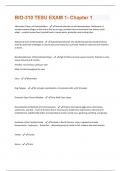
Alternative Theory of Domestication - Natural selection to self domestication. Settlement of semipermanent villages at the end of the last ice age, provided new environment that wolves could adapt. --surplus human food, spoiled foods, human waste, protection and nesting sites. Behavioral traits of DD bonding - Subordinate behavior into adulthood and decreased tendency towards dominate challenges as sexual and social maturity is achieved. Need for maternal care manifest as bond. Breeding Behavior of Domesticated Dogs - High fertility and early sexual maturity. Puberty is early, sexual maturity 6-9 months. Females- two estrous cycles per year Male- Fertile throughout the year Class - Mammalia Dog Puppies - Do not gain coordination or locomotor skills until 10 weeks. Domestic Dog's Closest Relative - Gray Wolf-Canis Lupus Domestication & Methods of Communication - Posture that signals aggression, dominance, submission, and fear .. level of stimulus that is necessary to evoke these expressions, intensity and completeness. Significantly better at responding to human social cues- gesturing, pointing, and gazing. Evolution of the Canidae Family - Evolved in North America. Later, migrated to Eurasia. Hesperocyon.. Leptocyon .. Tomarctus... dominate group of canids in NA..modern day canid species. Family - Caniae Genus - CanisGreeting of dog puppies - less intensive and more reserved frenzied in greeting other dogs. Higher response for their human caretakers. Greeting of wolf pups - intense and effusive "greeting frenzy" towards elderly pack members. Body posture and facial expressions show submission. Hesperocyon - Western Dog; Oldest member of the canidae family. 36-38 million years ago. Long legged, agile, predator, walked on toes. 1st miacids.. 2nd miacines... 3rd .. hesperocyon. Location of Domestication - Eurasia and Americas Mesomorphic Remodeling Theory - Traits of domestic dogs are not in wolves. Arrested at some point during its adolescence or metamorphic period. Behavioral flexibility and plasticity Miacidae Family- - Diverse group of predatory mammals. Small & tree dwelling. 62 million years ago. Formed the ancestral family for all Carivora. Walked on palms/soles (plantigrade), long bodies, slim, carnassial teeth Order - Carnivore Phyla - Animalia Primary Socialization - social bonds are easily and strongly established. Beginning of stage fearless.. end fearful. Novel Stimuli-- new sights, smells, other animals Process of Domestication - breeding and containment of large groups of animals are under the control of humansSocial Maturity of Domesticated Dogs - 18-24 months. Strong social bonds, onset of dominance relationships, and active defense of territory Socialization of Puppies - 5-12 weeks develop social bonds- creates strong attachment behaviors and allows for training later. If no interaction with humans will cause timidness. By 12-14 weeks if no interaction normal relationships are severely compromised. Rather human attention Socialization of Wolf pups - Bonding to the dam, littermates, and other pack members. Highly curious of environment and explore and investigate without wariness. Long flight distance and traveling from pack - fears. Rather other wolves. Species - Familaris Theory of Pedomorphosis - the morphological and behavioral changes from wolf-dog. Physical attributes- decreased body size, altered jaw size & strength, decreased number and size of teeth, prominent forehead, shortened limbs, and diminished secondary sexual characteristics in male. Neotenized- adaptability, subordinate behavior Time Period of Domestication - Late Mesolithic Period- 12,000-15,000 years ago Traditional Theory of Domestication - hunters & wolves competed for the same prey species. Recognized superior hunting abilities- captured, raised, and tamed pups for hunting aids. Selection of the more tamable, trainable, and the isolation left the alternations of structure and behavior.

Mostrar más Leer menos
Institución
BIO-310 TESU
Grado
BIO-310 TESU


Ups! No podemos cargar tu documento ahora. Inténtalo de nuevo o contacta con soporte.

Escuela, estudio y materia

Institución
BIO-310 TESU
Grado
BIO-310 TESU

Información del documento

Subido en
4 de agosto de 2024
Número de páginas
3
Escrito en
2024/2025
Tipo
Examen
Contiene
Preguntas y respuestas

Vista previa del contenido

BIO-310 TESU EXAM 1- Chapter 1
Alternative Theory of Domestication - Natural selection to self domestication. Settlement of
semipermanent villages at the end of the last ice age, provided new environment that wolves could
adapt. --surplus human food, spoiled foods, human waste, protection and nesting sites.


Behavioral traits of DD bonding - Subordinate behavior into adulthood and decreased tendency
towards dominate challenges as sexual and social maturity is achieved. Need for maternal care manifest
as bond.


Breeding Behavior of Domesticated Dogs - High fertility and early sexual maturity. Puberty is early,
sexual maturity 6-9 months.

Females- two estrous cycles per year

Male- Fertile throughout the year


Class - Mammalia


Dog Puppies - Do not gain coordination or locomotor skills until 10 weeks.


Domestic Dog's Closest Relative - Gray Wolf-Canis Lupus


Domestication & Methods of Communication - Posture that signals aggression, dominance,
submission, and fear .. level of stimulus that is necessary to evoke these expressions, intensity and
completeness. Significantly better at responding to human social cues- gesturing, pointing, and gazing.


Evolution of the Canidae Family - Evolved in North America. Later, migrated to Eurasia.
Hesperocyon.. Leptocyon .. Tomarctus... dominate group of canids in NA..modern day canid species.


Family - Caniae


Genus - Canis

Conoce al vendedor

Seller avatar
Los indicadores de reputación están sujetos a la cantidad de artículos vendidos por una tarifa y las reseñas que ha recibido por esos documentos. Hay tres niveles: Bronce, Plata y Oro. Cuanto mayor reputación, más podrás confiar en la calidad del trabajo del vendedor.
Brainarium Delaware State University
Ver perfil
Seguir Necesitas iniciar sesión para seguir a otros usuarios o asignaturas
Vendido
1826
Miembro desde
2 año
Número de seguidores
1043
Documentos
22338
Última venta
1 día hace

3.8

317 reseñas

5
147
4
60
3
54
2
16
1
40

Recientemente visto por ti

Por qué los estudiantes eligen Stuvia

Creado por compañeros estudiantes, verificado por reseñas

Calidad en la que puedes confiar: escrito por estudiantes que aprobaron y evaluado por otros que han usado estos resúmenes.

¿No estás satisfecho? Elige otro documento

¡No te preocupes! Puedes elegir directamente otro documento que se ajuste mejor a lo que buscas.

Paga como quieras, empieza a estudiar al instante

Sin suscripción, sin compromisos. Paga como estés acostumbrado con tarjeta de crédito y descarga tu documento PDF inmediatamente.

Student with book image

“Comprado, descargado y aprobado. Así de fácil puede ser.”

Alisha Student

Preguntas frecuentes