INTRACRANIAL ANEURYSM
- An intracranial aneurysm, also known as a cerebral
aneurysm, is a localized dilation or ballooning of a blood
vessel in the brain due to a weakened vessel wall. If it
ruptures, it can lead to a hemorrhagic stroke, which can
cause brain damage or death.
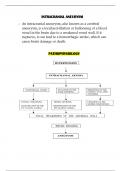
PATHOPHYSIOLOGY
, 1. Initiation:
The aneurysm formation begins with endothelial injury or
dysfunction, leading to inflammation and changes in the
vessel wall structure.
2. Progression:
As the vessel wall weakens, it starts to dilate under the
pressure of blood flow. The continuous hemodynamic
stress exacerbates the dilation.
3. Rupture:
Eventually, the aneurysm may rupture if the vessel wall
becomes too thin and can no longer withstand the
hemodynamic pressure. Rupture leads to subarachnoid
hemorrhage, a life-threatening condition.
SIGNS AND SYMPTOMS
Unruptured Intracranial Aneurysm
1. Headache: A sudden, severe headache is the most common
symptom.
2. Pain above and behind the eye.
3. Vision changes: Blurred or double vision.
4. Dilated pupil.
5. Weakness or numbness: Particularly on one side of the
face.
6. Difficulty speaking.
- An intracranial aneurysm, also known as a cerebral
aneurysm, is a localized dilation or ballooning of a blood
vessel in the brain due to a weakened vessel wall. If it
ruptures, it can lead to a hemorrhagic stroke, which can
cause brain damage or death.
PATHOPHYSIOLOGY
, 1. Initiation:
The aneurysm formation begins with endothelial injury or
dysfunction, leading to inflammation and changes in the
vessel wall structure.
2. Progression:
As the vessel wall weakens, it starts to dilate under the
pressure of blood flow. The continuous hemodynamic
stress exacerbates the dilation.
3. Rupture:
Eventually, the aneurysm may rupture if the vessel wall
becomes too thin and can no longer withstand the
hemodynamic pressure. Rupture leads to subarachnoid
hemorrhage, a life-threatening condition.
SIGNS AND SYMPTOMS
Unruptured Intracranial Aneurysm
1. Headache: A sudden, severe headache is the most common
symptom.
2. Pain above and behind the eye.
3. Vision changes: Blurred or double vision.
4. Dilated pupil.
5. Weakness or numbness: Particularly on one side of the
face.
6. Difficulty speaking.