
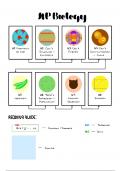
L : Chemistry U2 : Cell's L3 : Cell's L Cell's
.
of Life Structure + Energy Communication
functions + Cycle
1 M 1
~
Lb : 16 : gene's VT : 28 :
Herditary Expression + Natural Ecology
Regulation Selection
1 M 1
2EC) V99L JE :
ABC ABC Procedures
& + -
11) Equations/theorems
ABC Terms
Example
, Vi
WOTE3 : (H
,
0) critical to maintain life
-
Comic Bond : connection between
O
+ uS-
L
:
g
t
S
Hydrogen Bomp : connection
*
·
t
-
between Hus Off
g
t
·
Connect water molecules
1
&
H H
Together
H H
↓
t
Application of Water Chem Props :
o o Cohesion : water connect each other
o
a 7
· a > Adhesive : water connect with other
⑳
· ,
i , , , ,
·
-
⑳
I ↑
⑧
⑧
·
/
1 -
Surface Tension : water molecules on sur face have stronger bonds
due to lack of bord with other molecules.
1
⑧ ·
- I
·
&
o
Solvency : Due to its polar prop , water is the greatest solvent
(Dissolve chemicals)
⑧ o
o
Capillary Action : water molecules not separate because of cohesion
.
23 OC-EV : Carbon + Haprogen + Oxygen + Nitrogen
,
are main elements
of Life I made up 96 .
1 % of body weight
, Atoms: building blocks of matter Bonds :
Covenanti lomic:
&
⑳ o
& o
⑧ · &
· t &
-
>
+
2
-
M
a -
w -
I I face /act I
Inorganic
Element Usage Decomposes With
Out
fix by Absorb by
C Plant 's Lives use to Backtoenvir Die pue to lack of
Photosyn -
make every Diomolecule
The sis biomolecules
N Bacteria t Plant S . Notes environm -200
Other -
Deco web ↓ nucleic Proteins ↓ nucleic
MPOSeB a CIDS a CIDS
P make nucleic Die Due to lack of
acids + some muclic acids + some
Of
types LipiD types Of LIPID
.
3 : 3 OVOLECL LES : organic + carbon based macromolecules
*
H
Amount : & ⑧
H : CH
Monomer Dimer Polymer
Covenant Have 4 electrons
Bomb Useful for bonding
Metabolism :
Catabolism Anabolism :
↑
BREAK DOWN -
Polymers monomers BUILD Up -
monomers polymers for
to help generate ATP
. energy storage
Exergonics : net Release of free Endersonic: net Intake of free
energy energy
Free reactant
1
Free Product
098 5938
Energy Energy
~ ~
-
-
Product reactant
Time Time
,Dehydration Synthesis :
O H O H
1 2
monomers
· Polymers
·
Anabolic
H Momo H
process
mer
Momo
S mer
Momo
mer O Momo
mer O
H H
H H
O
H
H
3
&
Momo Momo O H
H
mer mer
Polymers
O 2
H
Hydrolysis Synthesis :
O
Polymers
H
>
monomers H
1 >
H
·
Catabolic
Process
Momo Momo
H
Nomo O H
mer
mer mer
Momo
mer
Polymers O
H
O 3
H
H
H Momo
mer
Momo [
mer O
H H
.
,BI
Biomolecule Monomer Polymer Main fun Structure
Carbonnet
EnergyStoragea structure
Structural
I
ares (Coni) Linear Structure + able to
nece
Stack
More stability : allow form of
tough surface
- >
ant con was
Long hydrocarbon chaim
Unsaturated fat
G
solids at room temp
Liquid
H
H
Proteins
Nucleic
ACID
·
c : OTE VS :
* Overview :
alpha-helices & Secondary Struct ↑
· ·
1 &
· Local fold of amire
S & · acid chain into elements
· ·
1 Primary Structure :
· · Like alpha-helices and
Amino Acip Sequence · · · beta shee is
·
4 Quaternar
3 Tertiary Structure :
Structure :
& Proteins finish &
Multiple
·
·
fOLD
Proteins
· ·
combine ·
·
* All proteins have 11 3 ,
but only some have h
,Amino Acid Structure : fill in in order for
carbon I
form bonds
↑
Amine Group [ Carboxyl Group :
-
:
-
IN-terminus ( (C-Terminus (
↓ H O
+ NH or NH ↓ COOH or COO -
, ,
+ Capable for + Capable for
HYDROGEN H i C C OH HYDROGEN
BONDING BONDING
R
↓
R-group : The Decide
structure
Property of the amimo acip
I
C
>
Hydrophobic : Of Hydrophilic :
-
&
Long O Oxesen/
hydrocarbon Hydrogen
SIDA
M
chains V
in
NH
,
Big Hexamer chair
COOH Ring(s)
H N HN COOH
,
I
Acidic (Hydrophilic) : O Basic (Hydrophilic) :
>
-
↓
Have carboxyl group 3
Have amime group
3
+ positive charge - negative charge
C OH H i
Primary Protein Structure : amino acids connect together Through Protein
Synthesis (1 3)
.
H H
H H
H O H O
N C C N C C
H H O
O
Re Re
Amino Acid 1 Amimo Acid 2
* Dehydration Synthesis
H
H
H
H
H O
H
N C C O
N C C
H O O
H
Re Re
, alpha-helices
Secondary Protein Structure : 1
·
· ·
Local fold of amino acid chain & ·
· ·
into elements &
·
· · · beta shee is
Tertiary Protein Structure :
Protein finish fold work
T
+
Hydrophobic Collapse : >R-group Interacti
⑧
·
⑧ ⑳
·
⑳ ⑧
·
Hydrophobic
...
my
⑧ ·
⑱
CH Interaction
G 1
·
· ( Hydrogen
UnfOLD ⑧
⑳
M
⑧
Bond f HCH ,
C
g
⑧
g CH
FOLD
-
⑧
Hydrophilic Amio Acid
↑
~
#
Hydrophilic Amio Acid Di Sulfide Bridge :
covalent bonds
between I Sulfurs
Easy to broke if
&
·
Strong +
not
outside normal & Drove to PH
. How
t p+
+ Tempo
Quaternary Protein Structure : multiple proteins combine
GVLCEC-C) :
Main function : storage of genetic material
DNA + RNA Structure:
5 Carbon Sugar
O 7
I 13 OH
OH OH
0 0
p 5'phosphate
- -
I
~ G 2' C C3
Base Base
Phosphate
C O
C C C C4
1 &
O 25
C C O
OH
~
RNA Only
o -
b -
0
OH
I
G
, H Adenine
C O H N N
C C C C C
C Nu H N C N
N C C N
Trymine Purines :
g
Peridimides : O 2x ring
single ring C C Structure
Structure
C Nu
* Replace T by U
3 in RNA
N C
Uracil
g
H
N H O guanine N
C C C C C
C N H N [ N
N C C N
Cutosine O H N
.
of Life Structure + Energy Communication
functions + Cycle
1 M 1
~
Lb : 16 : gene's VT : 28 :
Herditary Expression + Natural Ecology
Regulation Selection
1 M 1
2EC) V99L JE :
ABC ABC Procedures
& + -
11) Equations/theorems
ABC Terms
Example
, Vi
WOTE3 : (H
,
0) critical to maintain life
-
Comic Bond : connection between
O
+ uS-
L
:
g
t
S
Hydrogen Bomp : connection
*
·
t
-
between Hus Off
g
t
·
Connect water molecules
1
&
H H
Together
H H
↓
t
Application of Water Chem Props :
o o Cohesion : water connect each other
o
a 7
· a > Adhesive : water connect with other
⑳
· ,
i , , , ,
·
-
⑳
I ↑
⑧
⑧
·
/
1 -
Surface Tension : water molecules on sur face have stronger bonds
due to lack of bord with other molecules.
1
⑧ ·
- I
·
&
o
Solvency : Due to its polar prop , water is the greatest solvent
(Dissolve chemicals)
⑧ o
o
Capillary Action : water molecules not separate because of cohesion
.
23 OC-EV : Carbon + Haprogen + Oxygen + Nitrogen
,
are main elements
of Life I made up 96 .
1 % of body weight
, Atoms: building blocks of matter Bonds :
Covenanti lomic:
&
⑳ o
& o
⑧ · &
· t &
-
>
+
2
-
M
a -
w -
I I face /act I
Inorganic
Element Usage Decomposes With
Out
fix by Absorb by
C Plant 's Lives use to Backtoenvir Die pue to lack of
Photosyn -
make every Diomolecule
The sis biomolecules
N Bacteria t Plant S . Notes environm -200
Other -
Deco web ↓ nucleic Proteins ↓ nucleic
MPOSeB a CIDS a CIDS
P make nucleic Die Due to lack of
acids + some muclic acids + some
Of
types LipiD types Of LIPID
.
3 : 3 OVOLECL LES : organic + carbon based macromolecules
*
H
Amount : & ⑧
H : CH
Monomer Dimer Polymer
Covenant Have 4 electrons
Bomb Useful for bonding
Metabolism :
Catabolism Anabolism :
↑
BREAK DOWN -
Polymers monomers BUILD Up -
monomers polymers for
to help generate ATP
. energy storage
Exergonics : net Release of free Endersonic: net Intake of free
energy energy
Free reactant
1
Free Product
098 5938
Energy Energy
~ ~
-
-
Product reactant
Time Time
,Dehydration Synthesis :
O H O H
1 2
monomers
· Polymers
·
Anabolic
H Momo H
process
mer
Momo
S mer
Momo
mer O Momo
mer O
H H
H H
O
H
H
3
&
Momo Momo O H
H
mer mer
Polymers
O 2
H
Hydrolysis Synthesis :
O
Polymers
H
>
monomers H
1 >
H
·
Catabolic
Process
Momo Momo
H
Nomo O H
mer
mer mer
Momo
mer
Polymers O
H
O 3
H
H
H Momo
mer
Momo [
mer O
H H
.
,BI
Biomolecule Monomer Polymer Main fun Structure
Carbonnet
EnergyStoragea structure
Structural
I
ares (Coni) Linear Structure + able to
nece
Stack
More stability : allow form of
tough surface
- >
ant con was
Long hydrocarbon chaim
Unsaturated fat
G
solids at room temp
Liquid
H
H
Proteins
Nucleic
ACID
·
c : OTE VS :
* Overview :
alpha-helices & Secondary Struct ↑
· ·
1 &
· Local fold of amire
S & · acid chain into elements
· ·
1 Primary Structure :
· · Like alpha-helices and
Amino Acip Sequence · · · beta shee is
·
4 Quaternar
3 Tertiary Structure :
Structure :
& Proteins finish &
Multiple
·
·
fOLD
Proteins
· ·
combine ·
·
* All proteins have 11 3 ,
but only some have h
,Amino Acid Structure : fill in in order for
carbon I
form bonds
↑
Amine Group [ Carboxyl Group :
-
:
-
IN-terminus ( (C-Terminus (
↓ H O
+ NH or NH ↓ COOH or COO -
, ,
+ Capable for + Capable for
HYDROGEN H i C C OH HYDROGEN
BONDING BONDING
R
↓
R-group : The Decide
structure
Property of the amimo acip
I
C
>
Hydrophobic : Of Hydrophilic :
-
&
Long O Oxesen/
hydrocarbon Hydrogen
SIDA
M
chains V
in
NH
,
Big Hexamer chair
COOH Ring(s)
H N HN COOH
,
I
Acidic (Hydrophilic) : O Basic (Hydrophilic) :
>
-
↓
Have carboxyl group 3
Have amime group
3
+ positive charge - negative charge
C OH H i
Primary Protein Structure : amino acids connect together Through Protein
Synthesis (1 3)
.
H H
H H
H O H O
N C C N C C
H H O
O
Re Re
Amino Acid 1 Amimo Acid 2
* Dehydration Synthesis
H
H
H
H
H O
H
N C C O
N C C
H O O
H
Re Re
, alpha-helices
Secondary Protein Structure : 1
·
· ·
Local fold of amino acid chain & ·
· ·
into elements &
·
· · · beta shee is
Tertiary Protein Structure :
Protein finish fold work
T
+
Hydrophobic Collapse : >R-group Interacti
⑧
·
⑧ ⑳
·
⑳ ⑧
·
Hydrophobic
...
my
⑧ ·
⑱
CH Interaction
G 1
·
· ( Hydrogen
UnfOLD ⑧
⑳
M
⑧
Bond f HCH ,
C
g
⑧
g CH
FOLD
-
⑧
Hydrophilic Amio Acid
↑
~
#
Hydrophilic Amio Acid Di Sulfide Bridge :
covalent bonds
between I Sulfurs
Easy to broke if
&
·
Strong +
not
outside normal & Drove to PH
. How
t p+
+ Tempo
Quaternary Protein Structure : multiple proteins combine
GVLCEC-C) :
Main function : storage of genetic material
DNA + RNA Structure:
5 Carbon Sugar
O 7
I 13 OH
OH OH
0 0
p 5'phosphate
- -
I
~ G 2' C C3
Base Base
Phosphate
C O
C C C C4
1 &
O 25
C C O
OH
~
RNA Only
o -
b -
0
OH
I
G
, H Adenine
C O H N N
C C C C C
C Nu H N C N
N C C N
Trymine Purines :
g
Peridimides : O 2x ring
single ring C C Structure
Structure
C Nu
* Replace T by U
3 in RNA
N C
Uracil
g
H
N H O guanine N
C C C C C
C N H N [ N
N C C N
Cutosine O H N


