
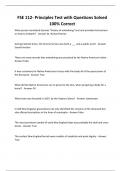
FSE 112 - Principles Test with Questions Solved 100% Correct What person translated Gannals "history of embalming" text and provided instructions on how to embalm? - Answer Dr. Richard Harlan During Colonial times, the funeral service was bot h a ___ and a public event - Answer Social function There are many records that embalming was practiced by the Native American Indian - Answer False It was customary for Native Americans to bury with the body all of the possessions of the deceased - Answ er True What did the Native Americans use to preserve the skin, when preparing a body for a burial? - Answer Oil What town was founded in 1607, by the Virgina Colony? - Answer Jamestown In Old New England, gravestones not only identified the remains of the deceased but also offered inscriptions in the form of cenotaphs - Answer False The most persistent symbol of e arly New England days was probably the skull and cross bones - Answer True The earliest New England burials were models of simplicity and quiet dignity - Answer True An Indian ritual burial included that of "Mound Builders" which were erected Earthen mou nds over their dead - Answer True In New England, the procession to the grave was buy horse and carriage - Answer False Dutch funerals took place three to four days after death - Answer True Native Americans would fill the body of the deceased with - Answer Sand What company began using mass production principles in 1858? - Answer Crane & Breed What purpose did a combination car serve? - Answer It could be used as a hearse or ambulance Metal burial vaults originated around the year - Answer 1879 Whic h of these funerary gifts was not common during early New England funeral services? - Answer Fountain pens The practice of American burial in coffins/caskets is deprived mainly from - Answer British folkways Crane and breed produced a hearse that was dis played at the 1893 Chicago World's Fair. It was used for the funeral of - Answer Carter Harrison, Mayor of Chicago What did life signals accomplish? - Answer A means to allow life to those buried alive
Vista previa 2 fuera de 7 páginas
Examen
FSE 112- Principles Test with Questions Solved 100% Correct
Vista previa 2 fuera de 7 páginas
What person translated Gannals "history of embalming" text and provided instructions on how to embalm? - Answer Dr. Richard Harlan During Colonial times, the funeral service was both a ___ and a public event - Answer Social function There are many records that embalming was practiced by the Native American Indian - Answer False
Vista previa del contenido
Información del documento
- Subido en
- 26 de julio de 2024
- Número de páginas
- 7
- Escrito en
- 2023/2024
- Tipo
- Examen
- Contiene
- Preguntas y respuestas
$12.99
¿Documento equivocado? Cámbialo gratis
Dentro de los 14 días posteriores a la compra y antes de descargarlo, puedes elegir otro documento. Puedes gastar el importe de nuevo.
Escrito por estudiantes que aprobaron
Inmediatamente disponible después del pago
Leer en línea o como PDF

Los indicadores de reputación están sujetos a la cantidad de artículos vendidos por una tarifa y las reseñas que ha recibido por esos documentos. Hay tres niveles: Bronce, Plata y Oro. Cuanto mayor reputación, más podrás confiar en la calidad del trabajo del vendedor.
