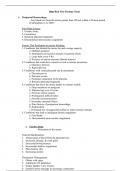
High Risk Post Partum Client
1. Postpartal Hemorrhage
- Any blood loss from the uterus greater than 500 mL within a 24-hour period
(Cunningham et al, 2001)
Four Main Causes:
1. Uterine Atony
2. Lacerations
3. Retained placental fragments
4. Disseminated intravascular coagulation
Factors That Predispose to uterine bleeding:
1. Conditions that distend the uterus beyond average capacity
a. Multiple gestation
b. Hydramnios (Excessive amount of amniotic fluid)
c. Large baby (over 9 lb)
d. Presence of uterine myomas (fibroid tumors)
2. Conditions that could have caused cervical or uterine lacerations
a. Operative delivery
b. Rapid delivery
3. Conditions with varied placental site & attachment
a. Placenta previa
b. Placenta accrete
c. Premature separation of the placenta
d. Retained placental fragments
4. Conditions that leave the uterus unable to contract readily
a. Deep anesthesia or analgesia
b. Maternal age over 30 years
c. Previous uterine surgery
d. Prolonged & difficult labor
e. Possible chorioamnionitis
f. Secondary maternal illness
g. Prior history of postpartum hemorrhage
h. Endometritis
i. Prolonged use of magnesium sulfate or other tocolytic therapy
5. Conditions that lead to inadequate blood coagulation
a. Fetal death
b. Disseminated intravascular coagulation
a. Uterine Atony
- Relaxation of the uterus
Clinical Manifestation:
1. Abrupt gush of blood from the placental site.
2. Increased, thready, & weak pulse
3. Decreased blood pressure
4. Increased& shallow respirations
5. Pale clammy skin
6. Increasing anxiety
Therapeutic Management:
1. Obtain vital signs.
2. Administer O2 inhalation.
3. Empty bladder every 4 hours.
4. Fundal/Uterine massage to encourage contraction
, 6. Drug therapy:
a. IV Oxytocin (Pitocin)
b. IM Methergine (Methylergonovine Maleate)
c. Prostaglandin F
S/E: Nausea, Diarrhea, Tachycardia, Hypertension
7. Blood transfusion
8. Surgical Procedure
a. Hysterectomy
b. Lacerations
i. Cervical lacerations – usually found on the sides of the cervix near the
branches of the uterine artery.
Therapeutic Management:
1. Repair of cervical laceration.
ii. Vaginal laceration
Therapeutic management:
1. Vaginal repair
2. Catheter insertion
iii. Perineal lacearions – usually occur when the woman is placed in a lithotomy
position, increasing tension on the perineum.
Therapeutic Management:
1. Eipisiorrhaphy
2. Increase fluid intake.
3. Provide stool softener
c. Retained Placental Fragments
Clinical Manifestations:
1. Presence of retained fragments (through sonogram)
2. (+) serum HCG
3. Signs of bleeding/shock
Therapeutic Management:
1. Removal of the placental fragments e.g. D&C
2. Methotrexate administration.
d. Disseminated Intravascular Coagulation
- a complex syndrome of activated coagulation that results in bleeding &
thrombosis.
Predisposing Factors:
1. Premature separation of placenta
2. Hypertension of pregnancy
3. Amniotic fluid embolism
4. Placental retention
5. Septic abortion
6. Retention of dead fetus
Clinical Manifestations:
1. Purpura, petechia, & ecchymosis on the skin, mucous membrane, heart lining
2. Prolonged bleeding from venipuncture.
3. Tachycardia & hypotension
4. Uncontrolled hemorrhage during surgery or childbirth
5. Oliguria
Therapeutic Management:
1. Treat the underlying cause.
2. Monitor signs of bleeding
1. Postpartal Hemorrhage
- Any blood loss from the uterus greater than 500 mL within a 24-hour period
(Cunningham et al, 2001)
Four Main Causes:
1. Uterine Atony
2. Lacerations
3. Retained placental fragments
4. Disseminated intravascular coagulation
Factors That Predispose to uterine bleeding:
1. Conditions that distend the uterus beyond average capacity
a. Multiple gestation
b. Hydramnios (Excessive amount of amniotic fluid)
c. Large baby (over 9 lb)
d. Presence of uterine myomas (fibroid tumors)
2. Conditions that could have caused cervical or uterine lacerations
a. Operative delivery
b. Rapid delivery
3. Conditions with varied placental site & attachment
a. Placenta previa
b. Placenta accrete
c. Premature separation of the placenta
d. Retained placental fragments
4. Conditions that leave the uterus unable to contract readily
a. Deep anesthesia or analgesia
b. Maternal age over 30 years
c. Previous uterine surgery
d. Prolonged & difficult labor
e. Possible chorioamnionitis
f. Secondary maternal illness
g. Prior history of postpartum hemorrhage
h. Endometritis
i. Prolonged use of magnesium sulfate or other tocolytic therapy
5. Conditions that lead to inadequate blood coagulation
a. Fetal death
b. Disseminated intravascular coagulation
a. Uterine Atony
- Relaxation of the uterus
Clinical Manifestation:
1. Abrupt gush of blood from the placental site.
2. Increased, thready, & weak pulse
3. Decreased blood pressure
4. Increased& shallow respirations
5. Pale clammy skin
6. Increasing anxiety
Therapeutic Management:
1. Obtain vital signs.
2. Administer O2 inhalation.
3. Empty bladder every 4 hours.
4. Fundal/Uterine massage to encourage contraction
, 6. Drug therapy:
a. IV Oxytocin (Pitocin)
b. IM Methergine (Methylergonovine Maleate)
c. Prostaglandin F
S/E: Nausea, Diarrhea, Tachycardia, Hypertension
7. Blood transfusion
8. Surgical Procedure
a. Hysterectomy
b. Lacerations
i. Cervical lacerations – usually found on the sides of the cervix near the
branches of the uterine artery.
Therapeutic Management:
1. Repair of cervical laceration.
ii. Vaginal laceration
Therapeutic management:
1. Vaginal repair
2. Catheter insertion
iii. Perineal lacearions – usually occur when the woman is placed in a lithotomy
position, increasing tension on the perineum.
Therapeutic Management:
1. Eipisiorrhaphy
2. Increase fluid intake.
3. Provide stool softener
c. Retained Placental Fragments
Clinical Manifestations:
1. Presence of retained fragments (through sonogram)
2. (+) serum HCG
3. Signs of bleeding/shock
Therapeutic Management:
1. Removal of the placental fragments e.g. D&C
2. Methotrexate administration.
d. Disseminated Intravascular Coagulation
- a complex syndrome of activated coagulation that results in bleeding &
thrombosis.
Predisposing Factors:
1. Premature separation of placenta
2. Hypertension of pregnancy
3. Amniotic fluid embolism
4. Placental retention
5. Septic abortion
6. Retention of dead fetus
Clinical Manifestations:
1. Purpura, petechia, & ecchymosis on the skin, mucous membrane, heart lining
2. Prolonged bleeding from venipuncture.
3. Tachycardia & hypotension
4. Uncontrolled hemorrhage during surgery or childbirth
5. Oliguria
Therapeutic Management:
1. Treat the underlying cause.
2. Monitor signs of bleeding