

Birth Doula Certification All Possible Questions and Answers with complete solution
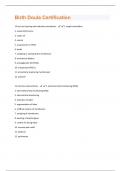
12 cervical ripening and induction procedures - 1. nipple stimulation 2. sexual intercourse 3. castor oil 4. enema 5. acupuncture or TENS 6. herbs 7. stripping or sweeping the membranes 8. mechanical dilators 9. prostaglandin E2 (PGE2) 10. misoprostol (PGE1) 11. amniotomy (rupturing membranes) 12. oxytocin 12 common interventions - 1. electronic fetal monitoring (EFM) 2. intermittent fetal monitoring (IFM) 3. internal fetal monitoring 4. induction of labor 5. augmentation of labor 6. artificial rupture of membranes 7. stripping of membranes 8. wearing a hospital gown 9. routine IV during labor 10. narcotic pain relief 11. epidural 12. episiotomy4 touch techniques - 1. effleurage 2. counter pressure 3. double hip squeeze 4. kneading massage 6 relaxation techniques - 1. visualization & affirmations 2. deep, slow breathing 3. progressive relaxation 4. setting the environment 5. breathing 6. rainbow script 9 positions of comfort - 1. side-lying 2. hands and knees 3. standing (slow dancing) / swaying 4. walking 5. sitting 6. squatting 7. birthing stool 8. birth ball 9. shower or bath amniotomy - artificial rupture of membranes usually an attempt to shorten labor birth ball - can be used throughout entire labor with many positions helps decrease pain, promotes comfort, great if mom is having back labor and allows baby to get in goof position using gravitythere should always be support person around so mom doesn't fall off; also need a ball that fits mom's height can rock back and forth, side-to-side in between contractions mom can rest head on a pillow giving gentle pressure on lower back is helpful during contractions and giving lower back massage between contractions there are also small birthing balls that can be used to rock while in hands and knees position on bed-- caregiver can do the same things here (pressure and massage) birthing stool - sit in upright position allows for partner/doula to massage back if mom is having back pain could also apply pressure to lower back or massage lower back can also give birth on birthing stool if right for mom breathing - cleansing breath (before and after contraction): deep breath in through the nose and out through the mouth slow breathing (during contraction): finishing contraction with a cleansing breath light breathing (during contraction): breath in and out rapidly. between the contractions, mom should sip on water, suck on ice chips --put those together: begin contraction with slow breathing, as contraction ramps up switch to light breathing and after the contraction ends take a nice cleansing breath. if contraction starts of super heavy/strong, skip the slow breath. cephalopelvic disproportion - condition preventing normal delivery through the birth canal; either the baby's head is too large or the birth canal is too smallcertified nurse midwife (CNM) - trained in nursing and midwifery care for women during pregnancy, labor, and delivery most CNM's: - have a bachelors degree in nursing - have a masters degree in midwifery - are certified by the American College of nurse-midwives most CNM's work with OB's
Document information
- Uploaded on
- July 14, 2024
- Number of pages
- 11
- Written in
- 2023/2024
- Type
- Exam (elaborations)
- Contains
- Questions & answers


