

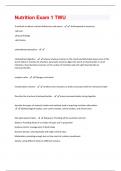
Nutrition Exam 1 TWU Questions With 100% Correct Answers.
4 methods to detect nutrient deficiencies and excess - -Anthropometric measures -lab tests -physical findings -diet history carbohydrate absorption - carbohydrate digestion - salivary amylase enzymes in the mouth partially break down some of the starch before it reaches the intestine, pancreatic enzymes digest the starch to disaccharides in small intestines, disaccharidase enzymes on the surface of intestinal wall cells split disaccharides to monosaccharides complex carbs - Glycogen and starch Condensation reaction - combines two reactants to yeild one product with the removal of water Describe the structure of polysaccharides - many monosaccharides strung together describe the types of research studies and methods used in acquiring nutrition information - Epidemiological Studies, case-control studies, animal studies, and clinical trials diet-planning principles - Adequacy: Providing all the essential nutrients Balance: Providing foods of a number of types and in proportion Kcalorie control: management of food intake Nutrient density: selecting foods with high nutrient value Moderation: providing enough but not too much of a dietary constituent Variety: using different foods on different ocasionsdietary recommendations regarding sugar intake - 25% of kcal should come from added sugars dietary recommendations regaurding complex carbohydrates - 46-56% should come from carbs Discretionary kcalorie allowance - the kcalories remaining in a person energy allowance after consuming enough nutrient-dense foods to meet all nutrient needs for a day Explain how variables might be correlation but not causation - correlation variables are related, but causation needs a reason to be related together fate of glucose in the body - can be stored a glycogen, used for energy, it can be converted to fat when carbohydrate us available. food labels - were created to help consumers make healthy food choices by providing information about the nutrient composition of foods heath effects of starches and fibers - they protect against heart disease, colon cancer, and diabetes, assist in weight control, improve large intestine health, lower blood cholesterol levels, how are starch and glycogent similar and how do they differ - Sim: they are both composed of glucose Dif: glycogen consists of many glucose molecules linked together in highly branched chains, while starch consists of many glucose molecules linked side by side how do the fibers differ from the other polysaccharides - both the bonds between their monosaccharides cannot be broken by human enzymes
Información del documento
- Subido en
- 12 de julio de 2024
- Número de páginas
- 7
- Escrito en
- 2023/2024
- Tipo
- Examen
- Contiene
- Preguntas y respuestas

