
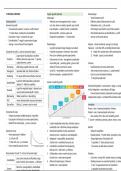
9 STRATEGIC METHODS Organic growth (internal) Disadvantages
Advantages - Tension between staff
Business growth - Maintain current management style + culture - Different cultures (diseconomies of scale)
Reasons for growth - Less risky, slower so adapt to growth, easy control - Redundancy costs, ↓ job security
- Increased sales volumes + revenue = profit reinvest - Less disruptive – maintain morale + productivity - CMA merger could restrict comp, finance wasted
- ↑ market share, control prices (competition) - Reinvest profits – premises, oppo cost - Only limited experience so diversification ↓ profit
- Economies of scale + economies of scope - Outperform competitors + ↑ market share - Success not the same abroad
- Diversification (↑ range) to cope market change
- Synergy = more achieved if work together Disadvantages Mergers – shares transferred, synergy (cost saving)
- Long time to adapt to large changes, lose culture Takeovers – more than 50%, controlling interest/stake
Economies of scale (↓ unit cost as become larger) - If market not growing = restricted / new market 1) Hostile, PLC majority share, offer premium price
Large volume of production, machines - Miss out on ambitious growth opportunities 2) Friendly – agreed, survival benefit
Technical efficient, decrease wage costs, ↑ capacity, - Diseconomies of scale – management complicated
capital-intensive, comms - Overtrading risk ↓ working capital = grow too fast Ventures
Purchasing Bulk buying, supplier discount, credit without LT funds, overinvest in assets - Small businesses try meet unmet needs
Managerial Specialist skills, fast, efficient decision - Ltd to PLC = shareholders, short termism, takeover - Joint ventures share resources, ↓ capital needed
- Become monopoly – penalised by CMA - Easy to access international markets
Marketing FC spread, afford more effective channels
- ↑ risk (joint spreads risk)
Large firm afford specialists, production Greiner’s model of growth
Specialisation
adapted, ↑ efficiency repetition Horizontal integration = same industry + stage (↓ comp)
Large firm negotiate larger / cheaper loans, Vertical integration = same industry, diff stage
Financial
access funds (retained profit / shares) Forward (control outlets), backwards (control suppli
Risk bearing Wider product line + diversifying Conglomerate mergers = unrelated firms (product extens
R+D Invest retained profit, processes innovation
Soc welfare Ethical, ↓ turnover, easy to recruit Innovation
Process = new / improved production + delivery
Economies of scope Product = new / improved goods and services
- Cheaper to produce multiple products, X specialise idea, analysis, R+D, value, test marketing, launch
- Use people + infrastructure so only expand produc ↑ success = protection, planning, culture, secrecy, consu
- Benefit from brand loyalty, ↓ prices, comp adv 1. Creative leadership shares ideas, informal, long hrs
Leadership crisis = effectively manage employees Benefits
Experience curve 2. Directional leadership, formal, experienced - Ahead of competition
- More experienced + efficient Autonomy crisis = expertise so want delegation - Expand markets, ↑ market share, economies of scop
- ↓ cost per unit) 3. Delegation + responsibility, decentralised - Charge higher prices if innovative USP
- ↑ total units, cost ↓ at constant Control crisis = coordinated resource use - ↑ reputation, ↑ future product success
- Fewer materials wasted, tech use 4. Coordination, centralised, formal planning - ↑ processes can add value to products
Red tap crisis = staff resent ↓ efficiency
Diseconomies of scale (↑ unit cost as become larger) 5. Collaboration, comms, matrix structure, innov Problems
Lose control, decentral, diff policies, large Growth crisis = seek external growth - Costs time + money (R+D, market research, training)
Coordination 6. Alliances through merger / takeover - Wasting resources on unwanted products (↓ deman
span of control, slow response, ↓ efficienct
Identity crisis = need expertise - ↑ cost = no guaranteed return on investment
Hierarchy, message distort, standardised
Comms - ↓ reputation of product poor quality
Advantages - Tension between staff
Business growth - Maintain current management style + culture - Different cultures (diseconomies of scale)
Reasons for growth - Less risky, slower so adapt to growth, easy control - Redundancy costs, ↓ job security
- Increased sales volumes + revenue = profit reinvest - Less disruptive – maintain morale + productivity - CMA merger could restrict comp, finance wasted
- ↑ market share, control prices (competition) - Reinvest profits – premises, oppo cost - Only limited experience so diversification ↓ profit
- Economies of scale + economies of scope - Outperform competitors + ↑ market share - Success not the same abroad
- Diversification (↑ range) to cope market change
- Synergy = more achieved if work together Disadvantages Mergers – shares transferred, synergy (cost saving)
- Long time to adapt to large changes, lose culture Takeovers – more than 50%, controlling interest/stake
Economies of scale (↓ unit cost as become larger) - If market not growing = restricted / new market 1) Hostile, PLC majority share, offer premium price
Large volume of production, machines - Miss out on ambitious growth opportunities 2) Friendly – agreed, survival benefit
Technical efficient, decrease wage costs, ↑ capacity, - Diseconomies of scale – management complicated
capital-intensive, comms - Overtrading risk ↓ working capital = grow too fast Ventures
Purchasing Bulk buying, supplier discount, credit without LT funds, overinvest in assets - Small businesses try meet unmet needs
Managerial Specialist skills, fast, efficient decision - Ltd to PLC = shareholders, short termism, takeover - Joint ventures share resources, ↓ capital needed
- Become monopoly – penalised by CMA - Easy to access international markets
Marketing FC spread, afford more effective channels
- ↑ risk (joint spreads risk)
Large firm afford specialists, production Greiner’s model of growth
Specialisation
adapted, ↑ efficiency repetition Horizontal integration = same industry + stage (↓ comp)
Large firm negotiate larger / cheaper loans, Vertical integration = same industry, diff stage
Financial
access funds (retained profit / shares) Forward (control outlets), backwards (control suppli
Risk bearing Wider product line + diversifying Conglomerate mergers = unrelated firms (product extens
R+D Invest retained profit, processes innovation
Soc welfare Ethical, ↓ turnover, easy to recruit Innovation
Process = new / improved production + delivery
Economies of scope Product = new / improved goods and services
- Cheaper to produce multiple products, X specialise idea, analysis, R+D, value, test marketing, launch
- Use people + infrastructure so only expand produc ↑ success = protection, planning, culture, secrecy, consu
- Benefit from brand loyalty, ↓ prices, comp adv 1. Creative leadership shares ideas, informal, long hrs
Leadership crisis = effectively manage employees Benefits
Experience curve 2. Directional leadership, formal, experienced - Ahead of competition
- More experienced + efficient Autonomy crisis = expertise so want delegation - Expand markets, ↑ market share, economies of scop
- ↓ cost per unit) 3. Delegation + responsibility, decentralised - Charge higher prices if innovative USP
- ↑ total units, cost ↓ at constant Control crisis = coordinated resource use - ↑ reputation, ↑ future product success
- Fewer materials wasted, tech use 4. Coordination, centralised, formal planning - ↑ processes can add value to products
Red tap crisis = staff resent ↓ efficiency
Diseconomies of scale (↑ unit cost as become larger) 5. Collaboration, comms, matrix structure, innov Problems
Lose control, decentral, diff policies, large Growth crisis = seek external growth - Costs time + money (R+D, market research, training)
Coordination 6. Alliances through merger / takeover - Wasting resources on unwanted products (↓ deman
span of control, slow response, ↓ efficienct
Identity crisis = need expertise - ↑ cost = no guaranteed return on investment
Hierarchy, message distort, standardised
Comms - ↓ reputation of product poor quality


