

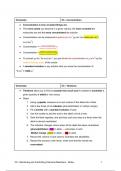
Chemistry C5 - Concentration
● Concentration is how crowded things are.
● The more solute you dissolve in a given volume, the more crowded the
molecules are and the more concentrated the solution.
3 3 3
● Concentration can be measured in grams per 𝑑𝑚 (𝑔/𝑑𝑚 )or moles per 𝑑𝑚 (
3
𝑚𝑜𝑙/𝑑𝑚 ).
𝑚𝑎𝑠𝑠 𝑜𝑓 𝑠𝑜𝑙𝑢𝑡𝑒 (𝑔)
● Concentration = 3
𝑣𝑜𝑙𝑢𝑚𝑒 𝑜𝑓 𝑠𝑜𝑙𝑢𝑡𝑖𝑜𝑛 (𝑑𝑚 )
𝑛𝑢𝑚𝑏𝑒𝑟 𝑜𝑓 𝑚𝑜𝑙𝑒𝑠 (𝑚𝑜𝑙)
● Concentration = 3
𝑣𝑜𝑙𝑢𝑚𝑒 𝑜𝑓 𝑠𝑜𝑙𝑢𝑡𝑖𝑜𝑛 (𝑑𝑚 )
3 3 3
● To convert 𝑔/𝑑𝑚 to 𝑚𝑜𝑙/𝑑𝑚 , you just divide the concentration in 𝑔/𝑑𝑚 by the
relative formula mass of the solute.
● A standard solution is any solution that you know the concentration of.
3 3
*1 𝑑𝑚 = 1000𝑐𝑚
Chemistry C5 - Titrations
● Titrations allow you to find out exactly how much acid is needed to neutralise a
given quantity of alkali(or vice versa).
● Steps:
1. Using a pipette, measure out a set volume of the alkali into a flask.
2. Add a few drops of an indicator (phenolphthalein or methyl orange).
3. Fill a burette with a standard solution of acid.
4. Use the burette to add the acid to the alkali a bit at a time.
5. Swirl the flask regularly, and add less acid (one drop at a time) when the
alkali is almost neutralised.
6. The indicator changes colour when all the alkali has been neutralised.
(phenolphthalein: pink in alkali → colourless in acid
Methyl orange: yellow in alkali → red in acid)
7. Record the volume of acid used to neutralise the alkali(titre).
8. Repeat the process a few times, make sure that the results are
concordant.
C5 - Monitoring and Controlling Chemical Reactions - Notes 1
, Example Question
3 3 3
25𝑐𝑚 of 0.1 𝑚𝑜𝑙/𝑑𝑚 of H2SO4 to neutralise 30 𝑐𝑚 of the 2NaOH solution. Find the
3
concentration of the alkali in 𝑚𝑜𝑙/𝑑𝑚 . 2NaOH + H2SO4 → Na2SO4 + 2H2O
3 3 3
1. Volume of H2SO4 = 25 𝑐𝑚 = 0.025 𝑑𝑚 1. Convert the volume into 𝑑𝑚 .
3 3
Volume of 2NaOH = 30 𝑐𝑚 = 0.03 𝑑𝑚
2. Moles = conc. x volume of solution 2. Find the mole of the known
solution.
= 0.1 x 0.025
= 0.0025 moles of H2SO4
3. Find the ratio from the
3. Ratio of H2SO4 to 2NaOH = 1:2 equation.
4. Moles of 2NaOH = 2 x 0.0025 = 0.005 mol 4. Multiply the ratio with the
mole of sulfuric acid.
𝑛𝑢𝑚𝑏𝑒𝑟 𝑜𝑓 𝑚𝑜𝑙𝑒𝑠 (𝑚𝑜𝑙)
5. Concentration = 3
5. Find the concentration of
𝑣𝑜𝑙𝑢𝑚𝑒 𝑜𝑓 𝑠𝑜𝑙𝑢𝑡𝑖𝑜𝑛 (𝑑𝑚 )
sodium hydroxide using the
= 0..03 concentration formula
3
= 0.167 𝑚𝑜𝑙/𝑑𝑚 (3 dp)
Chemistry C5 - Gases calculations
3
● The volume occupied by one mole of a gas is known as molar volume (𝑑𝑚 /𝑚𝑜𝑙)
● Molar volume = gas volume ÷ number of moles
3
● *One mole of any gas always occupies 24 𝑑𝑚 at room temperature and
pressure. (RTP = 20°C and 1 pressure)
3
● At RTP, all gases have the same molar volume – 24 𝑑𝑚 /𝑚𝑜𝑙.
● Moles of gas = Volume ÷ 24
Chemistry C5 - Percentage yield
● Yield - the amount of product you get from a reaction.
● The more reactants you start with, the higher the actual yield(what you get) will
be.
● The theoretical yield of a reaction is the mass of the product you estimate if all the
reactants were converted to products.
𝑎𝑐𝑡𝑢𝑎𝑙 𝑦𝑖𝑒𝑙𝑑
● *Percentage yield = 𝑡ℎ𝑒𝑜𝑟𝑒𝑡𝑖𝑐𝑎𝑙 𝑦𝑖𝑒𝑙𝑑
x 100
● A 0% yield means no reactants were converted into products.
● In a reaction with a low percentage yield, a lot of reactants are wasted.
C5 - Monitoring and Controlling Chemical Reactions - Notes 2
● Concentration is how crowded things are.
● The more solute you dissolve in a given volume, the more crowded the
molecules are and the more concentrated the solution.
3 3 3
● Concentration can be measured in grams per 𝑑𝑚 (𝑔/𝑑𝑚 )or moles per 𝑑𝑚 (
3
𝑚𝑜𝑙/𝑑𝑚 ).
𝑚𝑎𝑠𝑠 𝑜𝑓 𝑠𝑜𝑙𝑢𝑡𝑒 (𝑔)
● Concentration = 3
𝑣𝑜𝑙𝑢𝑚𝑒 𝑜𝑓 𝑠𝑜𝑙𝑢𝑡𝑖𝑜𝑛 (𝑑𝑚 )
𝑛𝑢𝑚𝑏𝑒𝑟 𝑜𝑓 𝑚𝑜𝑙𝑒𝑠 (𝑚𝑜𝑙)
● Concentration = 3
𝑣𝑜𝑙𝑢𝑚𝑒 𝑜𝑓 𝑠𝑜𝑙𝑢𝑡𝑖𝑜𝑛 (𝑑𝑚 )
3 3 3
● To convert 𝑔/𝑑𝑚 to 𝑚𝑜𝑙/𝑑𝑚 , you just divide the concentration in 𝑔/𝑑𝑚 by the
relative formula mass of the solute.
● A standard solution is any solution that you know the concentration of.
3 3
*1 𝑑𝑚 = 1000𝑐𝑚
Chemistry C5 - Titrations
● Titrations allow you to find out exactly how much acid is needed to neutralise a
given quantity of alkali(or vice versa).
● Steps:
1. Using a pipette, measure out a set volume of the alkali into a flask.
2. Add a few drops of an indicator (phenolphthalein or methyl orange).
3. Fill a burette with a standard solution of acid.
4. Use the burette to add the acid to the alkali a bit at a time.
5. Swirl the flask regularly, and add less acid (one drop at a time) when the
alkali is almost neutralised.
6. The indicator changes colour when all the alkali has been neutralised.
(phenolphthalein: pink in alkali → colourless in acid
Methyl orange: yellow in alkali → red in acid)
7. Record the volume of acid used to neutralise the alkali(titre).
8. Repeat the process a few times, make sure that the results are
concordant.
C5 - Monitoring and Controlling Chemical Reactions - Notes 1
, Example Question
3 3 3
25𝑐𝑚 of 0.1 𝑚𝑜𝑙/𝑑𝑚 of H2SO4 to neutralise 30 𝑐𝑚 of the 2NaOH solution. Find the
3
concentration of the alkali in 𝑚𝑜𝑙/𝑑𝑚 . 2NaOH + H2SO4 → Na2SO4 + 2H2O
3 3 3
1. Volume of H2SO4 = 25 𝑐𝑚 = 0.025 𝑑𝑚 1. Convert the volume into 𝑑𝑚 .
3 3
Volume of 2NaOH = 30 𝑐𝑚 = 0.03 𝑑𝑚
2. Moles = conc. x volume of solution 2. Find the mole of the known
solution.
= 0.1 x 0.025
= 0.0025 moles of H2SO4
3. Find the ratio from the
3. Ratio of H2SO4 to 2NaOH = 1:2 equation.
4. Moles of 2NaOH = 2 x 0.0025 = 0.005 mol 4. Multiply the ratio with the
mole of sulfuric acid.
𝑛𝑢𝑚𝑏𝑒𝑟 𝑜𝑓 𝑚𝑜𝑙𝑒𝑠 (𝑚𝑜𝑙)
5. Concentration = 3
5. Find the concentration of
𝑣𝑜𝑙𝑢𝑚𝑒 𝑜𝑓 𝑠𝑜𝑙𝑢𝑡𝑖𝑜𝑛 (𝑑𝑚 )
sodium hydroxide using the
= 0..03 concentration formula
3
= 0.167 𝑚𝑜𝑙/𝑑𝑚 (3 dp)
Chemistry C5 - Gases calculations
3
● The volume occupied by one mole of a gas is known as molar volume (𝑑𝑚 /𝑚𝑜𝑙)
● Molar volume = gas volume ÷ number of moles
3
● *One mole of any gas always occupies 24 𝑑𝑚 at room temperature and
pressure. (RTP = 20°C and 1 pressure)
3
● At RTP, all gases have the same molar volume – 24 𝑑𝑚 /𝑚𝑜𝑙.
● Moles of gas = Volume ÷ 24
Chemistry C5 - Percentage yield
● Yield - the amount of product you get from a reaction.
● The more reactants you start with, the higher the actual yield(what you get) will
be.
● The theoretical yield of a reaction is the mass of the product you estimate if all the
reactants were converted to products.
𝑎𝑐𝑡𝑢𝑎𝑙 𝑦𝑖𝑒𝑙𝑑
● *Percentage yield = 𝑡ℎ𝑒𝑜𝑟𝑒𝑡𝑖𝑐𝑎𝑙 𝑦𝑖𝑒𝑙𝑑
x 100
● A 0% yield means no reactants were converted into products.
● In a reaction with a low percentage yield, a lot of reactants are wasted.
C5 - Monitoring and Controlling Chemical Reactions - Notes 2


