1️⃣ Environmental issues: Responsible design
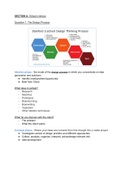
Designing the future
Environmental sustainability
Economic sustainability
Social sustainability
Carbon footprint - term used to measure the impact of greenhouse gas emissions from...
Carbon footprint: total amount of CO2 released into the atmosphere due to the activities of an individual, a
community or an organisation
Primary carbon footprint
Measures the direct emissions of CO2 from the burning of fossil fuels (e.g. from transport)
Secondary carbon footprint
Measures the indirect CO2 from the products we use (e.g. 5 carrier bags produce approx. 1kg of CO2)
Carbon footprint of products
Carbon offsetting
Donating to environmental charities
Using electric vehicles
Planting trees
Environmental journalist George Monbiot questions saying "You buy yourself a clean conscience by paying
someone else to undo the harm you are causing"
Pollution + Emissions
Biochemicals
Petrochemicals
Particulates
Methane + VOCs
Carbon dioxide, carbon monoxide, nitrogen oxide
Deforestation
Trees are being used faster than they can be replenished
,Forests act as a carbon sink - deforestation is responsible for 15% of greenhouse gas emissions
Soil erosion , surface run-off, flash flooding
Communities are displaced + valuable habitats are lost
Climate change
Desertification and loss of habitats
Extreme weather conditions
Melting ice, glaciers + rising sea levels
The scale of the problem
Patches of plastic waste have been found on the surface of about 40% of the world's oceans
Seals + turtles are among 300 species which become entangled in plastic waste
Microplastics provide a medium to transport other toxic compounds
Single use
Single-use products and packaging, currently make up 1/5 of all litter
Plastic bag use in England declined when a 5p charge was introduced in 2015
In Norway deposit return schemes have led to 96% of plastic bottles being returned
UK government is currently considering a plastic bottle recycling scheme + a tax on takeaway + other plastic
packaging
Prolific plastics
We use more than 5 million tonnes of plastic each year
Over the last 70 years plastic use has hugely increased, due to low cost + durability
Sustainable development
Introduced in 1987 by the World Commission on Environment and Development (the Brundtland Commission)
Sustainable development: 'development which meets the needs of current generations, without the
compromising the ability of future generations to meet their own needs'
economic, social + environmental
Environmental issues (6 Rs)
Rethink
Click fittings
SMAs (Shape Memory Alloys) to aid product disassembly before recycling
Refuse
, Reduce
Reuse
Repair
Addresses 'throw away' culture
Recycle
Must consider ease of disassembly
e.g. car manufacturers will use click fittings to attach dashboards + interior door panels, to remove the
need for additional joining components like screws
Primary recycling (or re-use)
The use of of functioning second-hand products. Charity shops, eBay + local council recycling centres are
the main sources for primary recycling
Secondary recycling
At the end of a product's life, the materials are recycled to make different products. Boat sails can be
made into seating products e.g. beanbags
Tertiary recycling
Completely breaking down a product and reformulating it through a chemical process. Polymer drink
bottles can be shredded + spun into fibres to make fleece textiles
The environmental impact of packing
The use of concentrates significantly reduce the amount of packing (e.g. concentrated juice + detergent)
Alternative energy sources
Renewable energy
pros
It will never run out
Renewable energy facilities often require less maintenance than traditional generators
Little or no waste, such as from CO2 and chemical pollutants, means minimal environmental impact
(clean energy)
cons
Can be difficult to generate the large quantities of electricity, that are produced by traditional fossil fuel
generators
Often relies on weather for its source of power, so if the supply is unreliable the energy production will be
unreliable too
Renewable energy is currently more expensive than traditional fossil fuels - mostly due to the large capital
costs associated with new tech
Designing the future
Environmental sustainability
Economic sustainability
Social sustainability
Carbon footprint - term used to measure the impact of greenhouse gas emissions from...
Carbon footprint: total amount of CO2 released into the atmosphere due to the activities of an individual, a
community or an organisation
Primary carbon footprint
Measures the direct emissions of CO2 from the burning of fossil fuels (e.g. from transport)
Secondary carbon footprint
Measures the indirect CO2 from the products we use (e.g. 5 carrier bags produce approx. 1kg of CO2)
Carbon footprint of products
Carbon offsetting
Donating to environmental charities
Using electric vehicles
Planting trees
Environmental journalist George Monbiot questions saying "You buy yourself a clean conscience by paying
someone else to undo the harm you are causing"
Pollution + Emissions
Biochemicals
Petrochemicals
Particulates
Methane + VOCs
Carbon dioxide, carbon monoxide, nitrogen oxide
Deforestation
Trees are being used faster than they can be replenished
,Forests act as a carbon sink - deforestation is responsible for 15% of greenhouse gas emissions
Soil erosion , surface run-off, flash flooding
Communities are displaced + valuable habitats are lost
Climate change
Desertification and loss of habitats
Extreme weather conditions
Melting ice, glaciers + rising sea levels
The scale of the problem
Patches of plastic waste have been found on the surface of about 40% of the world's oceans
Seals + turtles are among 300 species which become entangled in plastic waste
Microplastics provide a medium to transport other toxic compounds
Single use
Single-use products and packaging, currently make up 1/5 of all litter
Plastic bag use in England declined when a 5p charge was introduced in 2015
In Norway deposit return schemes have led to 96% of plastic bottles being returned
UK government is currently considering a plastic bottle recycling scheme + a tax on takeaway + other plastic
packaging
Prolific plastics
We use more than 5 million tonnes of plastic each year
Over the last 70 years plastic use has hugely increased, due to low cost + durability
Sustainable development
Introduced in 1987 by the World Commission on Environment and Development (the Brundtland Commission)
Sustainable development: 'development which meets the needs of current generations, without the
compromising the ability of future generations to meet their own needs'
economic, social + environmental
Environmental issues (6 Rs)
Rethink
Click fittings
SMAs (Shape Memory Alloys) to aid product disassembly before recycling
Refuse
, Reduce
Reuse
Repair
Addresses 'throw away' culture
Recycle
Must consider ease of disassembly
e.g. car manufacturers will use click fittings to attach dashboards + interior door panels, to remove the
need for additional joining components like screws
Primary recycling (or re-use)
The use of of functioning second-hand products. Charity shops, eBay + local council recycling centres are
the main sources for primary recycling
Secondary recycling
At the end of a product's life, the materials are recycled to make different products. Boat sails can be
made into seating products e.g. beanbags
Tertiary recycling
Completely breaking down a product and reformulating it through a chemical process. Polymer drink
bottles can be shredded + spun into fibres to make fleece textiles
The environmental impact of packing
The use of concentrates significantly reduce the amount of packing (e.g. concentrated juice + detergent)
Alternative energy sources
Renewable energy
pros
It will never run out
Renewable energy facilities often require less maintenance than traditional generators
Little or no waste, such as from CO2 and chemical pollutants, means minimal environmental impact
(clean energy)
cons
Can be difficult to generate the large quantities of electricity, that are produced by traditional fossil fuel
generators
Often relies on weather for its source of power, so if the supply is unreliable the energy production will be
unreliable too
Renewable energy is currently more expensive than traditional fossil fuels - mostly due to the large capital
costs associated with new tech